
Original photo by Valentina Shilkina/ Shutterstock
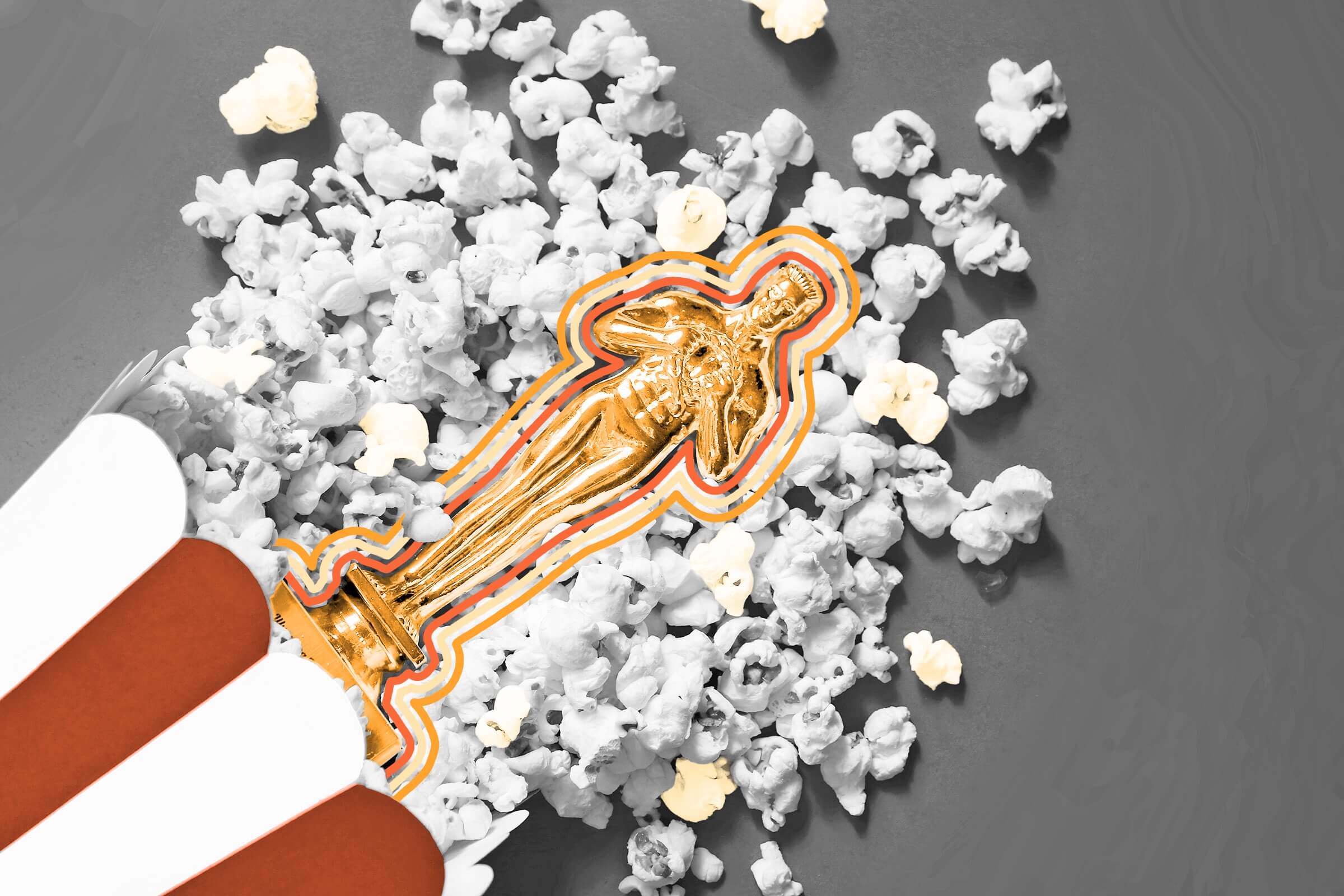
Hollywood was on the cusp of some major changes by the late 1920s. The advent of the technology that produced "talkies" such as 1927's The Jazz Singer was certainly one of them, but more concerning to MGM studio chief Louis B. Mayer was the encroaching threat of unionized labor. Mayer subsequently oversaw the 1927 launch of the Academy of Motion Picture Arts and Sciences, a nonprofit created to mediate wage disputes and provide favorable promotion for the movie industry; it soon also oversaw side projects such as a celebration of stars with "awards of merit for distinctive achievement."

Anybody working in the film industry can become a member of the Academy of Motion Picture Arts and Sciences.

Ready to reveal?

Oops, incorrect!

It's a fib

Membership in the Academy is by invitation only. Although candidates generally require the sponsorship of two existing members, this provision is waived for anyone who has already received an Academy Award nomination.

The first such celebration took place at the end of a black-tie banquet on May 16, 1929, before 270 guests in the Blossom Room of the Hollywood Roosevelt Hotel. Among the familiar features of this ceremony was a host (in this case, Academy president Douglas Fairbanks) announcing the winners of such categories as Best Actor, Best Actress, and Best Cinematography. Noticeable differences included the lack of sound feature films for consideration — The Jazz Singer won a special award for "pioneer outstanding talking picture" — and two winners each for Best Picture and Best Direction. There was also zero suspense baked into the evening, as the winners had already been revealed three months earlier. Absent the sort of long-winded speeches that require an orchestra to keep things moving, the entire ceremony lasted a tidy 15 minutes.

Even as Hollywood braced for more turmoil following the October 1929 stock market crash, the Academy moved forward with its second awards ceremony on April 3, 1930. This time, the winners were unknown until announced on stage (save for the newspapers, which were clued in to prepare for evening editions). And this time the event was broadcast on the radio, a big step toward turning what was initially a private party into the major public gala that would mark the biggest night on the Hollywood calendar.

Numbers Don't Lie

Numbers Don't Lie

Feature films in contention for Best Picture at the 2024 Academy Awards
265
Weight (in pounds) of an Academy Award statuette
8.5
First year the Academy Awards were televised
1953
Number of founding members of the Academy of Motion Picture Arts and Sciences
36

Academy Award statuettes are made from solid ______ and plated in 24-karat gold.

Ready to reveal?

Confirm your email to play the next question?

Academy Award statuettes are made from solid bronze and plated in 24-karat gold.

Placeholder Image

Host Jerry Lewis had to improvise when the 1959 Academy Awards telecast ended 20 minutes early.

As difficult as it is to imagine the normally three-hour-plus Academy Awards finishing early, that’s exactly what happened during the 1959 telecast. Faced with the task of staving off 20 minutes of dead-air time, host Jerry Lewis pulled every possible trick out of his bag: “I proceeded to do schtick and bits and talking to the musicians in the pit and asking someone in the audience if they ever won a prize,” he recalled decades later. Surrounded by the night’s stars on stage, Lewis had them dance to multiple reprises of “There’s No Business Like Show Business,” at various points conducting the orchestra and trying his hand at the trumpet, until NBC finally cut away to a sports documentary. Despite his quick thinking, Lewis ultimately became the fall guy for the show’s botched ending. Time writer Richard Corliss later asserted, “Until Nixon’s 18-1/2, Lewis’s 20 were the minutes that lived in pop-culture infamy,” and he pointed to this event as the reason the performer wasn’t invited back to the Oscars stage until receiving a special award in 2009.

Tim Ott
Writer

Tim Ott has written for sites including Biography.com, History.com, and MLB.com, and is known to delude himself into thinking he can craft a marketable screenplay.

Interesting Facts

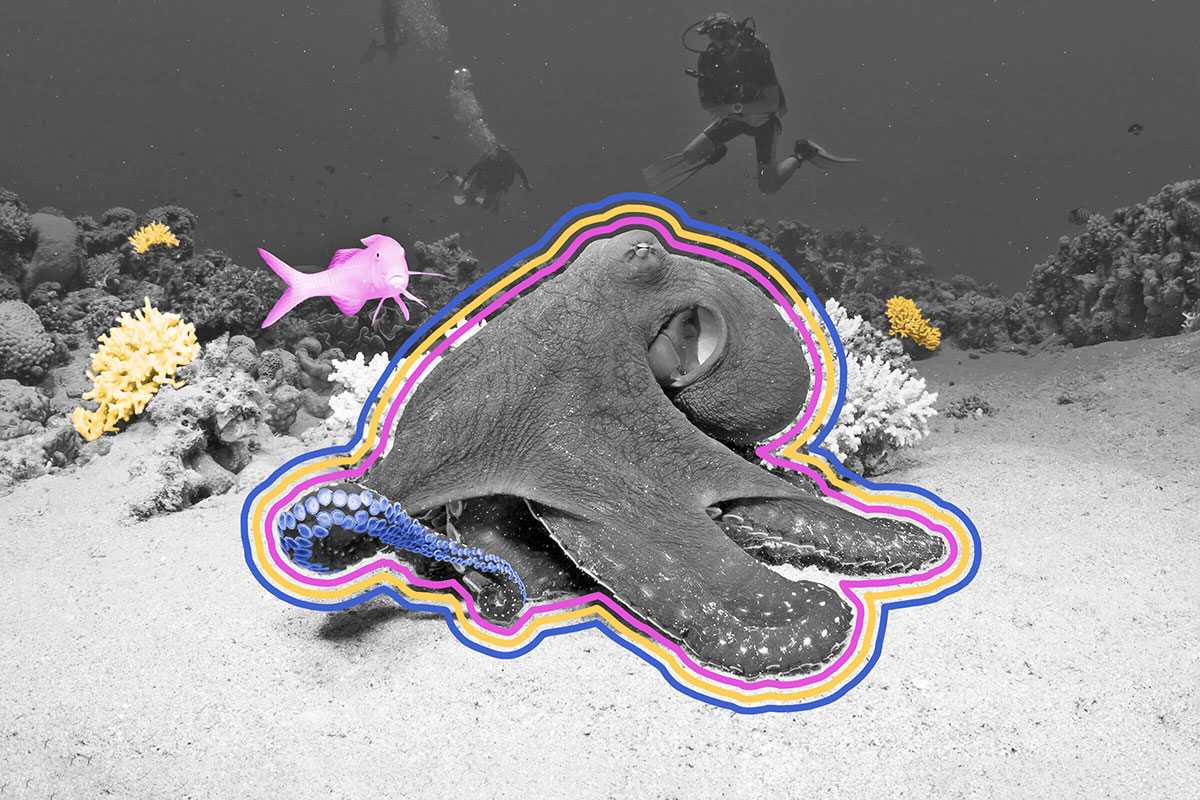
The most distinguishing feature about an octopus is its set of eight appendages — after all, they’re right there in the name. But don’t confuse that tangle of limbs for tentacles, because octopuses don’t have those — they have arms. For us armchair biologists, the two words seem interchangeable, but there’s an important difference. On animals such as squids, tentacles are usually longer and have suckers only on their clubbed ends; they’re primarily used for hunting. By contrast, a cephalopod's arms have suckers that smell, taste, and feel all the way down. Squids, for example, have both eight arms and two tentacles.

Octopus blood is blue.

Ready to reveal?

Oops, incorrect!

It's a fact

In humans, iron-rich hemoglobin delivers oxygen to tissues while turning our blood red. Octopus blood, however, contains hemocyanin, which uses a copper atom instead of iron to deliver oxygen to cells. This is what makes the blood of octopuses — and many other sea creatures — blue.

Of course, an octopus’s “arms” are nothing like the two appendages dangling from your torso. For one, octopus arms are entirely soft tissue, and that absence of bone makes octopuses incredibly flexible. But the most striking difference between octopus arms and our own is that all eight arms contain more than half of an octopus’s total neurons, cells that are usually concentrated in a central brain. This has led some scientists to theorize that octopuses essentially have nine brains — a centralized one and eight mini ones located in each arm. Recent research suggests that there might be more connection between these “brains” than previously imagined, and that an octopus’s arms are, at the very least, “clever” (a very peculiar adjective to describe an arm). Whatever the IQ of an octopus’s arms, it’s clear that they’re just as strange, and incredible, as the creatures themselves.

Numbers Don't Lie

Numbers Don't Lie

Running time (in minutes) of “My Octopus Teacher,” winner of the Best Documentary Oscar in 2021
85
Number of neurons in an octopus
500 million
Total number of suckers found on a giant Pacific octopus’s eight arms (280 on each)
2,240
Appendages belonging to California’s white millipede (Illacme plenipes), the most of any animal
750

The monstrous octopus found in Greek mythology is called a ______.

Ready to reveal?

Confirm your email to play the next question?

The monstrous octopus found in Greek mythology is called a kraken.

Placeholder Image

Octopuses can fit into an inch-wide hole.

Octopuses are master contortionists with the ability to fit into incredibly small spaces — in fact, they can fit inside holes only an inch wide. A majority of an octopus’s body is soft tissue that can lengthen, contract, and contort in any way necessary. The only hard part on their body is the beak, which gets its name because these mouth parts resemble the beaks of parrots. The octopus uses its beak, made up of a fibrous substance called chitin (which also forms the exoskeletons of arthropods), to eat crunchy prey like crabs and clams. Because the beak is the only octopus part that can’t contort, it essentially sets the minimum size of the hole an octopus can squeeze into. To capture this amazing ability on camera, in 2010 National Geographic filmed an octopus as it passed through a plexiglass hole. The 600-pound creature squeezed itself through an opening the size of a quarter.

Darren Orf
Writer

Darren Orf lives in Portland, has a cat, and writes about all things science and climate. You can find his previous work at Popular Mechanics, Inverse, Gizmodo, and Paste, among others.

Original photo by Silvia Bianchini/ iStock

Germany loves its beer, but seltzer is a close second. The country is so entwined with the fizzy beverage that the word “seltzer” comes from the name of the German town of Selters, which is famous for its naturally carbonated mineral springs. The springs have been well known in the area for more than 1,000 years, and by 1791, fizzy water from Selters was so popular, it was exported throughout the world in jugs stamped with the name “selters-wasser,” or “selters water.” The word transformed into “seltzer” when the beverage became popular in North America, especially in New York and Philadelphia, around the early 19th century. Today, the Selterswassermuseum (in Selters, of course) chronicles the local spring’s long history.

Mountain Dew was invented as a whiskey mixer.

Ready to reveal?

Oops, incorrect!

It's a fact

Mountain Dew, whose name is slang for moonshine, first appeared around the 1940s as a noncaffeinated mixer for whiskey and was somewhat similar to today’s Sprite or 7Up.

But Germany’s love of seltzer goes beyond just one town. The world’s first commercial soft drink was created by German jeweler and amateur scientist Jacob Schweppe, who improved upon a way to manufacture carbonated water in the late 18th century. Schweppes soda water expanded throughout Europe, and was mostly sold as a health tonic, especially for upset stomachs. According to the company, some early customers called it “lightning in a bottle” because of its then-novel carbonation. Today, Germany is still one of the highest-ranked countries when it comes to bottled water consumption (fizzy and nonfizzy).

Numbers Don't Lie

Numbers Don't Lie

Year the Selters spring is first mentioned in the historical record
772 CE
Estimated population of Selters, Germany, as of 2020
7,936
Year Schweppes was founded
1783
Seltzer water market size (in USD) as of 2020
29.71 billion

______, the chemist who discovered oxygen, accidentally invented carbonated water in 1767.

Ready to reveal?

Confirm your email to play the next question?

Joseph Priestly, the chemist who discovered oxygen, accidentally invented carbonated water in 1767.

Placeholder Image

Coca-Cola was originally marketed as a “brain tonic.”

In the 19th century, drink-makers of all kinds sold their concoctions as tonics or healthy cure-alls. In reality, some of these “medicinal drinks” were little more than various alcohols mixed with drugs like cocaine (a legal ingredient at the time). So it wasn’t strange when John S. Pemberton, a pharmacist from Georgia, marketed his newest nonalcoholic libation, Coca-Cola, as a “brain tonic.” The first advertisement for Coca-Cola said the “intellectual beverage … contains the valuable tonic and nerve stimulant properties of the coca plant and cola (or Kola) nuts.” It’s a strange ad campaign compared to soda-swilling Santa Clauses or pop-pounding polar bears, but clearly it worked.

Darren Orf
Writer

Darren Orf lives in Portland, has a cat, and writes about all things science and climate. You can find his previous work at Popular Mechanics, Inverse, Gizmodo, and Paste, among others.

Original photo by martinedoucet/ iStock

There's nothing silly about a broken bone, but if laughter is the best medicine, then the creators of Silly String may well have helped more people than they ever envisioned. In the 1960s, inventor Leonard A. Fish and chemist Robert P. Cox set about producing a mixture that would rapidly harden after delivery via a spray can, providing a near-instant cast for anyone unfortunate enough to sustain a broken limb. They came up with a sticky concoction that set quickly and held, then tested some 500 nozzles in search of the best application from a pressurized can. When one nozzle propelled a stream 30 feet across the room, Fish and Cox had another idea — maybe this stringy goo would work better as a plaything?

A New Jersey town has banned the public use of Silly String.

Ready to reveal?

Oops, incorrect!

It's a fact

While some communities, like Beverly Hills, have enacted temporary bans for Halloween, the New Jersey town of Ridgewood strictly prohibits “the discharge of a product called ‘Silly String’ in or along the public streets, sidewalks, parks, or public places … at any time.”

After tweaking their recipe, the duo arranged a meeting with an executive at Wham-O, the company behind such popular toys as the Frisbee and Hula Hoop. At first, a business relationship seemed unlikely; overeager to demonstrate, Fish and Cox all but decorated the office with loads of colorful string, and were unceremoniously shown the door. Fortunately, the company's owners later spotted some leftover gunk and were intrigued enough to seek a larger sample. The next day, Fish and Cox received a telegram from Wham-O requesting 24 cans of the stuff for a market test. By 1972, when a patent was granted for this "foamable resinous composition," Silly String had clearly moved on from its roots as a tool for healing and was well on the way to its destiny as a mess-making accoutrement for partygoers of all ages.

Numbers Don't Lie

Numbers Don't Lie

Miles of string advertised on early Silly String labels
.25
Canisters of Silly String handed out at a baseball game in 2017
4,025
Maximum temperature (in degrees Fahrenheit) suggested for safe Silly String storage
120
Year the Car-­Freshner Corporation acquired the rights to Silly String
1997

75% of the liquid inside a can of Silly String comes from its ______.

Ready to reveal?

Confirm your email to play the next question?

75% of the liquid inside a can of Silly String comes from its propellant.

Placeholder Image

Silly String is used by the military to detect booby traps.

Although Fish and Cox chose the path of entertainment for their creation, they may have been heartened by news of a real-world application that fulfilled their original goal of helping people. As far back as 1997, the U.S. military used Silly String to weed out the presence of dangerous improvised explosive devices (IEDs) in hostile areas. A spritz of the stringy stuff is light enough to drape across nearly invisible trip wires without setting them off, calling attention to these deadly traps often nestled in doorways and gates. While the military has been quiet about publicizing this use, the revelation of its effectiveness prompted one mother, whose son was stationed in Iraq in the early 2000s, to collect 80,000 cans of Silly String and nearly identical products to send overseas to aid the war effort and save a few more lives.

Tim Ott
Writer

Tim Ott has written for sites including Biography.com, History.com, and MLB.com, and is known to delude himself into thinking he can craft a marketable screenplay.

Original photo by Raul C/ iStock

Globe-trotters who spend time in Turkey can find many ways to indulge their taste buds: rich and foamy coffees, juicy kebabs, and crispy baklava filled with nuts and honey. Then there’s dondurma, or what some call Turkish ice cream, a warm-weather delight that’s served in a cone but has one not-so-frosty feature: It doesn’t melt.

Vanilla beans aren’t really beans.

Ready to reveal?

Oops, incorrect!

It's a fact

Real vanilla extract — not the imitation stuff made from synthetic flavoring — is produced by vine-growing vanilla orchids now found primarily in Madagascar. The “beans” they produce aren’t really beans, but instead pods that contain thousands of tiny seeds.

Like most ice cream, dondurma is a dairy-based confection, in this case made from goat milk and sweetened with sugar. However, it has two additional ingredients that give the dessert its unique texture and anti-melting properties: salep and mastic, both harvested from plants native to Turkey. Salep is a type of flour made from the bulbs of wild purple orchids that grow throughout the country; it’s also used in a hot and milky regional drink that goes by the same name. The powder gives dondurma its thickness and helps keep it from melting. The second ingredient, mastic, is a natural resin extracted from the region’s mastic trees and has long been used as chewing gum. The thick and heat-resistant substance looks like sap and has a light cedar flavor. It also gives dondurma its chewy texture.

Unlike other ice cream, dondurma isn’t churned, and is instead created more like taffy. Stretching and beating the ingredients together over and over again — much like kneading dough to activate stretchy wheat gluten — gives the ice cream its elasticity. Although it can’t melt, dondurma is still kept frozen, then scooped into cones or bowls as a summertime snack — a recipe that’s been satisfying sweet tooths for possibly 500 years.

Numbers Don't Lie

Numbers Don't Lie

Amount of ice cream (in gallons) eaten by the average American each year
4
Amount of ice cream (in pounds) used to build the world’s largest ice cream cone
1,000
Height (in feet) of Turkey’s Great Ararat mountain
16,945
Estimated number of orchids harvested in Turkey each year for salep
120 million

More ______ are grown in Turkey than in any other country.

Ready to reveal?

Confirm your email to play the next question?

More hazelnuts are grown in Turkey than in any other country.

Placeholder Image

Scientists don’t fully understand why “brain freezes” happen.

“Brain freeze” is much easier to pronounce than “sphenopalatine ganglioneuralgia,” the term scientists use to describe the uncomfortable and sudden headache caused by consuming cold foods and drinks too quickly. Brain freezes aren’t at all life-threatening, though it’s not entirely clear why they happen — the working theory is that sudden cold sensations cause the blood vessels in our mouths and throats to momentarily narrow and constrict blood flow. When the vessels quickly widen again, the fluctuation triggers pain receptors in the face and head. Some scientists believe the pain is one way our brain protects itself, warning us to stop what we’re doing to keep a continuous supply of blood and oxygen going at all times. However, not everyone experiences this sensation, and researchers aren’t sure why; studies show that less than half of people get brain freezes, though people who are prone to migraines are more likely to experience the unpleasant response.

Nicole Garner Meeker
Writer

Nicole Garner Meeker is a writer and editor based in St. Louis. Her history, nature, and food stories have also appeared at Mental Floss and Better Report.

Original photo by LIAL/ Shutterstock

In the 1950s, long before they were compact and more affordable, the earliest VCRs took up as much space as a piano and cost more than a house. We can trace the technology to engineer Charles Ginsburg, who was hired by electronics company Ampex to work on the development of a new video tape recorder (VTR). The resulting machine, called the Ampex VRX-1000, debuted in 1956 and allowed users to edit and play back recorded video on tape reels. However, these devices were humongous and cost roughly $50,000 (around $580,000 today), making them out of reach for personal use. Instead, Ampex found a market in large television networks such as CBS, which used the VRX-1000 to replace costly live broadcasts with prerecorded, edited content that could be re-aired.

The bestselling VHS of all time is “The Lion King.”

Ready to reveal?

Oops, incorrect!

It's a fact

According to IMDb, the bestselling VHS tape of all time is 1994’s “The Lion King,” which sold an estimated 32 million copies. The runner-up is Disney’s “Aladdin” with 30 million copies sold. Among live-action films, the bestselling VHS tape is “Titanic,” which sold roughly 25 million copies.

The personal VCR market developed further into the 1960s, starting with the work of Sony engineer Nobutoshi Kihara, who unveiled the CV-2000 in 1965. This was a smaller and more affordable device priced at $695 (around $7,000 today), capable of recording and playing back black-and-white images. But the CV-2000 still relied on tape reels; it wasn’t until 1971 that the first VCR to use cassettes debuted. This was the Sony VO-1600, which incorporated Sony’s new U-matic technology, in which the tape was encased inside a cassette — a direct predecessor to modern VHS tapes. The retail price of the Sony VO-1600 was still in excess of $1,000. But as the technology continued to develop throughout the 1980s, the cost of a new VCR dipped into the low hundreds.

Numbers Don't Lie

Numbers Don't Lie

Price of one “Star Wars” VHS tape sold at auction
$114,000
Final year VCRs were manufactured
2016
Diameter (in inches) of a standard DVD disc
4.7
Blockbuster stores that existed at the company’s peak
9,000+

The last remaining Blockbuster store is located in ______.

Ready to reveal?

Confirm your email to play the next question?

The last remaining Blockbuster store is located in Bend, Oregon.

Placeholder Image

The first and last VHS movies released in the U.S. came less than 30 years apart.

VHS tapes made their commercial debut in the United States in 1977, one year after they first hit shelves in Japan. Some of the earliest titles from that year included indelible classics such as The Sound of Music, Patton, and the film version of M*A*S*H. The VHS format exploded in popularity throughout the 1980s and 1990s, though it began to wane in the early 2000s when DVD sales overtook VHS sales for the first time.

Studios continued to produce feature films on VHS until the mid-2000s before they stopped manufacturing VHS versions of feature films altogether. According to the Los Angeles Times, the last major Hollywood movie released on VHS was the 2005 David Cronenberg thriller A History of Violence, which was brought to market on VHS the following year, marking the end of the medium’s 30-year production run.

Bennett Kleinman
Staff Writer

Bennett Kleinman is a New York City-based staff writer for Inbox Studio, and previously contributed to television programs such as "Late Show With David Letterman" and "Impractical Jokers." Bennett is also a devoted New York Yankees and New Jersey Devils fan, and thinks plain seltzer is the best drink ever invented.

Original photo by pabradyphoto/ iStock

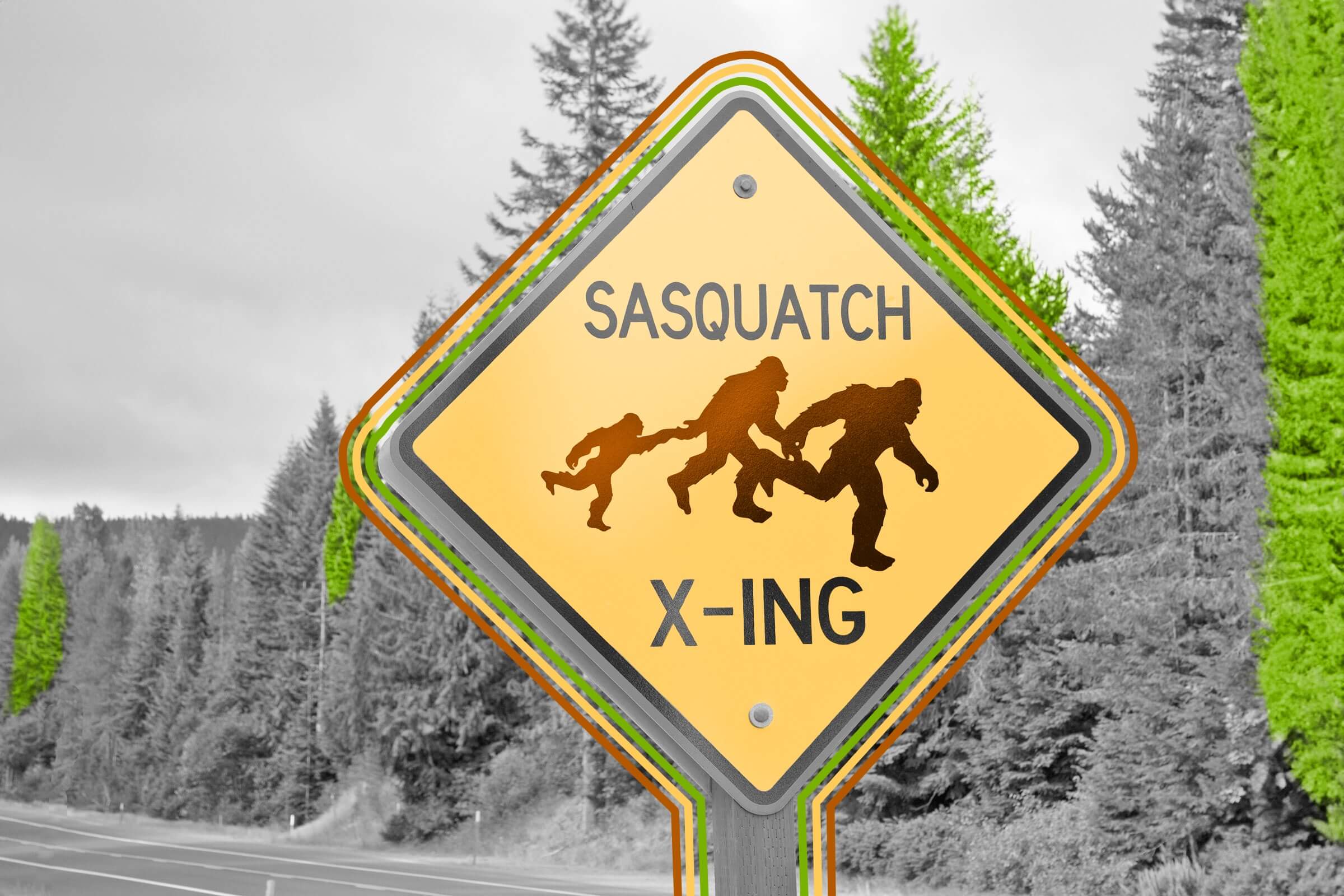
Every state has an official bird or tree, but only one state’s governor has declared a state monster. Washington state is home to some impressive forests, and it’s within these misty woods that a legend has grown about an apelike man known as Bigfoot or Sasquatch (sasq'ets means “hairy man” in the Halq'emeylem language of British Columbia). The myth of the Sasquatch began centuries ago with West Coast Indigenous peoples, and gained steam in the 19th century when British explorers (allegedly) discovered “Sasquatch prints” during explorations of the Columbia River. However, the modern legend really kicked into high gear in 1958, when a journalist for the Humboldt Times in northern California pondered if a set of mysterious footprints, mentioned by a reader, could be a relative “of the Abominable Snowman of the Himalayas.” Almost a decade later, the famously grainy video shot in Bluff Creek, California — known as the Patterson-Gimlin film (named for its creators) — cemented the iconic status of this hirsute creature.

Washington state is home to the highest peak in the contiguous U.S.

Ready to reveal?

Oops, incorrect!

It's a fib

Mount Whitney in California is the highest peak above sea level, at 14,494 feet. Washington’s Mount Rainier is third on the list, following Colorado’s Mount Elbert in second place.

Today, Bigfoot’s image can be found throughout the Pacific Northwest, emblazoned on festival signs and gift shop tchotchkes. In 1970, Washington’s governor issued a proclamation declaring Sasquatch the state monster of Washington; he even affixed a lock of the legendary monster's supposed hair to the document. (The proclamation also deemed “all Sasquachii” a protected state resource.) More recent endeavors, in 2017, attempted to solidify that official status when state Senator Ann Rivers introduced bill SB 5816, calling for Sasquatch to become the state’s official monster. The bill was referred to committee but has yet to be signed into law, which means that for now, the Sasquatch’s official status — much like the creature itself — remains elusive. 

Numbers Don't Lie

Numbers Don't Lie

Percentage of U.S. citizens who believe Sasquatch is real, according to a 2022 poll
13%
Times Sasquatch has been spotted in Washington state, per the Bigfoot Field Researchers Organization
700+
Height (in feet) of Gigantopithecus blacki, an ancient giant ape that once lived in Southeast Asia
10
Length (in feet) of Washington’s Evergreen Point Bridge, the world’s longest floating bridge
7,708.49

Mythic animals such as the Sasquatch and yeti are known as ______.

Ready to reveal?

Confirm your email to play the next question?

Mythic animals such as the Sasquatch and yeti are known as cryptids.

Placeholder Image

Washington state is also the birthplace of the modern UFO craze.

The Pacific Northwest is well known for its cryptids, but this region of the U.S. also birthed another realm of paranormal fascination. On June 24, 1947, a fire extinguisher salesman named Kenneth Arnold flew past Mount Rainier in his single-engine CallAir plane, en route to an air show, when he spotted something out of the ordinary — nine metallic discs whose trajectory appeared to defy known physics. Days later, Arnold told the story to two reporters at the East Oregonian newspaper, using phrases like “pie pan,” “disk,” and the now-familiar “saucer.” One of the reporters wrote a story for the Associated Press wire service, and by the afternoon, the nation was abuzz with the possibility of unknown “flying saucers” hovering above the U.S. A month later, allegedly extraterrestrial events at Roswell, New Mexico, fanned this smoldering craze into a full-blown blaze. Although Arnold at one point lamented his role in this “flying saucer” obsession — he often found himself the subject of ridicule — later in life he saw his otherworldly report as a necessary patriotic duty, saying: “If I had not reported it, it would have constituted a disloyalty to my country. Wouldn’t you think so?”

Darren Orf
Writer

Darren Orf lives in Portland, has a cat, and writes about all things science and climate. You can find his previous work at Popular Mechanics, Inverse, Gizmodo, and Paste, among others.

Original photo by Anusorn Nakdee/ Shutterstock

In Greek mythology, a chimera is a part-lion, part-goat, part-snake, all-weird monstrosity, but in scientific circles, the name takes on a different meaning. In biology, a chimera is anyone whose body contains genetically distinct cells. This doesn’t mean that another small organism is living within you, but rather that cells wholly different from your cells coexist within you. In fact, a kind of chimerism is fairly common. New mothers carry some of the cells of their offspring, which can remain within their body for up to 40 years. This exchange of cells is also a two-way street, as children often contain some of their mother’s cells, which cross the placenta and into the child’s bloodstream during pregnancy. However, not many cells reside in a mother and her offspring, so scientists refer to this phenomenon as “microchimerism.” 

A person with two different-colored eyes is a chimera.

Ready to reveal?

Oops, incorrect!

It's a fib

While a person with two distinct eye colors may be a chimera, there are many ways for this phenomenon to occur. Sometimes, family DNA, trauma, disease, injury, and other forms of genetic mutation can affect the pigment, or melanin, that determines eye color.

A more dramatic form of human chimerism is when two embryos that would usually form nonidentical twins instead fuse in the womb, and the resulting single embryo contains cells of both. While this can have some outward effects (like different-colored patches of skin on one person), most of the time this condition is only discovered through genetic testing. In one bizarre case in 2003, a 52-year-old mother needed a kidney transplant, and when her children were tested for compatibility, the results showed that two of her three children were not hers genetically. This is because she was a chimera, having fused with her twin embryo before birth, and the doctors didn’t think to search for a second genetic marker in other parts of her body. That makes this confused mother only 1 out of 100 or so confirmed chimera cases worldwide, but many, many more are likely out there.

Numbers Don't Lie

Numbers Don't Lie

Year scientists created the first human-pig chimera for transplantable organs
2017
Number of lines in Greek poet Hesiod’s “Theogony,” which contains a detailed description of chimera
1,022
Year the first case of a natural human chimera was reported
1953
Average number of cells in an adult human female (men contain 36 trillion cells on average)
28 trillion

In the “Iliad,” Homer mentions the slaying of the mythical chimera by the Greek hero ______.

Ready to reveal?

Confirm your email to play the next question?

In the “Iliad,” Homer mentions the slaying of the mythical chimera by the Greek hero Bellerophon.

Placeholder Image

Many of the foods we eat come from chimera plants.

Chimeras aren’t confined to the animal kingdom; many of the fruits and vegetables we consume are chimeras or bud sports. Chimeras are when an organism contains two distinctly different tissues, whereas a bud sport is a singular genetic deviation from the rest of the plant, often caused by a spontaneous mutation. The effects of chimerism can be seen clearly in apples, which originated from Eurasia, but in which different overlying tissues produce alteration in the color of the fruit’s skin. This widespread chimerism likely originated from ancient farmers, who “often grafted fruit-producing branches onto another variety or species,” in the words of New Scientist. In fact, humans have been modifying plants in this way — and enjoying the fruits of their efforts — for thousands of years.

Darren Orf
Writer

Darren Orf lives in Portland, has a cat, and writes about all things science and climate. You can find his previous work at Popular Mechanics, Inverse, Gizmodo, and Paste, among others.

Original photo by New Africa/ Shutterstock

You can send a lot of things in the mail, but you can’t send a person — at least not anymore. There was nothing preventing people from mailing their own children in the early days of the U.S. Postal Service’s parcel post service, though, and at least seven families took advantage of it. That includes the Beagues, an Ohio couple who in 1913 paid 15 cents in postage to mail their newborn son to his grandmother’s house a mile down the road. Beyond the novelty of it — when the parcel post service began on January 1, 1913, some were eager to see which packages they could get away with sending — it was a surprisingly practical way of getting one’s kiddo from point A to point B.

A pizza has been delivered in space.

Ready to reveal?

Oops, incorrect!

It's a fact

It happened in 2001, when Pizza Hut struck a $1 million deal to deliver a pizza to the International Space Station. Russian cosmonaut Yuri Usachov accepted the delivery, which substituted salami for pepperoni because it withstood conditions better.

To start with, many people in rural areas knew their postal carriers fairly well, which meant the children were simply walked or carried on often-short trips. In other instances, children traveled on trains as Railway Mail, but with stamps instead of (usually more expensive) train tickets. The longest known trip of a child through the mail occurred in 1915, when a 6-year-old was sent 720 miles from Florida to Virginia — a lengthy trip that cost just 15 cents. Fortunately, there are no reports of children being injured by being sent through the mail. (Pictures of children in literal mailbags were staged.) The practice ended, as so many do, when certain higher-ups became aware of the loophole and decided to close it, also around 1915.

Numbers Don't Lie

Numbers Don't Lie

Addresses served by the U.S. Postal Service
163 million+
Pieces of mail sent through the USPS per day
425.3 million
Cost of a Forever Stamp as of February 2025
73¢
Retail post offices in the U.S.
31,123

The first postmaster general was ______.

Ready to reveal?

Confirm your email to play the next question?

The first postmaster general was Benjamin Franklin.

Placeholder Image

The world’s oldest working post office is in Scotland.

First opened more than three centuries ago, the Sanquhar Post Office is the oldest working post office in the world. It’s been serving the people of Sanquhar, Scotland, since 1712 — just five years after Scotland and England unified. It remains popular among tourists, who enjoy having their letters marked with a “World’s Oldest Post Office” stamp. The future of the site was briefly in doubt when the previous owners decided to retire, but new owners took over in 2023. The Sanquhar post office predates the entire United States Postal Service by 63 years; the USPS was established by the Second Continental Congress on July 26, 1775.

Michael Nordine
Staff Writer

Michael Nordine is a writer and editor living in Denver. A native Angeleno, he has two cats and wishes he had more.

Original photo by Vicki L. Mille/ Shutterstock

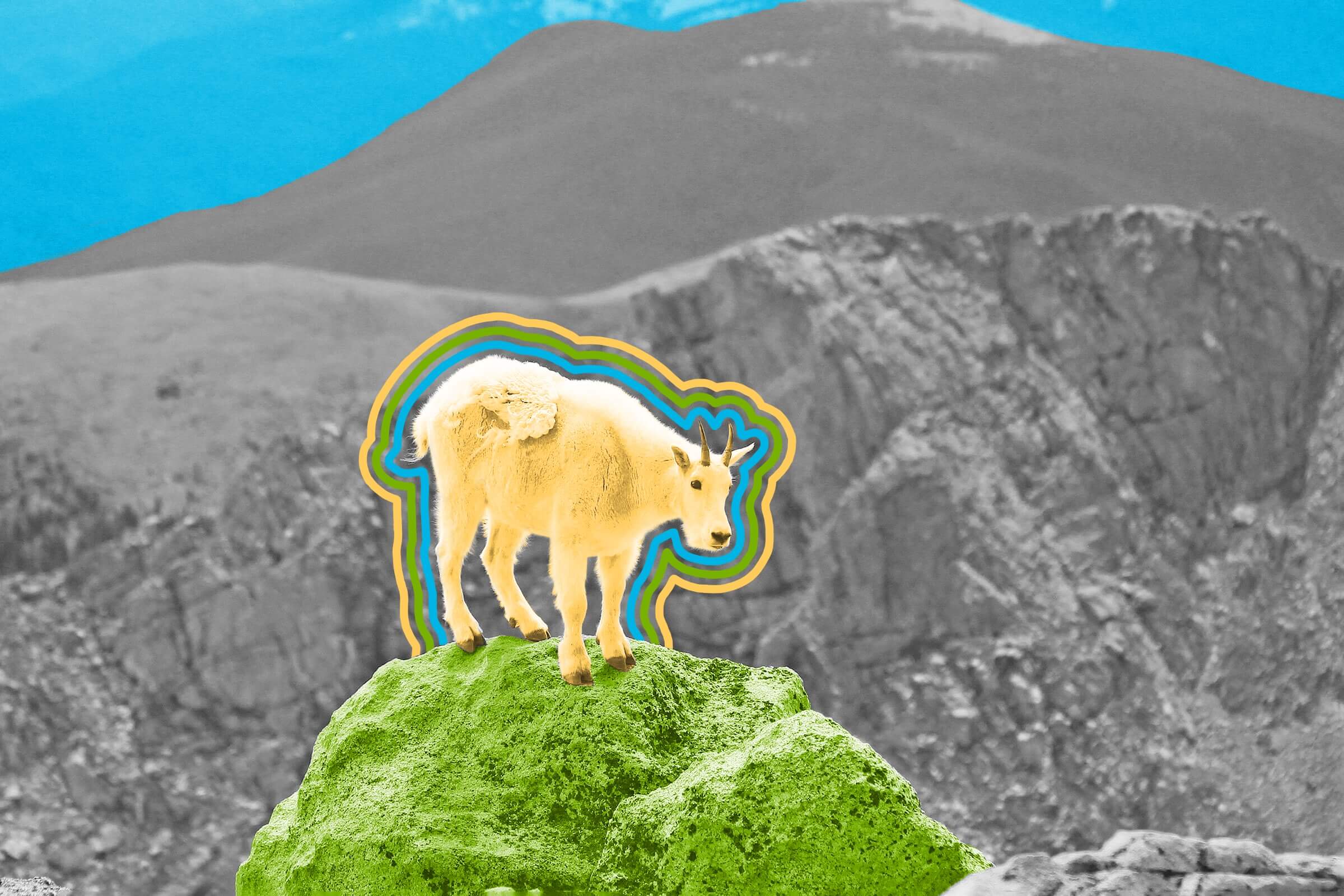
When is a goat not a goat? When it can be spotted on a rail-thin rock crevasse at an altitude of 13,000 feet in the northwestern United States and Canada. That animal, while seemingly possessing the stubbornness attributed to the goats found at petting zoos, is actually the biologically distinct mountain goat, the lone extant species of the genus Oreamnos.

You can tell a mountain goat's age by counting the rings on its horns.

Ready to reveal?

Oops, incorrect!

It's a fact

As with trees, mountain goats reveal their ages by the rings that appear on their keratinized horns. No rings materialize during their first winter, but they emerge in each successive year after that.

While related to domestic and wild goats within the Bovidae family, mountain goats belong to the Rupicaprini tribe, a subdivision of "goat antelopes" that includes fellow rock-climbing creatures such as the goral and chamois. Anatomically, rupicaprids differ from other bovids by featuring short, dagger-like horns atop thinner, lighter skulls. Mountain goats have also developed specific features that would feel strange to their cousins in the petting zoo, namely the thick, double layer of fur and suction cup-like hooves that allow them to survive in cold, treacherous environments.

Behavior-wise, male mountain goats are more deferential to females than their domestic cousins. They're also far less likely to engage in the sort of head-butting waged between playful kids and competing rivals among true goat herds, due to the potential for injury from those sharp horns. But lest you think these animals suffer from a courage deficiency, just think about how brave you'd be leaping between cliffs more than 2 miles above sea level.

Numbers Don't Lie

Numbers Don't Lie

Lifespan (in years) of the typical wild mountain goat
9-12
Weight (in pounds) reached by the largest male mountain goats
300
Distance (in feet) a mountain goat can jump in a single bound
12
Number of studio albums released by the Mountain Goats
21

A group of mountain goats is called a ______.

Ready to reveal?

Confirm your email to play the next question?

A group of mountain goats is called a band.

Placeholder Image

Mountain goats enjoy refreshing themselves with human urine.

Most guides will advise keeping a safe distance from mountain goats, but sometimes the animals get a little more close and personal than we’d like. That’s what started happening in Washington’s Olympic National Park, where the ever-growing mountain goat population developed a taste for the salt in human urine and sweat. Although it can make for a fun campfire story or blog post, a brush with these normally elusive wild animals can be dangerous. Furthermore, the increasingly emboldened creatures have been found to be disrupting the ecosystem by trampling and gobbling up vegetation. In response, the National Park Service in 2018 began airlifting mountain goats to the nearby North Cascades National Park, a locale with plenty of the naturally occurring mineral deposits needed to supplement their diets, and fewer of the freely urinating hikers just waiting to blog about their close encounters with intruding wildlife.

Tim Ott
Writer

Tim Ott has written for sites including Biography.com, History.com, and MLB.com, and is known to delude himself into thinking he can craft a marketable screenplay.