
Humans aren’t the only animals that suffer from motion sickness. For instance, despite being equally comfortable on land or in water, seals can reportedly get seasick if you put them on a boat. Like human beings and many other animals, they rely on their inner ears for balance. The conflict between the signals sent to the brain by their eyes and ears results in the same discomfort experienced by anyone who’s struggled to get their sea legs, but at least the adorable mammals have the option of jumping in the water to alleviate their queasiness.
Despite their name, these seals, which are native to Antarctica, mostly eat krill. In fact, there aren’t many crabs in Antarctica at all. The name is a misnomer attributed to them by early sealers and whalers who misunderstood the animals’ diet.
Aside from this minor impairment, however, seals are highly physically attuned to their environments. Their underwater eyesight is excellent, and their whiskers are also important when hunting. The latter allows them to sense vibrations caused by swimming prey and are so effective that even blind seals can hunt and feed underwater — just don’t ask them to share their catch on your boat afterward.
Seals belong to a group of marine mammals known as pinnipeds, meaning “fin-footed.”
Advertisement
No one knows how Baikal seals got where they are.
Baikal seals can be found in just one location: Lake Baikal in Siberia. They’re the only pinniped species that lives exclusively in fresh water, as well as one of the smallest true (aka earless) seals. As for how they came to reside in the world’s deepest, oldest, and most voluminous lake, no one knows. Between 80,000 and 100,000 Baikal seals live in the lake, so despite the enigmatic origins, they seem to be doing quite well in their environment.
Michael Nordine
Staff Writer
Michael Nordine is a writer and editor living in Denver. A native Angeleno, he has two cats and wishes he had more.
Advertisement
top picks from the Inbox Studio network
Interesting Facts is part of Inbox Studio, an email-first media company. *Indicates a third-party property.
Benjamin Franklin is often credited with launching the U.S. Postal Service after the Continental Congress authorized him to create postal routes in 1775. But before the ingenious founding father became the first U.S. postmaster, there was another important mail manager: a tavern owner by the name of Richard Fairbanks. About 136 years before Franklin’s post office management, Fairbanks’ tavern became the first post office in the United States. There, the businessman, who was permitted to sell “wine and strong water” along Boston’s Water Street, became responsible for collecting and distributing mail.
Each year, about 3,000 unwrapped coconuts are mailed from the Hoolehua Post Office on Molokai, where senders decorate, address, and affix postage to the fruit’s shell. The “Post-A-Nut” program began in 1991, offering senders free coconuts with paid postage to anywhere in the world.
Combining a post office and a bar might seem unusual by today’s standards, but in the 17th century it was a common and clever system. European practices of the time often designated inns and taverns as post offices because they were regular gathering spots within communities. Public houses had a major influence on colonial life too, providing meals and directions for travelers, entertainment, and news. That logic is why, on November 6, 1639, the Massachusetts General Court designated Fairbanks’ tavern as the official post office for “all letters which are brought from beyond the seas,” specifically meaning any correspondence between the colony and Great Britain. Fairbanks was paid one penny for each letter he handled. As for intercolonial mail, early Americans were resourceful at communicating with fellow New Worlders, privately sending their letters throughout the colonies with the help of traveling neighbors and merchants.
Vanuatu, an island country in the South Pacific Ocean, has the world’s only underwater post office.
Advertisement
Americans once paid to receive their mail, not send it.
Popping to the post office to purchase a book of stamps is a routine task for many Americans, though it wasn’t the norm until 175 years ago. At one time, American letter senders didn’t pay postage — the recipient of their message did. That is, until 1847, when Congress allowed the U.S. Postal Service to issue its first official stamp. Although mail service had existed in America since the Revolutionary period, by the 1840s the USPS was operating at a budget deficit, in part because delivery fees weren’t always paid upon delivery. Postage upon delivery was not cheap — the cost of sending a letter from New York City to Buffalo, New York, was as much as 25 cents at a time when many workers barely earned $1 a day. Mail recipients could refuse letters, meaning the postal service was on the hook for the round-trip delivery cost. Many Americans were skeptical of prepaying postage, believing it an insult that suggested the recipient was too poor to cover the fee, but by 1855 Congress’ mail reforms made stamps mandatory, while also standardizing and lowering the cost of mail delivery.
Nicole Garner Meeker
Writer
Nicole Garner Meeker is a writer and editor based in St. Louis. Her history, nature, and food stories have also appeared at Mental Floss and Better Report.
Advertisement
top picks from the Inbox Studio network
Interesting Facts is part of Inbox Studio, an email-first media company. *Indicates a third-party property.
Original photo by Mariusz S. Jurgielewicz/ Shutterstock
The largest and oldest ocean basin on Earth, the Pacific has roughly twice as much water as the Atlantic. Yet it didn’t receive the name we know today until the 16th century. On November 28, 1520, Portuguese navigator Ferdinand Magellan — after 38 days of weathering the treacherous waters of the strait that’s now named after him at the tip of southern Chile — became the first European to reach the ocean by way of the Atlantic. Happy to have the harrowing journey behind him, Magellan referred to this new ocean as “Mar Pacifico,” meaning “Peaceful Sea.” While the moniker made sense at the time, today we know that both the Pacific and Atlantic can be tumultuous at times.
Every continent could fit inside the Pacific Ocean basin.
70% of the Earth's surface is covered in water, and the Pacific Ocean is doing a lot of the heavy lifting. All seven continents could fit within its watery boundaries — with millions of square miles to spare.
Yet “Pacific” isn’t the only name this big blue expanse has been known by. In 1513 — seven years before Magellan glimpsed the Pacific — Spanish conquistador Vasco Nunez de Balboa led an expedition across the isthmus of Panama and named the sea he found on the other side the far less poetic “el mar del sul,” or the “South Sea.” However, the most authentic moniker for the Pacific Ocean may be the Hawaiian term “Moananuiākea.” Interestingly, this name — perhaps over a thousand years old — is closely related to the Maori “Te Moana Nui a Kiwa,” meaning the “Great Ocean of Kiwa” (Kiwa being a Maori guardian of the sea). So while “Pacific” is the name most of us now know, it’s certainly not the one used by the people who mapped and sailed the Pacific’s 63 million square miles for centuries before the Europeans arrived.
The Americas are named after the Italian explorer Amerigo Vespucci.
Advertisement
Ferdinand Magellan wasn’t the first person to circumnavigate the globe.
Most people learn in history class that Ferdinand Magellan was the first person to circumnavigate the globe during his famous voyage from 1519 to 1522, but the truth is a lot more complicated. For one, the famous (or infamous) explorer never actually finished the voyage from Spain to the Moluccas (Spice Islands), because he was killed in the Philippines in 1521. Another mariner on his expedition, Juan Sebastián del Cano, brought the Victoria, the last surviving vessel of Magellan’s fleet, back to Spain in September 1522. But even if Magellan had survived that skirmish, the first person to actually circumnavigate the globe may have been an enslaved individual named Enrique, whom Magellan had seized during the Portuguese conquest of Malacca in 1511. Eight years later, Enrique served as an interpreter on Magellan’s globe-trotting quest. After Magellan’s death, Enrique abandoned the mission only a few hundred miles short of Malacca. If he returned home in 1521 (we’ll likely never know), then he’d officially be the first person to ever travel the entire globe.
Interesting Facts
Editorial
Interesting Facts writers have been seen in Popular Mechanics, Mental Floss, A+E Networks, and more. They’re fascinated by history, science, food, culture, and the world around them.
Advertisement
top picks from the Inbox Studio network
Interesting Facts is part of Inbox Studio, an email-first media company. *Indicates a third-party property.
The modern credit card may not exist if it weren’t for a businessman who forgot his wallet more than 75 years ago. In 1949, Frank McNamara was dining with clients at Major’s Cabin Grill in New York City, when he realized he didn’t have any cash on him and couldn’t pay. Accounts differ about whether McNamara’s wife came to his rescue or he simply promised to pay the restaurant back later. In either case, he was reportedly determined never to allow this embarrassing situation to occur again and began brainstorming new ways for people to pay if they also found themselves cashless.
A billionaire once charged a $170.4 million painting to his credit card.
In 2015, Chinese billionaire Liu Yiqian won Modigliani’s “Nu couché” (“Reclining Nude”) at auction. Rather than pay in cash or by check, he put the entire $170.4 million purchase on his American Express card — earning millions of rewards points in the process.
With the help of lawyer Ralph Schneider, McNamara conceived of a company called the Diners Club, which issued pocket-sized cardboard credit cards featuring details such as a person’s name, address, and membership number. The idea was for members to use the cards at participating restaurants, each of which kept track of a running personal monthly tab connected to each card. While the concept of a running tab wasn’t new, this was the first card that could be used at an array of businesses instead of one establishment. At the end of each month, each eatery would tell the Diners Club how much debt was owed, and the company would collect money from its members and send the necessary amount to each restaurant, minus a processing fee.
The service made its debut on February 8, 1950, when McNamara returned to Major’s Cabin Grill for a dinner that Diners Club International now refers to as the “First Supper.” At the end of the meal, McNamara provided his charge card and signed his name, serving as proof of purchase. The Diners Club became an immediate sensation, amassing more than 330 participating businesses and 42,000 card holders within a year.
A fear of spending money is known as chrometophobia.
Advertisement
Coca-Cola accepted mobile payments in the 1990s.
Though they’re commonplace today, digital payments didn’t exist before the 1990s. The first legitimate online transaction was in 1994, when someone purchased a copy of the Sting album Ten Summoner’s Tales online for $12.48 plus shipping. In 1997, Coca-Cola launched a rudimentary method of paying for products with a cellphone.
The company installed two vending machines in Helsinki, Finland, allowing customers to send payment using SMS text. The service was called “Dial-a-Coke,” and the charges were eventually added to the customer’s monthly telephone bill. The idea caught on, with just under one-third of the vending machines’ cans successfully purchased with a mobile phone. The concept later expanded to Tallinn, Estonia, by 1999 and Australia in 2001.
Interesting Facts
Editorial
Interesting Facts writers have been seen in Popular Mechanics, Mental Floss, A+E Networks, and more. They’re fascinated by history, science, food, culture, and the world around them.
Advertisement
top picks from the Inbox Studio network
Interesting Facts is part of Inbox Studio, an email-first media company. *Indicates a third-party property.
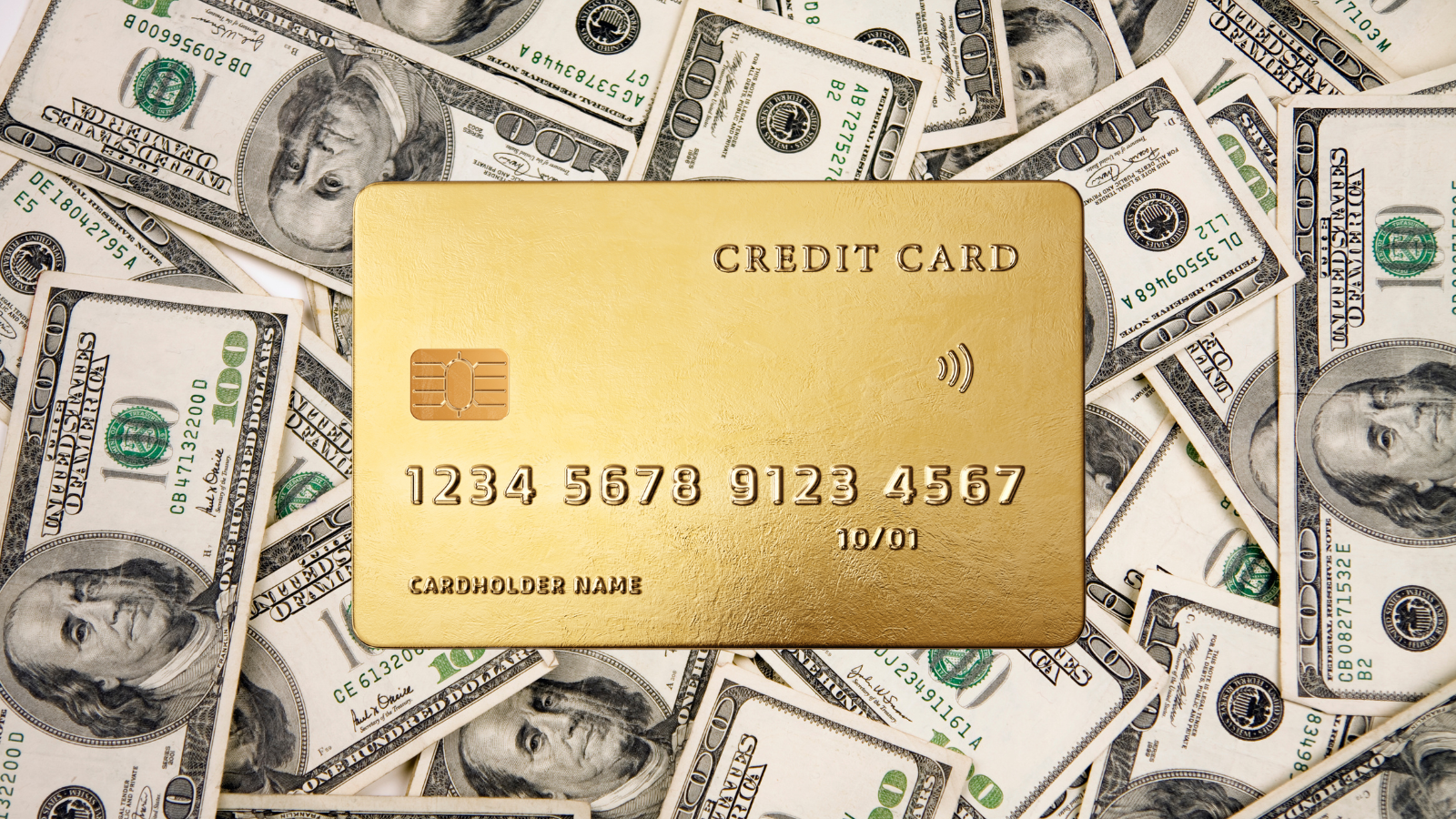
If you go into an Italian restaurant and order spaghetto, chances are you’ll leave hungry. That’s because “spaghetto” refers to just a lone pasta strand; it’s the singular form of the plural “spaghetti.” Other beloved Italian foods share this same grammatical distinction — one cannoli is actually a “cannolo,” and it's a single cheese-filled “raviolo” or “panino” sandwich. Though this may seem strange given that these plural terms are so ingrained in the English lexicon, Italian language rules state that a word ending in -i means it’s plural, whereas an -o or -a suffix (depending on whether it’s a masculine or feminine term) denotes singularity. (Similarly, “paparazzo” is the singular form of the plural “paparazzi.”) As for the term for the beloved pasta dish itself, “spaghetti” was inspired by the Italian word “spago,” which means “twine” or “string.”
The BBC once told viewers that spaghetti grows on trees.
It may seem outlandish in retrospect, but on April Fools’ Day, 1957, the BBC informed viewers that there was a “spaghetti farm” in Switzerland. They even aired a fabricated video featuring Swiss women harvesting spaghetti from an orchard. Of course, it was just a (skillful) hoax.
Despite pasta’s deep association with Italy, it’s far from an Italian invention. Though its precise origins are somewhat obscure, Arab traders are thought to have introduced pasta to Sicily sometime in the eighth or ninth centuries. Even pasta sauce isn’t originally Italian: Tomatoes were brought to Europe in the 16th century by explorers from the New World, with the first tomato sauce recipe appearing in a 1692 Italian cookbook written by chef Antonio Latini. More than 300 years later, spaghetti is a perennially popular dish, even if most of us haven't always known what to call it.
National Spaghetti Day occurs on January 4 each year.
Advertisement
Thomas Jefferson helped popularize pasta in the United States.
Around the time he served as U.S. minister to France (1784–1789), future President Thomas Jefferson wrote, “The best maccaroni in Italy is made with a particular sort of flour called Semola, in Naples.” Jefferson even tasked his secretary and diplomat William Short with tracking down a machine for making “maccaroni,” a term he used to describe pasta in general. Jefferson was known for offering pasta to his dinner guests during his presidency, and even had his own written recipe for an early form of mac and cheese that survives to this day. He was also known for serving White House visitors other European delicacies of the time, such as macaroons and ice cream. Though Jefferson was the famous face often connected to pasta’s growing popularity, his Black, enslaved cooks were the ones truly responsible for crafting the delicious dishes – among them James Hemings, Peter Hemings, Edith Hern Fossett, and Frances Gillette Hern.
Bennett Kleinman
Staff Writer
Bennett Kleinman is a New York City-based staff writer for Inbox Studio, and previously contributed to television programs such as "Late Show With David Letterman" and "Impractical Jokers." Bennett is also a devoted New York Yankees and New Jersey Devils fan, and thinks plain seltzer is the best drink ever invented.
Advertisement
top picks from the Inbox Studio network
Interesting Facts is part of Inbox Studio, an email-first media company. *Indicates a third-party property.
Original photo by Daniel Krasoń/ Alamy Stock Photo
eBay is one of the world’s largest online retailers, auctioning off nearly anything you can think of. While vehicles, jewelry, and electronics are some of the most commonly sold items today, there’s one unusual purchase cemented in the digital storefront’s history: a broken laser pointer.
Silicon Valley developer Pierre Omidyar launched eBay from his home in 1995, though originally it was called Auction Web. When it came time to test the online venture, Omidyar decided to list an inexpensive item he already owned, uploading an ad for a broken laser pointer. He had purchased the $30 device for presentations, but ended up using the laser to play with his cat. When the laser pointer broke after a few weeks, the eBay founder listed it online for $1, making sure to clearly label the device as inoperable. After a week, interest picked up, and a bidding war kicked off; the final, winning bid for the laser pointer topped out at $14.83.
In eBay’s early days, rumors swirled that founder Pierre Omidyar created the site as a way to find more Pez dispensers for his fiancée’s collection. The myth, which was started by the company’s PR specialist to attract attention to the site, was debunked in 2002 but lives on.
Soon after, the online auction marketplace exploded in popularity, and within two years the company had rebranded to its current name and sold its millionth item — a Sesame Street-themed jack-in-the-box toy. However, it would take another two decades for Omidyar’s broken laser pointer to resurface. Canadian Mark Fraser came forward in 2015 amid the company’s 20th anniversary celebration, identifying himself as the very first eBay customer. A self-proclaimed “electronics geek,” he purchased the discounted laser pointer with the hopes of repairing it himself. Although unsuccessful, Fraser held onto the tool for decades and more recently even considered relisting the item on eBay to see what it would fetch.
More than $500 million worth of Beanie Babies have been sold on eBay.
Advertisement
The first item scanned at a grocery store was a pack of gum.
Lasers have many practical applications, though when they were first invented in 1960, scientists weren’t sure exactly how they could be used. At one point, the technological breakthrough was considered a “solution seeking a problem.” With more experimenting, lasers slowly became commonly used tools — and one of the first places to utilize them was the grocery store checkout. The first supermarket scanners were installed in Marsh Supermarket in Troy, Ohio, in 1974; paired with the newly devised Uniform Product Code (aka UPC or barcode), the scanners could automatically record purchases and tally grocery totals through a computerized system for the first time. A pack of Wrigley’s Juicy Fruit chewing gum was the first item scanned using the system, a choice that wasn’t left to chance — grocery store executives were initially dubious that tiny UPCs could be scanned successfully.
Nicole Garner Meeker
Writer
Nicole Garner Meeker is a writer and editor based in St. Louis. Her history, nature, and food stories have also appeared at Mental Floss and Better Report.
Advertisement
top picks from the Inbox Studio network
Interesting Facts is part of Inbox Studio, an email-first media company. *Indicates a third-party property.
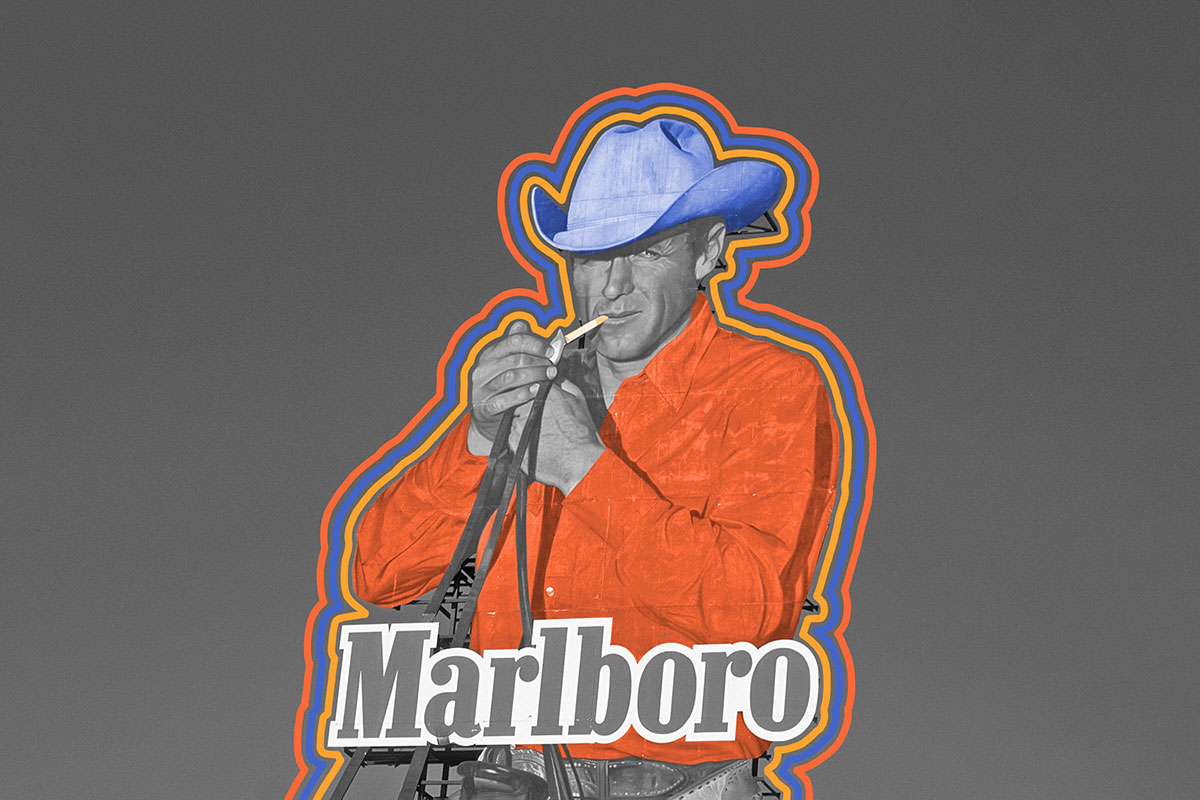
Original photo by United Archives GmbH/ Alamy Stock Photo
In the early days of the internet, settling on the perfect username sometimes required finding the right niche email service — like the first G-mail, which gave cat lovers the ability to show off their feline fervor. Those first email accounts weren’t handled by Google, owner of today’s incredibly popular Gmail service; instead, they were run by the studio behind the Garfield comic strip. Paws, Inc. — owned by Garfield creator Jim Davis — launched “Garfield’s G-mail” around 1997, though internet historians have few details to go on about its origins or eventual demise. What is known is that the service allowed users to sign up for their own email address that ended with “@catsrule.garfield.com.” G-mail was, after all, marketed as “email with cattitude.”
“Garfield” cartoonist Jim Davis was inspired by the “Peanuts” comics.
Davis drew inspiration from Snoopy when creating his Garfield character. Garfield was a hit with readers, though it’s believed “Peanuts” creator Charles Schulz was not a fan.
Internet lore suggests the original G-mail was shuttered when Google’s Gmail emerged, though online sleuths say that’s unlikely, considering that Google didn’t launch its email service until 2004, and Paws, Inc., moved its email service to the “@e-garfield” domain around 2001. Plus, Paws, Inc., never used the “@gmail” domain name. It’s more likely the digital mailboxes were eventually shuttered once interest died off, as happened with many now-outdated remnants of the internet’s past. Garfield comics, however, have remained popular with cartoon enthusiasts, and a new animated film hit theaters in 2024, returning the fictional tabby cat to the screen for the first time in 15 years.
Today, “Google” is both a noun and verb, but at one time, the tech giant’s name was simply a typo. In 1997, Google founder Larry Page and fellow Stanford student Sean Anderson were coming up with titles for a data-indexing website when the name emerged. Initially, Anderson suggested “googolplex” (one of the largest describable numbers), which was then shortened to “googol.” Anderson went online to see if the term was available to purchase for a web domain, but misspelled the word, typing “google” instead. The name stuck: Google.com was registered as a domain in September 1997, and its search engine feature debuted a year later. But building Google’s more popular services would take some time — the search engine wouldn’t release its email accounts for six more years, and at first through invite-only. Eventually, of course, Gmail grew into the digital mainstay it is today.
Nicole Garner Meeker
Writer
Nicole Garner Meeker is a writer and editor based in St. Louis. Her history, nature, and food stories have also appeared at Mental Floss and Better Report.
Advertisement
top picks from the Inbox Studio network
Interesting Facts is part of Inbox Studio, an email-first media company. *Indicates a third-party property.

Original photo by Patti McConville/ Alamy Stock Photo
Food and drink often taste different on an airplane, usually more bland. But ginger ale maintains a crisp, dry flavor that makes it known for being even better when enjoyed in the air. It all has to do with the way cabin conditions affect our taste buds. Humidity levels inside an airplane cabin generally hover around just 20%, though this can dip even lower. This dryness — combined with low cabin pressures — reduces oxygen saturation in the blood, which in turn lessens the effectiveness of some taste receptors.
Though it’s primarily enjoyed as a cold soda today, Dr Pepper was marketed as a hot drink from the late 1950s into the 1970s. Seasonal ads ran during winter to increase sales, and consumers were told to heat Dr Pepper to 180 degrees, pour it over a thin slice of lemon, and enjoy.
A 2010 study commissioned by German airline Lufthansa found that typical cabin conditions inhibit our taste buds’ ability to process salty flavors by as much as 30% and sweet flavors by as much as 20%. And a 2015 study suggests that loud noises in your standard cabin impact the body’s chorda tympani facial nerve, which also lessens the intensity of any sweet-tasting fare.
In the case of ginger ale specifically, passengers typically report that it tastes less sweet than normal in the air. However, while our taste buds may not be able to sense the sugar, the beverage still possesses a sharp, extra-dry flavor, which is often thought to feel more refreshing than ginger ale on the ground. The crispness comes from the slightly spicy nature of ginger flavoring. It makes ginger ale an especially popular beverage aboard planes, and many travel guides recommendordering the drink in flight for its unique flavor.
The five basic tastes are sweet, salty, sour, bitter, and umami.
Advertisement
The first in-flight meals were sold on a 1919 flight from London to Paris.
When the first scheduled commercial flights began in 1914, they lacked many modern amenities, including in-flight meals, which weren’t served until 1919 aboard a Handley Page Transport plane connecting London and Paris. On October 11, the company offered passengers boxed lunches containing sandwiches and fruit, which cost 3 shillings (equal to around $11 today).
In-flight dining made its way to United States airlines by the late 1920s, with Western Air Express helping pioneer the concept. It offered passengers meals containing fried chicken, fruit, and cake on flights between Los Angeles and San Francisco, though they were unheated and prepped prior to departure. In 1936, United Airlines became the first major airline to install galleys and ovens on planes, allowing crews to heat meals in flight for the first time.
Bennett Kleinman
Staff Writer
Bennett Kleinman is a New York City-based staff writer for Inbox Studio, and previously contributed to television programs such as "Late Show With David Letterman" and "Impractical Jokers." Bennett is also a devoted New York Yankees and New Jersey Devils fan, and thinks plain seltzer is the best drink ever invented.
Advertisement
top picks from the Inbox Studio network
Interesting Facts is part of Inbox Studio, an email-first media company. *Indicates a third-party property.
Original photo by Volgi archive/ Alamy Stock Photo
In early 1901, English inventor Hubert Cecil Booth traveled to Empire Music Hall in London to witness a strange invention — a mechanical aspirator designed to blow pressurized air to clean rail cars. Booth later asked the demonstrator why the machine (invented by an American in St. Louis) didn’t simply suck up the dust rather than blow it around. “He became heated,” Booth later wrote, “remarking that sucking out dust was impossible.” Unconvinced, Booth set about creating such a contraption, and later that same year he filed a patent for a vacuum machine he named the “Puffing Billy.”
The Hoover vacuum is named after President Herbert Hoover.
Herbert Hoover’s presidency (1929 to 1933) arrived decades after the debut of the Hoover vacuum company, named after Ohio businessman William H. Hoover. The vacuum mogul has no relation to the nation’s 31st president.
This machine wasn’t quite as fancy as modern Dust Busters, Dirt Devils, Hoovers, or Dysons. Instead, the Puffing Billy was red, gasoline-powered, extremely loud, and big — really big. So big, in fact, that the machine needed to be pulled by horses when Booth’s British Vacuum Cleaner Company made house calls. Once outside a residence, 82-foot-long hoses snaked from the machine through open windows. Because turn-of-the-century carpet cleaning wasn’t cheap, Booth’s customers were often members of British high society; one of his first jobs was to clean Westminster Abbey’s carpet ahead of Edward VII’s coronation in 1902. By 1906, Booth had created a more portable version of the Puffing Billy, and two years later, the Electric Suction Sweeper Company (later renamed Hoover) released the “Model O,” the first commercially successful vacuum in the United States.
The world’s largest vacuum chamber is located at a NASA facility in the U.S. state of Ohio.
Advertisement
Engineers in the 19th century used horses to power boats.
Although an animal-powered boat can trace its origins back to Roman times, team boats (also known as “horse boats” or “horse ferries”) became especially popular during the 19th century in the United States. Horses walked either in a circle or in place to turn wheels that moved the boat forward. The first commercially operated horse boat (or any other animal-powered boat) in the U.S. plied the waters of the Delaware River around 1791. Well suited for journeys of only a few miles, horse boats were soon sailing the waters of Lake Champlain as well as the Hudson River before eventually spreading to the Ohio and Mississippi rivers, and the Great Lakes. By the 1850s, these horse-powered creations were largely replaced by paddle steamers — the beginning of the horse’s decades-long slide from supremacy to irrelevancy, at least when it comes to transportation.
Darren Orf
Writer
Darren Orf lives in Portland, has a cat, and writes about all things science and climate. You can find his previous work at Popular Mechanics, Inverse, Gizmodo, and Paste, among others.
Advertisement
top picks from the Inbox Studio network
Interesting Facts is part of Inbox Studio, an email-first media company. *Indicates a third-party property.

When George Washington died in 1799, Congress could think of no better way to honor the first president than by laying him to rest in the U.S. Capitol. The building had been under construction since Washington himself laid the cornerstone in 1793, and plans were quickly approved to add a burial chamber two stories below the rotunda with a 10-foot marble statue of Washington above the tomb. Visitors would be able to view the grave via a circular opening in the center of the rotunda floor. There was just one problem: Washington had already designated his Mount Vernon estate to be his final resting place, meaning neither he nor anyone else is actually buried in what’s still called the Capitol Crypt.
George Washington won both of his presidential elections unanimously.
He ran essentially unopposed in both 1788 and 1792, thereby winning every available electoral vote — 69 the first time, 132 the second — in each election.
This crypt, which was finally completed in 1827, has gone by a few different names over the years. The 1797 plan by architect William Thornton labeled the space the “Grand Vestibule,” whereas architect Benjamin Henry Latrobe’s 1806 plan referred to it as the “General Vestibule to all the Offices” and an 1824 report of the Commissioners of Public Buildings simply called it the “lower rotundo.” For those who’d like to see the crypt today, it’s included in most tours of the Capitol.
The Capitol Crypt’s sandstone floor was sourced from a quarry in Seneca, Maryland.
Advertisement
The U.S. Capitol was burned down in the War of 1812.
The United States has engaged in many international conflicts, most of which haven’t been fought on the country’s own soil. One exception to this is the War of 1812, a kind of sequel to the Revolutionary War in which the U.S. once again went to battle against its British frenemies across the pond.
Mostly spurred by violations of maritime rights, the war reached a retaliatory pitch when, in response to American troops burning the Canadian capital, York (now Toronto), British troops made their way to D.C. and burned everything they could — including the Capitol. This happened on August 24, 1814, a day that also saw the White House set ablaze. Restoration began immediately, and though the Library of Congress’ 3,000-volume collection was ultimately lost, the Capitol was rebuilt and a new library was begun with the donation of Thomas Jefferson’s personal collection of 6,487 books.
Michael Nordine
Staff Writer
Michael Nordine is a writer and editor living in Denver. A native Angeleno, he has two cats and wishes he had more.
Advertisement
top picks from the Inbox Studio network
Interesting Facts is part of Inbox Studio, an email-first media company. *Indicates a third-party property.
Enter your email to receive facts so astonishing you’ll have a hard time believing they’re true. They are. Each email is packed with fascinating information that will prove it.
Sorry, your email address is not valid. Please try again.