
Original photo by DNY59/ iStock
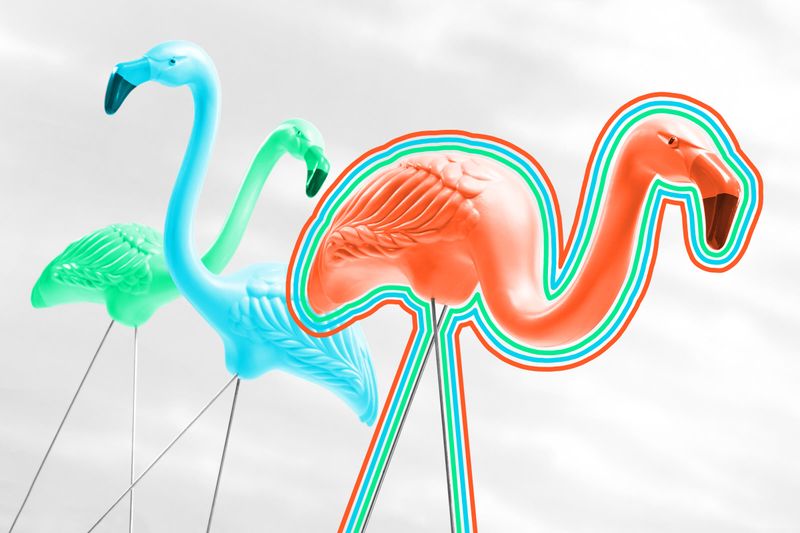
Wisconsinites are known for their love of cheese, so it’s no surprise that the city of Madison’s official bird is the invariably cheesy plastic flamingo. The lawn bird first “migrated” to town in 1979 as part of a prank on the University of Wisconsin-Madison campus. Students awoke one day that September to find the school’s Bascom Hill covered with 1,008 plastic flamingos, which had been placed there by the school government’s Pail & Shovel Party. The group was known for their absurdist stunts, including throwing a 10,000-person toga party and building a replica of the Statue of Liberty emerging from nearby Lake Mendota. Yet it wasn’t until 2009, after a successful lobbying campaign from local newspaper columnist Doug Moe, that the Madison City Council voted 15-4 in favor of designating the plastic flamingo as the official city bird. Councilwoman Marsha Rummel defended the decision against the four dissenters by saying, “If you don’t have a little fun, [life’s] not worth living.”




Oops, incorrect!
It's a factAlso known as a stand, colony, or pod, a collective of flamingos is appropriately described by the colorful term “flamboyance.” Other notable collective terms referring to groups of birds include a murder of crows, a parliament of owls, and an exaltation of larks.
The plastic flamingo may be the lone official bird made of synthetic material, but it’s far from the only one with a feel-good backstory. In 2019, the black-crowned night heron was declared the city bird of Oakland, California, thanks to a multiyear movement begun by a group of third graders who had been helping to rehabilitate local birds after an oil spill. On a statewide level, the California gull is — despite its name — the official bird of Utah, and was designated such to honor the gulls who saved malnourished Mormon pioneers in 1848 by eating the crickets then decimating local crops. In Japan, the green pheasant (kiji) was declared the national bird in 1947 in part because it’s believed that the creatures can detect and warn of impending earthquakes.

Numbers Don't Lie
More Interesting Reads





The world’s oldest flamingo lived to be ______ years old.
Ready to reveal?
Confirm your email to play the next question?
The world’s oldest flamingo lived to be 83 years old.

Flamingos are born a dull gray color and turn pink from their diet.
A flamingo’s defining characteristic is its bright-pink appearance, but that trait is far from hereditary. In fact, flamingo chicks are born a dull gray shade, and develop their pinkish hue as they grow older. The colorful change is due to a flamingo’s diet, which is high in beta-carotene. This red-orange pigment is found in various types of algae and brine shrimp that make up the bulk of a flamingo’s meals. Enzymes in the bird’s digestive system break down these pigments, which are then absorbed into the feathers and skin, turning most flamingos a striking pink hue.

Bennett Kleinman is a New York City-based staff writer for Inbox Studio, and previously contributed to television programs such as "Late Show With David Letterman" and "Impractical Jokers." Bennett is also a devoted New York Yankees and New Jersey Devils fan, and thinks plain seltzer is the best drink ever invented.
top picks from the Inbox Studio network
Interesting Facts is part of Inbox Studio, an email-first media company. *Indicates a third-party property.