
Original photo by © mgkuijpers/stock.adobe.com
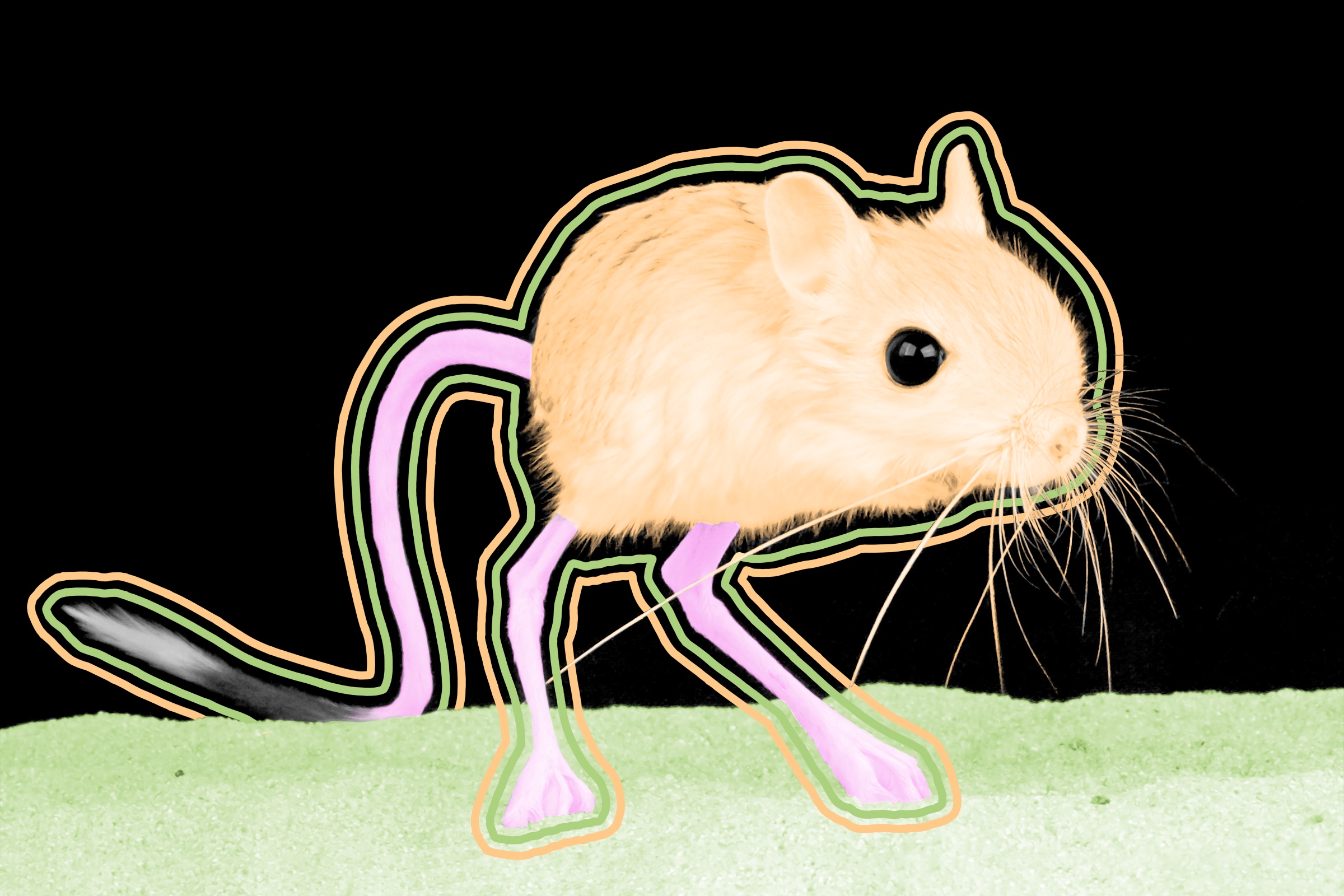
In the scorching deserts of North America, where summer temperatures regularly exceed 100 degrees Fahrenheit and rainfall is scarce, a small rodent the size of a hamster is thriving — and it’s possible that it’s never taken a sip of water in its life. The kangaroo rat, named for the powerful hind legs that allow it to bound across the arid desert landscape, has solved one of survival’s trickiest problems: how to live in an environment that provides almost no water at all.
This seemingly miraculous feat is achieved through various evolutional adaptations. One of the kangaroo rat’s key characteristics is its ability to get all the moisture it needs from its primarily seed-based diet. When it breaks down those seeds during digestion, one of the byproducts is a small amount of water — just enough to sustain the animal.




Oops, incorrect!
It's a factThe greater capybara, native to Central and South America, weighs between 110 and 132 pounds on average, but one female specimen in Brazil reached a whopping 201 pounds — roughly the weight of the average male wide receiver.
But producing small amounts of metabolic water alone isn’t enough; kangaroo rats have also developed clever adaptations for conserving water. They don’t sweat or pant like other animals, preventing the loss of much-needed liquid from their bodies, and their kidneys concentrate their urine to an almost crystal-like consistency, with very little water lost through waste. Even their exhaled breath is partially recycled thanks to specialized nasal cavities, which condense moisture to be reabsorbed rather than escaping the body through breathing.
The small, mostly nocturnal rodents also escape much of the daytime heat by remaining in their underground burrows out of the scorching sun. The combination of all these evolutionary and behavioral adaptations allows kangaroo rats — which have a lifespan of between two and six years — to survive in some of Earth’s hottest and harshest environments without drinking a drop of water.

Numbers Don't Lie
More Interesting Reads



The term for an intense fear of mice and rats is ______.
Ready to reveal?
Confirm your email to play the next question?
The term for an intense fear of mice and rats is musophobia.

Camel humps don’t store water.
This common misconception comes from the camel’s ability to go weeks at a time without needing a drink, which is often mistakenly attributed to their supposedly water-storing humps. But those humps — one or two, depending on the species — store fatty tissue, not water.
Food sources are often scarce for camels, so to avoid starvation, they’re able to metabolize the fat in their humps for nutrition. When you see a camel with a deflated or drooping hump, it means the animal has gone quite a long time without food — but the hump will sit upright once the camel has refueled.
Humps aside, camels are excellent at conserving water and surviving in extreme heat. They can lose up to 30% of their body weight due to water loss without suffering fatal consequences — by comparison, other mammals may die at a 12% loss. They also rarely sweat and are capable of drinking huge amounts of water — up to 30 gallons — in one go.

Tony is an English writer of nonfiction and fiction living on the edge of the Amazon jungle.
top picks from the Inbox Studio network
Interesting Facts is part of Inbox Studio, an email-first media company. *Indicates a third-party property.