

Interesting Facts
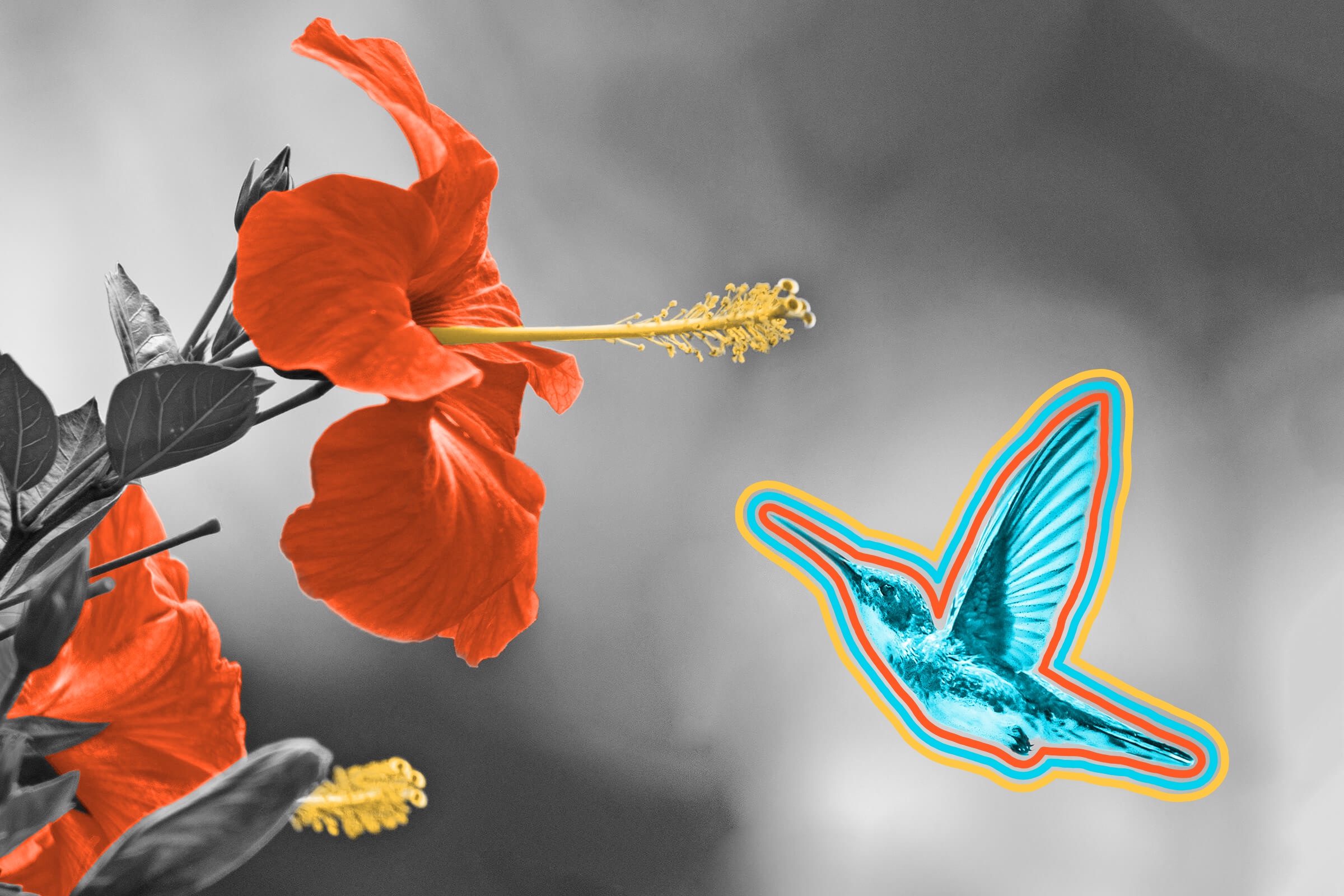
Colorblindness is relative. Just as we can perceive hues that dogs can’t, hummingbirds can see colors that humans can’t. Whereas the three types of color-sensitive cone cells in our eyes allow us to see red, green, and blue light, hummingbirds (and most other birds) have a fourth type of cone attuned to ultraviolet light. In addition to UV light, birds may even be able to see combination colors like ultraviolet+green and ultraviolet+red — something we mere humans can only imagine. Having four types of cone cells, known as tetrachromacy, is also common in fish and reptiles, and researchers believe that dinosaurs possessed it as well. Some very special humans also seem to have a fourth type of cone — about 1% of the population.




Oops, incorrect!
It's a factBecause of the way their wings are structured, most birds can’t fly backward, though some, like herons and egrets, can briefly flutter backward. Only hummingbirds can truly fly backward, and it’s thanks to the unique, extremely agile muscles in their wings.
Being able to see this way is especially useful for hummingbirds, whose endless quest for sugar is aided by their ability to discern different-colored flowers — including “nonspectral” colors that combine hues from widely different parts of the color spectrum. (Their color perception also helps them with migration, mating, and avoiding predators.) Purple is the only nonspectral color we humans can perceive (it involves both blue and red, or both short and long wavelengths of light), but some birds might see as many as five: purple, ultraviolet+red, ultraviolet+green, ultraviolet+yellow, and ultraviolet+purple. That certainly sounds worth singing about.

Numbers Don't Lie
More Interesting Reads




The world’s smallest bird is the ______.
Ready to reveal?
Confirm your email to play the next question?
The world’s smallest bird is the bee hummingbird.

Birds have hollow bones — but not for the reason you might think.
If you were already aware that birds have hollow bones, you might have also heard that it’s because that makes them lighter — but that’s not actually the reason for this unusual feature. Studies have shown that bird skeletons aren’t any lighter than mammal skeletons of the same size. The actual reason bird bones aren’t just hollow but pneumatized (read: full of space for air) is because flying requires so much oxygen that birds’ lungs actually extend into their bones. As a baby bird grows, the air sacs of its lungs create a series of small hollows in its bones that give it extra space for taking in oxygen. The trait helps birds take in oxygen both while inhaling and exhaling, which helps keep them aloft even longer.

Michael Nordine is a writer and editor living in Denver. A native Angeleno, he has two cats and wishes he had more.
top picks from the Inbox Studio network
Interesting Facts is part of Inbox Studio, an email-first media company. *Indicates a third-party property.