
Original photo by © JimVallee/ iStock
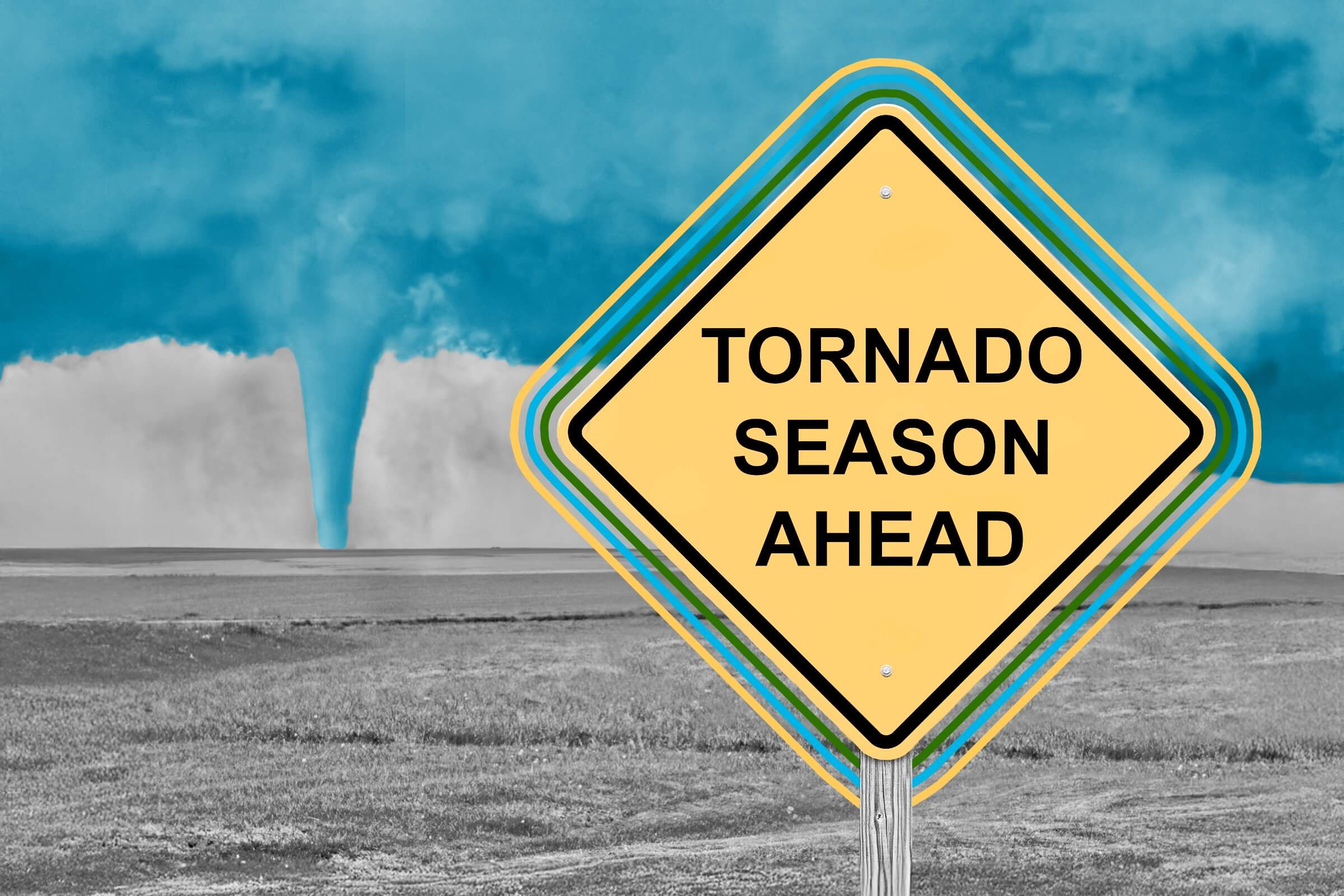
England doesn’t have the most annual tornadoes of any country overall — that dubious honor belongs to the United States — but it does have the most by land area. Brits are hit by roughly 29 twisters every year, which works out to 2.2 tornadoes per 10,000 square kilometers (3,861 square miles); that’s quite a bit more than the U.S., which gets 1.3 a year per the same area. England has a total area of 50,301 square miles, while America is vastly larger at 3,531,837 square miles.




Oops, incorrect!
It's a fibThough they’re much bigger, hurricanes aren’t as fast as tornadoes, which reach much higher wind speeds. Tornadoes reach about 207 mph, while hurricanes are typically closer to 131 mph.
About 1,150 tornadoes are reported in the U.S. each year, which is more than all of Europe, Canada, and Australia combined. This is mostly due to topography, as the vast area in the middle of the country — appropriately known as Tornado Alley — is where dry, cold air traveling from Canada meets the moist, warm air from the south.
This creates unstable atmospheric conditions, which are ideal for the formation of tornadoes. While England isn’t as flat as Tornado Alley, its weather conditions, with an abundance of cold fronts and thunderstorms, are similarly conducive to tornadoes.

Numbers Don't Lie
More Interesting Reads



Tornadoes are measured using the ______.
Ready to reveal?
Confirm your email to play the next question?
Tornadoes are measured using the Fujita Scale.

Tornadoes have plucked the feathers off chickens.
Though it may sound like an urban legend, there have been many instances of tornadoes plucking the feathers right off of chickens. “While it is not the mission of the National Severe Storms Forecast Center to record tornadoes which deplumed fowls,” the organization said in a response to a 1978 article in American Heritage magazine, “enough events of this phenomenon have been documented over the past one hundred and forty years to warrant acceptance.”
The real question isn’t whether this has ever happened but how, and there are a number of competing theories. Some think it’s simply the strength of the wind, while others (including Kurt Vonnegut’s brother Bernard, a meteorologist) believe the birds become so anxious during the storms that they spontaneously molt — an evolutionary adaptation meant to ensure predators make off with only a mouthful of feathers, rather than the entire chicken, when attacking.

Michael Nordine is a writer and editor living in Denver. A native Angeleno, he has two cats and wishes he had more.
top picks from the Inbox Studio network
Interesting Facts is part of Inbox Studio, an email-first media company. *Indicates a third-party property.