

Original photo by Channel 82/ Unsplash
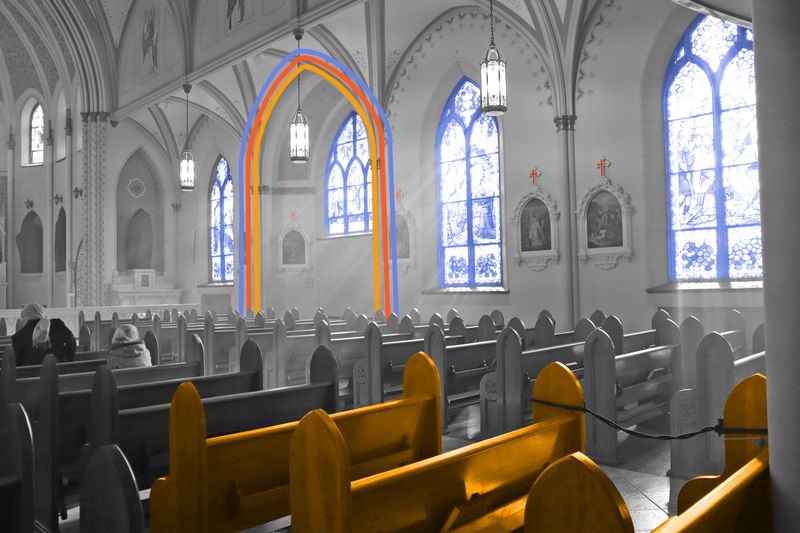
The term “devil’s advocate” is a familiar label for someone who argues a position they don’t agree with just to make a point, but its origins are more literal than you might expect. In 1587, Pope Sixtus V established the position of promotor fidei (meaning “promoter of the faith”), popularly known as advocatus diaboli, or devil’s advocate, as part of the process of beatification or canonization — aka becoming a saint. The devil’s advocate was the church’s skeptic, picking apart stories of reported “miracles” to argue against someone’s sainthood. The advocate had to be present for any part of the sainthood process to be considered valid.




Oops, incorrect!
It's a factGertrude of Nivelles, who lived in seventh-century Belgium, is often considered the patron saint of cats, an association that may have developed because her iconography often depicts her with mice or rats. However, the Catholic Church has never made the patronage official.
For hundreds of years, sainthood was relatively rare, but Pope John Paul II (head of the Catholic Church from 1978 to 2005) believed the church needed more examples of sanctity, so he effectively abolished the position of devil’s advocate in 1983 as part of a revision of the canonization procedures. He also shortened the posthumous waiting period for saints from 50 years after death to just five years. These and other changes ushered in an unprecedented number of new saints. In the 600 years before John Paul II, around 300 people were declared saints. In the less than three decades of his papacy, John Paul II oversaw the canonization of 482 saints. More recently, Pope Francis canonized 942 people (including Mother Teresa, Anglican convert Cardinal John Henry Newman, and Swiss seamstress Marguerite Bays) between 2013 and 2025.

Numbers Don't Lie
More Interesting Reads




______ was the first saint ever officially canonized, in 993.
Ready to reveal?
Confirm your email to play the next question?
St. Ulrich of Augsburg was the first saint ever officially canonized, in 993.

St. Patrick was not Irish (or named Patrick).
Many saints predate the canonization process, which was created in the early Middle Ages. One of these saints is St. Patrick, the holy mascot of that famous day in March. But contrary to popular belief, St. Patrick wasn’t Irish. He was born in Britain around the fourth century CE and given the name Maewyn Succat. Eventually he made his way to Ireland, where he became a Christian priest and took the name Patrick, derived from the Latin word pater, meaning “father.” Patrick’s extensive missionary work did take place on the Emerald Isle (back in the fifth century CE, Ireland mostly practiced a form of Celtic polytheism), but mischaracterizations continue beyond just his name and hometown. Patrick had no documented love of shamrocks or intense hatred of snakes; many of these well-known tales were created centuries after his death.

Darren Orf lives in Portland, has a cat, and writes about all things science and climate. You can find his previous work at Popular Mechanics, Inverse, Gizmodo, and Paste, among others.
top picks from the Inbox Studio network
Interesting Facts is part of Inbox Studio, an email-first media company. *Indicates a third-party property.