

Original photo by © Christine van der Velden/Alamy
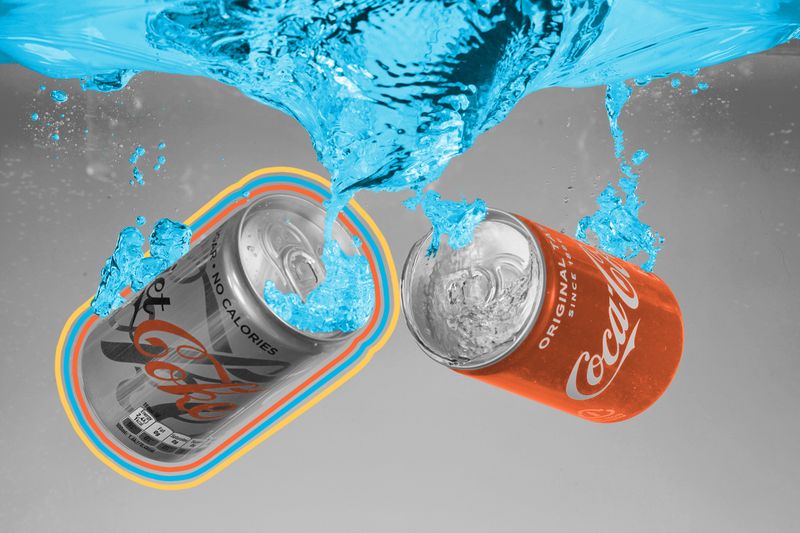
Calories aren’t the only difference between a can of Coca-Cola and a can of Diet Coke. If you were to drop a full, closed can of each into water, you’d observe another distinction: Regular Coke sinks, while Diet Coke floats.
It’s a curious idiosyncrasy given that the two cans seem nearly identical otherwise; they're the same size, contain the same amount of liquid, and use the same aluminum material. This peculiarity comes down to a difference in density, aka how much mass is packed into their given volumes.




Oops, incorrect!
It's a fibAluminum cans are actually highly recyclable. They can be recycled repeatedly without losing much quality, making them one of our most sustainable materials.
A 12-ounce can of regular Coke contains 39 grams of sugar (roughly 10 teaspoons). Diet Coke, though, gets its sweetness from artificial sweeteners such as aspartame. Because that sugar substitute is about 200 times sweeter than the real thing, very little of it — just 0.2 grams per can — is needed to achieve the same taste.
The diet can, then, contains far less dissolved sweetener and therefore weighs a bit less overall. Objects that are denser than water sink while those that are less dense float, and Coca-Cola’s sugar adds enough extra mass to make the can slightly denser than water.

Numbers Don't Lie
More Interesting Reads




The name of the porous volcanic rock that can float is ______.
Ready to reveal?
Confirm your email to play the next question?
The name of the porous volcanic rock that can float is pumice.

Coca-Cola originated as a “wine.”
You may have heard that early Coca-Cola contained cocaine, but in its earliest form, the drink was also an alcoholic beverage. In the 1880s, Georgia pharmacist John Stith Pemberton created a drink called Pemberton’s French Wine Coca, inspired by popular European coca wines such as Vin Mariani that combined coca leaf extract with alcohol.
Pemberton’s tonic contained wine, kola nuts for caffeine, and coca leaves, which naturally contained small amounts of cocaine. It was marketed as a medicinal drink that claimed to boost energy, improve mood, and relieve headaches. But in 1886, shortly after Pemberton debuted his drink, his home base of Atlanta passed prohibition legislation. To continue selling his product, Pemberton removed the alcohol and reformulated the recipe as a soft drink.

Nicole is a writer, thrift store lover, and group-chat meme spammer based in Ontario, Canada.
top picks from the Inbox Studio network
Interesting Facts is part of Inbox Studio, an email-first media company. *Indicates a third-party property.