
Original photo by Yuliya Apanasenka/ iStock
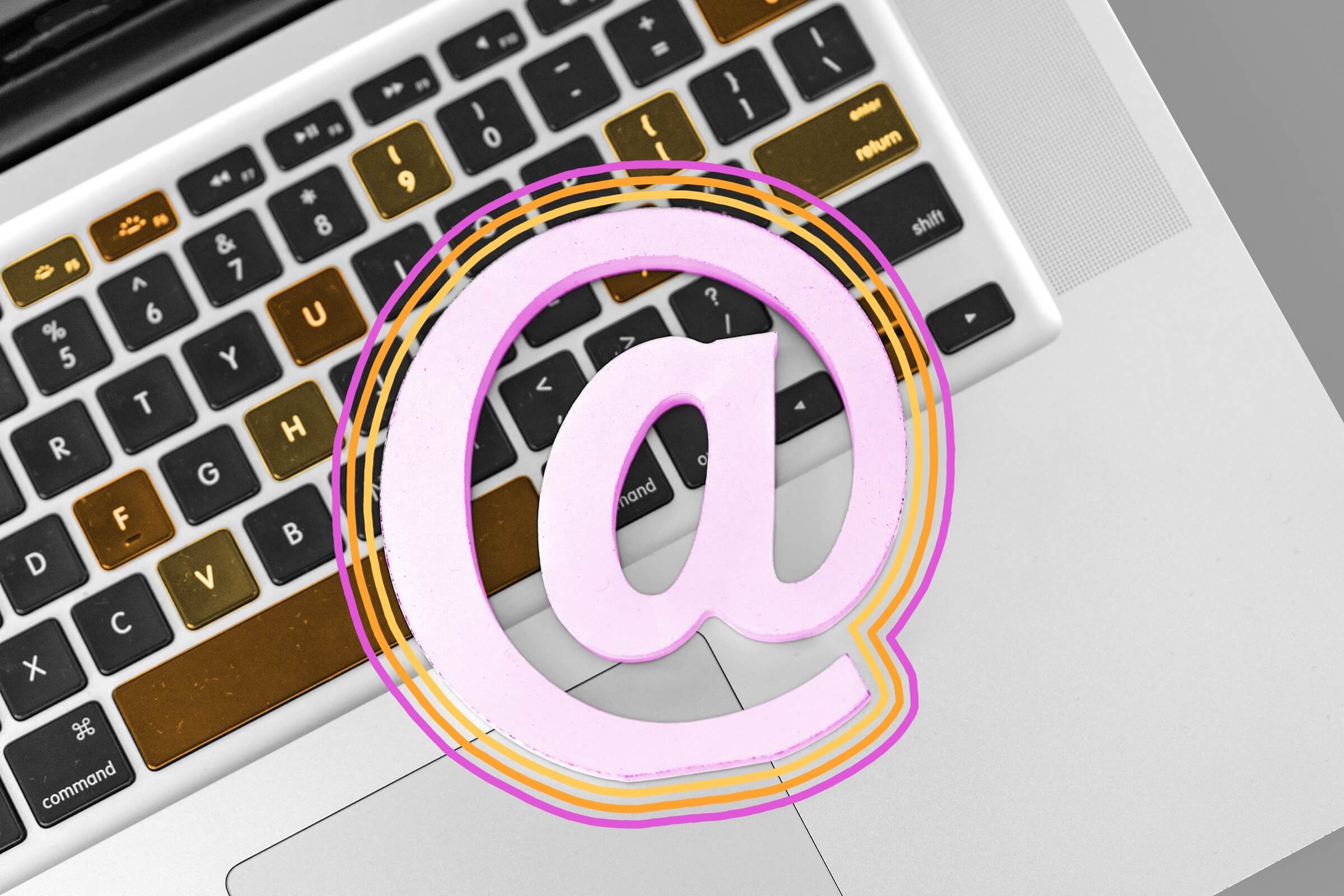
The @ symbol has been in use for centuries, since long before email made it one of the most-typed characters on Earth. The first documented use dates all the way back to a 1536 letter written by an Italian merchant, who used a looping “a” as shorthand for amphorae — a traditional unit of volume roughly equal to a standard clay amphora jar. In other contexts, medieval scribes also used the symbol to mean “at the rate of,” helping to make calculations and bookkeeping more efficient.
As global trade expanded, merchants began using @ in ledgers to indicate price per unit — for example, three barrels @ five florins each. That practical function kept the symbol alive for hundreds of years, even as writing styles, currencies, and languages evolved. The average person, however, rarely encountered it outside of accounting and typewriters.




Oops, incorrect!
It's a fibThe letters “QWERTY” don’t represent words — they are the first six letters on the top row of a computer keyboard.
That changed dramatically in 1971, when computer engineer Ray Tomlinson needed a character to separate a username from a host computer in the world’s first networked email. It had to be a symbol that was rarely used in names, yet widely understood across keyboards. He selected @, a typographic character used by developers that at the time meant “located at” — as in “user at computer.”
More than five decades later, the @ symbol now helps route billions of messages daily and anchors our digital identities across email and social platforms. Not bad for a 16th-century bookkeeper’s shorthand.

Numbers Don't Lie
More Interesting Reads



When it first appeared on a typewriter keyboard, the @ symbol was known as the “______”
Ready to reveal?
Confirm your email to play the next question?
When it first appeared on a typewriter keyboard, the @ symbol was known as the “commercial ‘a.’”

The @ symbol has many nicknames.
Despite its universal function, there is no globally recognized name for the @ symbol. In the U.S., it’s most commonly known as the “at sign,” and in modern computing terminology, it’s called the “commercial at” (formerly “commercial ‘a’”).
Across other languages, the names are far more imaginative. Several countries have nicknames related to monkeys, likely because of the symbol’s swirling tail. German speakers call it “spider monkey” (klammeraffe) or “monkey’s tail” (affenschwanz). Dutch speakers also use “monkey tail” (apestaart), and Polish speakers refer to it simply as “monkey” (małpa).
Some cultures see other animals in the distinctive curves. Danish speakers have two names for the symbol: “pig’s tail” (grisehale) and “elephant’s trunk” (snabel ). In Russia, it’s called “dog” (sobachka), and in Greece it’s “duckling” (papaki). Italians call it “snail” (chiocciola), while Hungarians refer to it as “worm” (kukac).

Kristina is a coffee-fueled writer living happily ever after with her family in the suburbs of Richmond, Virginia.
top picks from the Inbox Studio network
Interesting Facts is part of Inbox Studio, an email-first media company. *Indicates a third-party property.