

Original photo by Nick Russill/ Unsplash

Most modern cars are expertly crafted to protect their occupants from the perils of the road. Yet there was a time in the not-so-distant past when many vehicles were much more unsafe to drive, due to dubious design elements such as lap-only seatbelts and fuel tanks in vulnerable locations. Here are five old-school car features that would never be street-legal today.
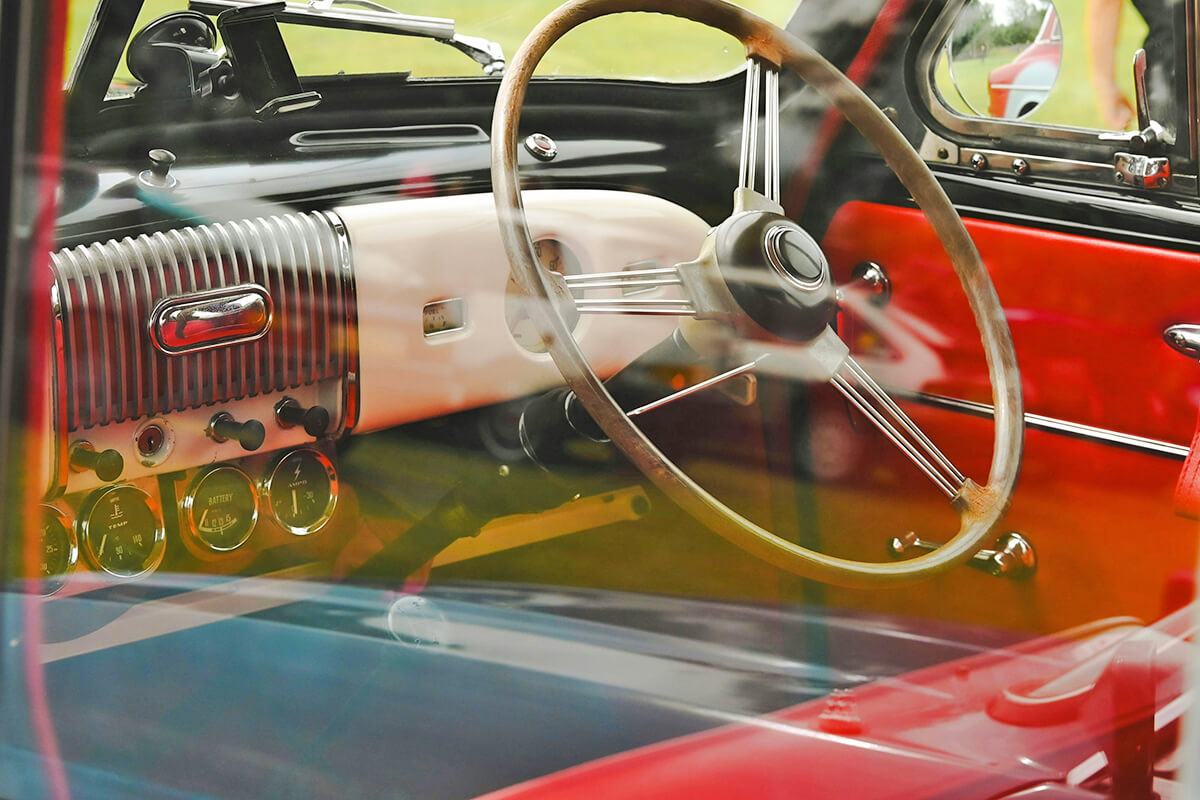
Non-Collapsible Steering Columns
Before the late 1960s, cars came with a non-collapsible steering column — a rigid, one-piece metal shaft that linked the steering wheel directly to the car’s wheels. While these worked just fine for run-of-the-mill daily driving, in the event of a high-speed, head-on collision, the steering columns essentially transformed into steel javelins that could impale the driver.
Given their lack of flexibility, the shafts would transfer all the force from the oncoming collision directly into the driver’s head or chest. Nowadays, cars are often equipped with a collapsible steering column made of multiple parts meant to absorb the force of impact. The safety feature entered widespread production in 1967 thanks to General Motors, and Chrysler and Ford followed suit by the end of the following year.
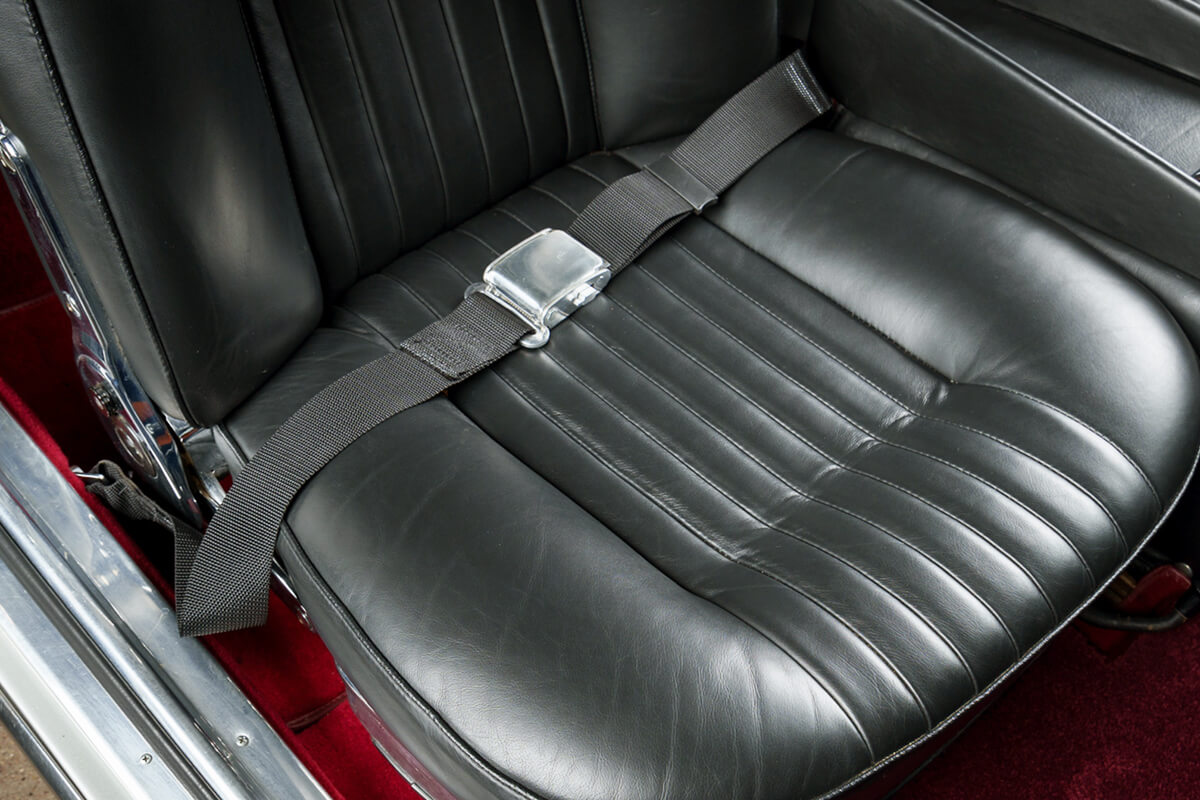
Lap-Only Seatbelts
While the earliest cars didn’t feature any seatbelts at all, lap-only belts weren’t much of an improvement. The design made its debut in communal streetcars in the 1930s and safety belts were later introduced in personal vehicles by Nash Motors in 1949.
Lap belts could save people from being jettisoned out of the car and into the street, but they only restrained the body’s lower half. In the event of an accident, a passenger’s upper torso and head could still lunge forward with great force, potentially causing serious injuries.
In 1955, inventors Roger Griswold and Hugh De Haven filed a patent for a seatbelt that included both a lap and shoulder strap — an early incarnation of what we use today. Nonetheless, lap-only belts remained the standard throughout the 1950s and ’60s. And many passengers often ignored those entirely, as it wasn’t until 1984 that New York became the first state to mandate the use of seatbelts.
Thankfully, the much safer three-point seatbelts began appearing in 1959, thanks to Nils Bohlin of Volvo, who designed them for a new line of Swedish cars. Other manufacturers took note of the improved safety, and seatbelts that went over the lap and shoulder, thus keeping the whole body secure upon impact, became increasingly common throughout the 1970s and ’80s.
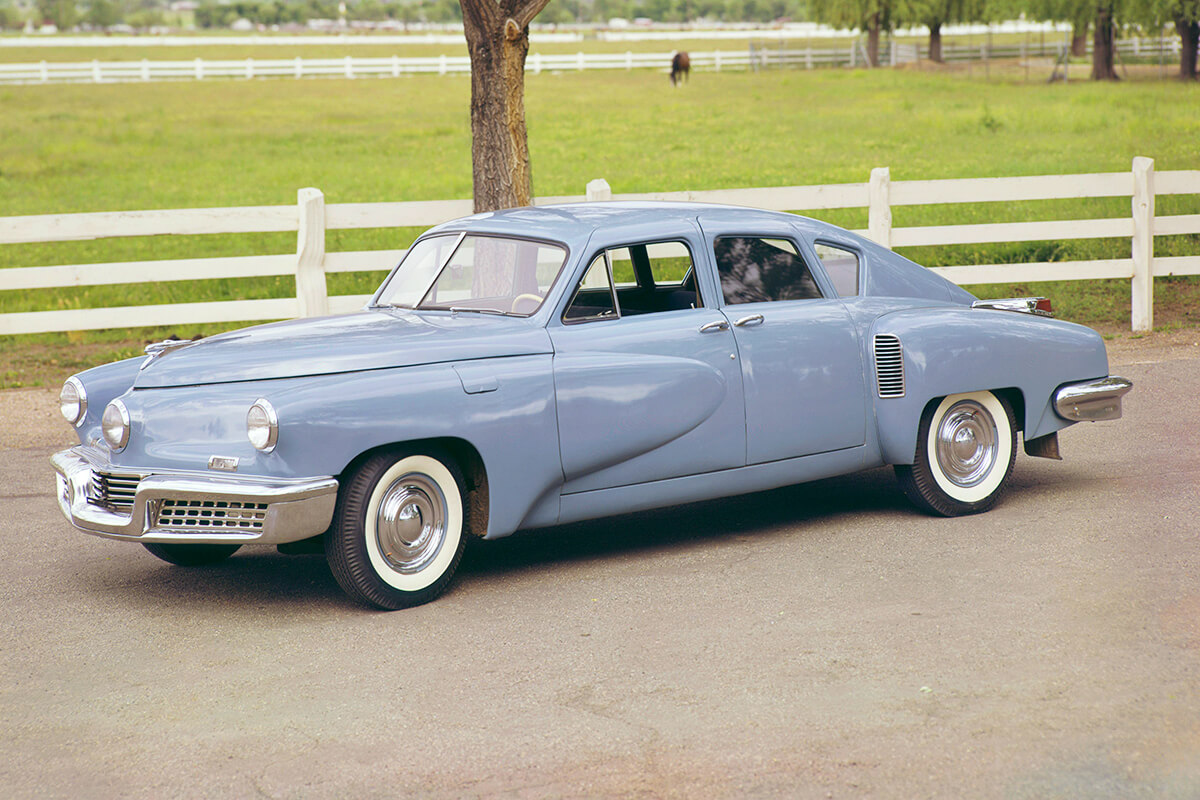
Pop-Out Windshields
The 1948 Tucker sedan was the first vehicle to feature a pop-out windshield — an innovative design element intended to improve safety. The idea was for the windshield to automatically eject after a crash, thus giving passengers an opening to escape if need be, and also avoiding cuts from shattered glass. Or so the thinking went.
There were, however, two major problems with the pop-out window. First, many people didn’t use seatbelts at the time, so they were propelled forward in a high-speed collision. Without any windshield, this meant passengers would be thrown from the car onto the street.
In addition, there was nothing to offer protection from any oncoming debris once the windshield popped out. For example, if a car were to be flipped onto its side, the windshield would fly off and there would be nothing shielding passengers from detritus flying in through the open gap.
This is a far cry from windshields now, which are laminated and designed to stay in place when shattered. Modern windshields also contain a layer of polyvinyl butyral that’s meant to prevent any shattered glass from entering the vehicle even if the exterior glass layer cracks.
More Interesting Reads



Rear-Mounted Fuel Tanks
Starting in the early 20th century, it was common for car manufacturers to place the fuel tank behind the rear axle and adjacent to the bumper. This design trend continued well into the late part of the century, despite posing a clear safety hazard.
A rear-mounted fuel tank was highly vulnerable to any high-speed crashes from behind, as this would force the fuel tank forward into the vehicle’s rear axle, thus potentially causing the tank to rupture and explode. Even minor fender benders posed a serious risk, as a slight bump from behind could cause the tank to malform, rupture, and leak fuel.
This flawed design was highlighted in the 1970s thanks to the Ford Pinto, a model that was taken out of production after just 10 years. There were many instances of cars colliding with Pintos from behind, resulting in a ball of flame. Furthermore, the Pinto car doors were known to jam after accidents, thus preventing occupants from escaping the inferno.
Those incidents helped highlight the fact the need for fuel tanks to be placed in a safer location, which is why manufacturers now put fuel tanks ahead of the rear axle and between the wheels. This provides a buffer from all crashes, whether they impact the car from behind, the front, or the side.
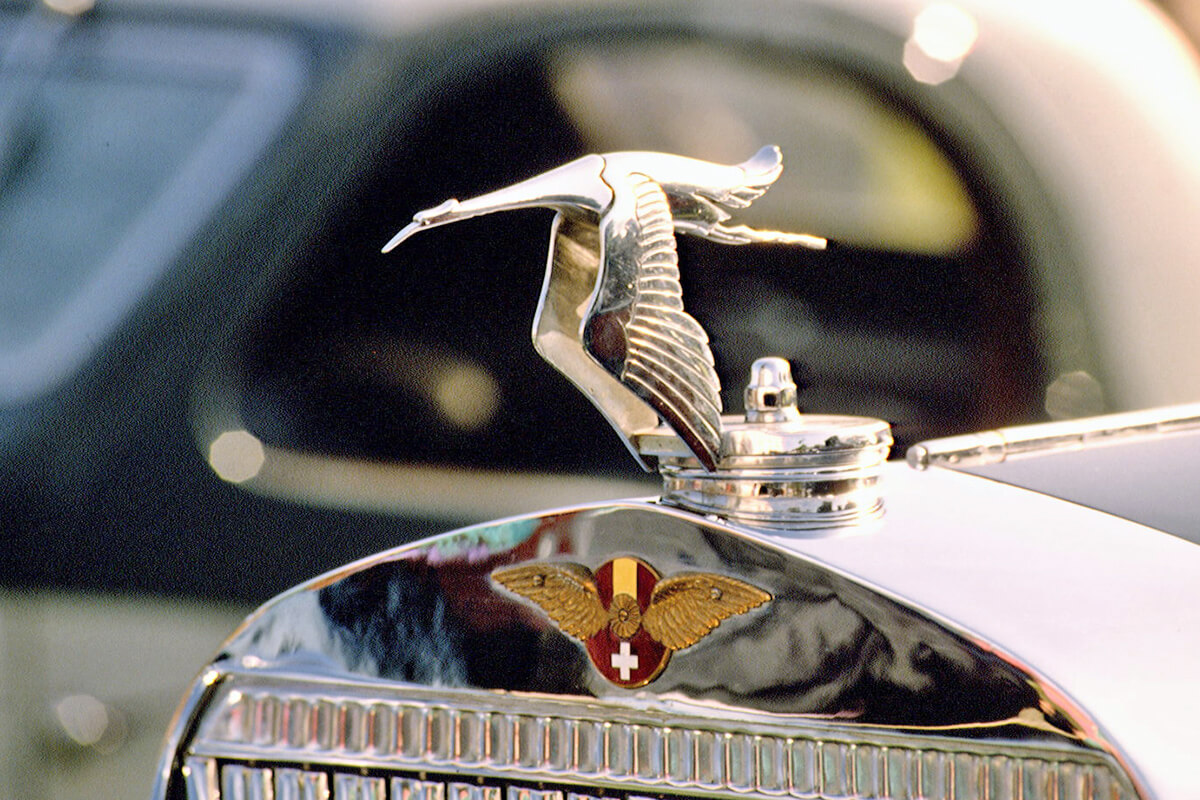
Sharp Decorative Adornments
While some vintage car features posed a danger to the vehicle’s occupants, other features put pedestrians and bikers in harm’s way. One notable example is hood ornaments, which were often hard as steel and featured sharp angles, posing an increased risk to pedestrians who were hit by cars.
Moreover, the hood ornament’s sharp point would stick out above the front bumper and could shatter the windows of oncoming cars in a collision. These concerns motivated carmarkers such as Bentley to design hood ornaments that retracted inside the hood during impact, while other car companies decided to phase them out altogether.
Sleek tailfins — such as the ones on a 1959 Cadillac Eldorado — were another decorative feature that doubled as a safety hazard. With their sharp, rigid edges, the tailfins could scrape, slice, or puncture anything they came into contact with. Today, tailfins are very much a relic of the past, as modern cars feature more rounded exteriors designed to put safety first.

Bennett Kleinman is a New York City-based staff writer for Inbox Studio, and previously contributed to television programs such as "Late Show With David Letterman" and "Impractical Jokers." Bennett is also a devoted New York Yankees and New Jersey Devils fan, and thinks plain seltzer is the best drink ever invented.
top picks from the Inbox Studio network
Interesting Facts is part of Inbox Studio, an email-first media company. *Indicates a third-party property.