

Original photo by indianeye/ iStock
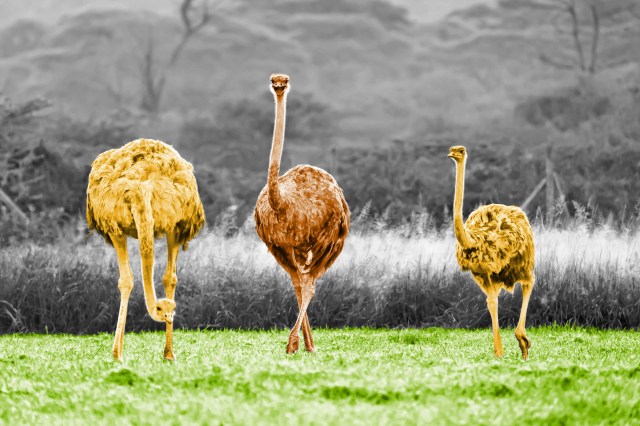
The world’s biggest birds can be ranked in various ways: by weight, height, or wingspan — and then there’s the question of whether or not to include flightless birds. Penguins, for example, are quite bulky, but no penguin species can fly. Conversely, the wandering albatross is an exceptional flyer with an immense wingspan of up to 12 feet, but it weighs only about as much as a human toddler.
We decided to look at the world’s avian heavyweights by mass alone, regardless of whether or not they can fly. Our only requirement is that the bird in question must still exist, as extinct species are a whole different ball game.
Take, for example, the Vorombe titan, a species of elephant bird that once lived in Madagascar before going extinct some 1,000 years ago. That colossal bird stood as tall as 9 feet 10 inches and had an estimated weight of around 1,800 pounds — far larger than any bird living today.
Here, then, are seven of the heaviest birds roaming the Earth today, ranked in ascending order by mass, from impressively large to heavier (and taller) than an average human.
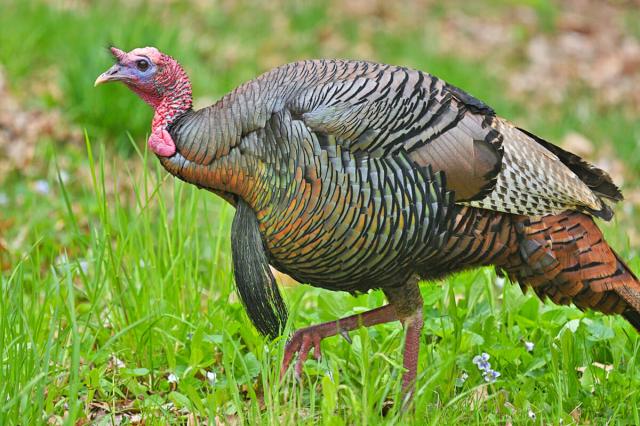
Wild Turkeys
The wild turkey holds the distinction of being among the heaviest flying birds in the world. Unlike their domesticated counterparts, they’re surprisingly agile and swift fliers, despite reaching weights in excess of 25 pounds.
According to the National Wild Turkey Federation, the largest wild turkey on record — harvested by a hunter in Kentucky — weighed a mighty 37.61 pounds, about twice the size of the turkeys typically placed on a Thanksgiving table. Wild turkeys manage to gain all that bulk through opportunistic foraging and a varied, omnivorous, and protein-rich diet that includes berries, acorns, nuts, seeds, insects, and small reptiles.
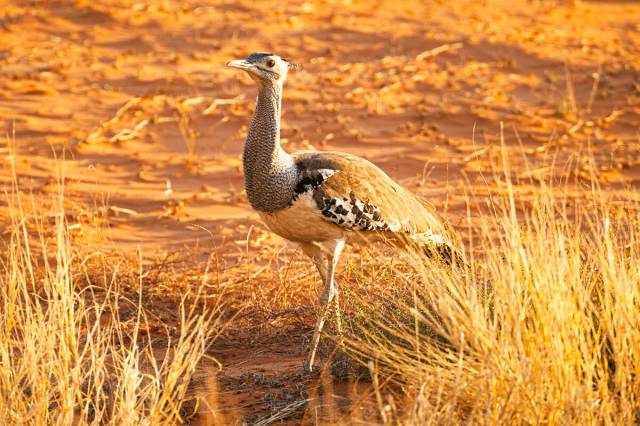
Kori Bustards
Africa’s kori bustard is the world’s heaviest flying bird, with males weighing up to 40 pounds (females are much smaller, averaging 11 to 13 pounds). Unsurprisingly, the kori bustard expends a lot of energy to fly, so it remains on the ground most of the time and only takes to the air when necessary — typically to avoid predators.
When flight is required, the birds use their long legs to get a running start and take to the air with powerful wing beats (using their 7-to-9 foot wingspan) before transitioning to slower, steadier flaps once airborne. Keeping low to the ground, kori bustards typically land soon after taking off, normally within sight of their launch.
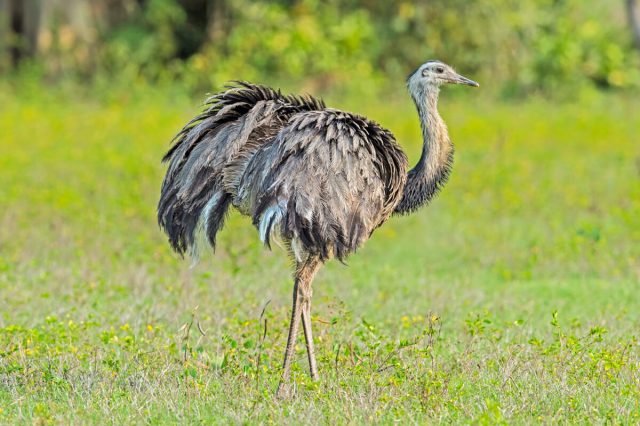
Greater Rheas
The greater rhea is South America’s largest bird, standing up to 5 feet tall and weighing between 33 and 66 pounds. These birds, which are related to ostriches and emus, roam the grasslands and pampas of Argentina, Bolivia, Brazil, Paraguay, and Uruguay. They’re completely flightless, using their long, powerful legs to outrun predators such as cougars and jaguars.
Greater rheas have unusually long wings for flightless birds. While useless for flight, the wings are important for balance and for changing direction while running at speeds of up to 40 miles per hour. The birds are also excellent swimmers, using their legs, necks, and wings to cross rivers and marshes with surprising grace and ease.
More Interesting Reads


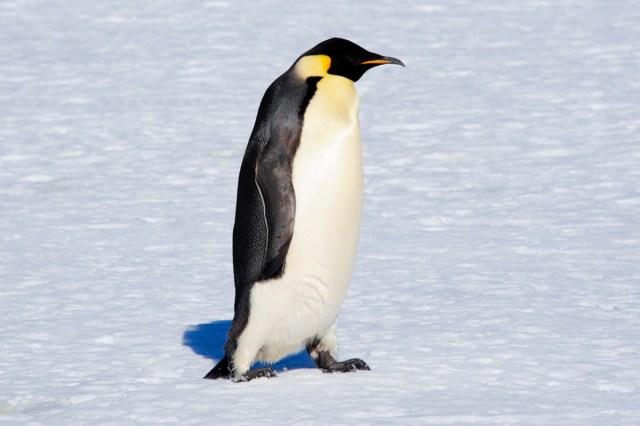
Emperor Penguins
The emperor penguin is the heaviest of all the penguin species. Adults stand at around 43 to 47 inches tall and can weigh as much as 100 pounds, though weights vary greatly by sex and season. During the brutal Antarctic winters, emperor penguins need all the blubber they can muster to insulate themselves from the extreme cold, and they huddle together in tightly packed groups to keep warm.
Of course they are, like all penguin species, flightless — and they’re not particularly adept at walking, either, often displaying a comical clumsiness on land. But emperor penguins excel in the water: They’re exceptional swimmers, capable of diving deeper and for longer than any other bird.
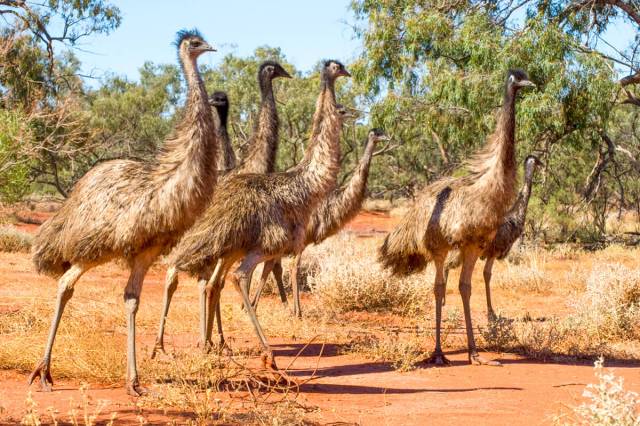
Emus
The emu is Australia’s largest native bird and the second-tallest bird in the world (but third in terms of overall bulk). They can reach heights of more than 6 feet tall, and the largest specimens weigh as much as 120 pounds.
Unlike greater rheas, emus have tiny vestigial wings that are only about 7 inches long. Flying is certainly not an option, making running their way of life. Using their powerful legs, emus are capable of sustained speeds of at least 30 miles per hour and even faster short sprints — with each stride nearly 9 feet long. Emus use their strong legs, heavy feet, and sharp nails to defend themselves from predators, while also relying on their impressive agility when surprised — they can jump 7 feet straight up to escape trouble.
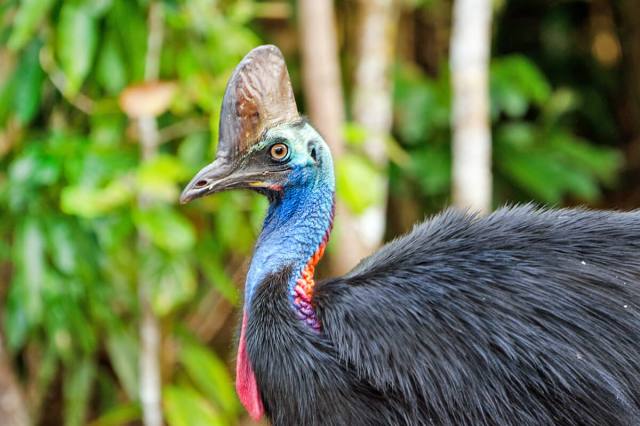
Southern Cassowaries
Weighing up to 170 pounds and reaching heights of 6 feet, the southern cassowary is the second-heaviest bird in the world. Found in Australia, Indonesia, and Papua New Guinea, these massive flightless birds have a distinct appearance, with bright blue faces, red wattles, and a prominent, helmet-like casque atop their heads.
These are shy, solitary birds, living alone in rainforests and only coming together when it’s time to breed. While not inherently aggressive, they are territorial and will attack if provoked or angered — and when a cassowary gets mad, it doesn’t hold back.
Widely considered the world’s most dangerous bird, the southern cassowary has incredibly powerful legs and a 4-inch, dagger-like claw on its middle toe. When threatened, they’re capable of delivering devastating kicks and slashes, including to humans, although attacks are rare and fatalities even rarer.
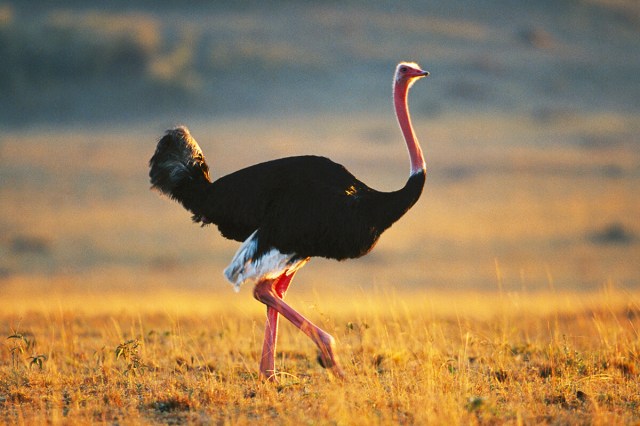
Common Ostriches
The common ostrich is the undisputed heavyweight of the avian world. Adult ostriches typically weigh between 250 and 300 pounds and can reach heights of up to 9 feet. (Females tend to be shorter, closer to 6 feet.) Native to Africa, these birds are well-suited to the continent’s dry, open landscapes, having sacrificed the ability to fly for incredible speed on land.
Ostriches are the world’s fastest animals on two legs, capable of sprinting at 43 mph and maintaining a cruising speed of 30 mph for 10 miles. An ostrich’s kick, meanwhile, is so powerful it can kill a lion.
Being such big birds, they also lay big eggs — the biggest eggs of any living animal, in fact. The largest ostrich egg ever recorded weighed a whopping 5 pounds 11 ounces.
You may have heard tell of ostriches burying their heads in the sand when they’re scared, but that’s just a myth. That common misconception likely arose because ostriches dig shallow holes as nests for their eggs, and when they use their beaks to turn the eggs, it appears as though they’re sticking their heads in the sand.

Tony is an English writer of nonfiction and fiction living on the edge of the Amazon jungle.
top picks from the Inbox Studio network
Interesting Facts is part of Inbox Studio, an email-first media company. *Indicates a third-party property.