What’s the biggest brain in the animal kingdom? If we’re talking sheer size, there’s a clear winner: the sperm whale. Typically about 18 pounds, the brain of this cetacean weighs nearly six times more than the bundle of neurons and gray matter between your own ears.
However, this doesn’t mean the sperm whale is the smartest animal. When it comes to intelligence, size isn’t everything. The overall size of the brain compared to an animal’s body (known as the brain-to-body-mass ratio) can be a strong indicator of intelligence, but other factors such as brain structure and neuron density can have an even bigger impact on an animal’s smarts. A sperm whale, which weighs around 45 tons, has a brain-to-body-mass ratio of only around 1:5,100. Humans, on the other hand, have a far more impressive ratio of 1:40. Here are five of the biggest-brained creatures on Earth relative to their size.
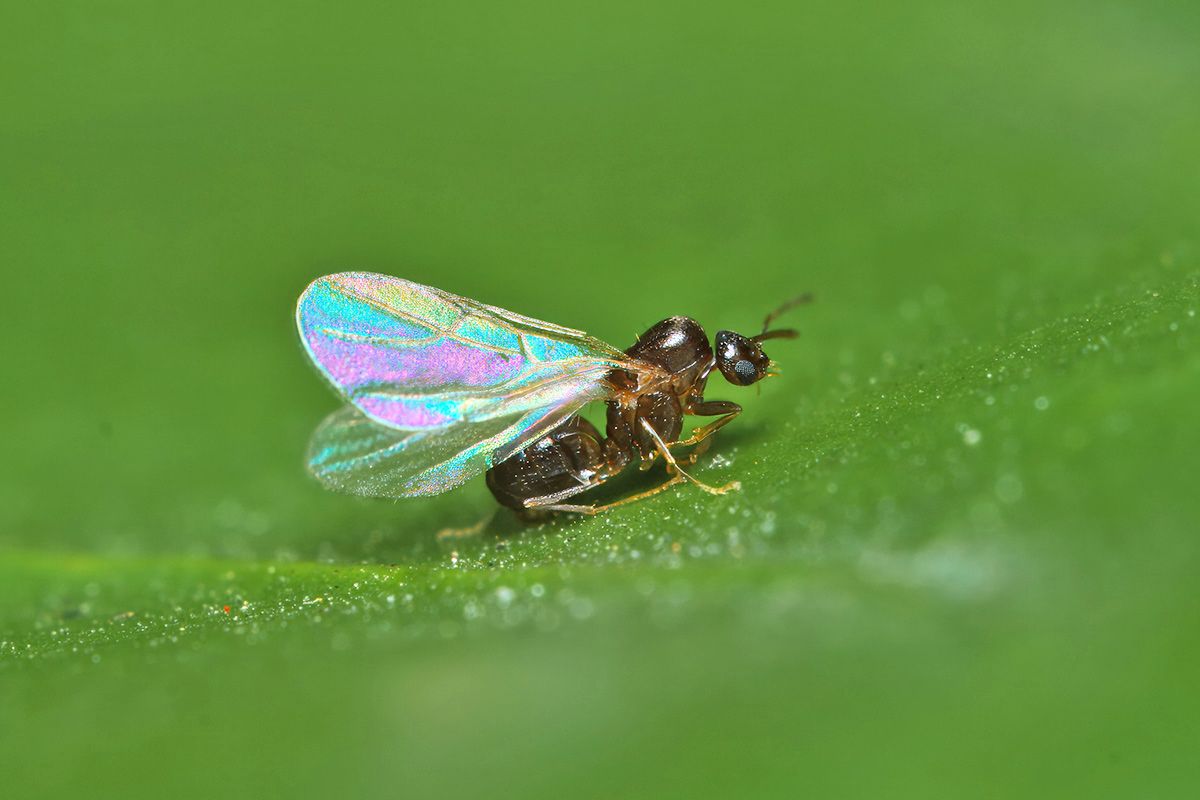
While the world’s largest brain belongs to one of the biggest animals on the planet, the animal with the largest brain-to-body ratio is decidedly on the other end of the spectrum. Brachymyrmex is a genus of ant that contains some 44 different species. According to a 2009 study in the journal Brain, Behavior, and Evolution, this genus sports the largest brain of any organism relative to its body size, at a staggering 1:8 ratio. Of course, these are still very small brains, weighing only 0.006 milligrams, but the size is proportionally huge when compared to the ants’ overall body mass of just 0.049 milligrams.
As for intelligence, although a single ant’s brain contains only 250,000 neurons (a human brain contains roughly 86 billion), entomologists recognize ants — along with bees and termites — as some of the smartest insects in the world.
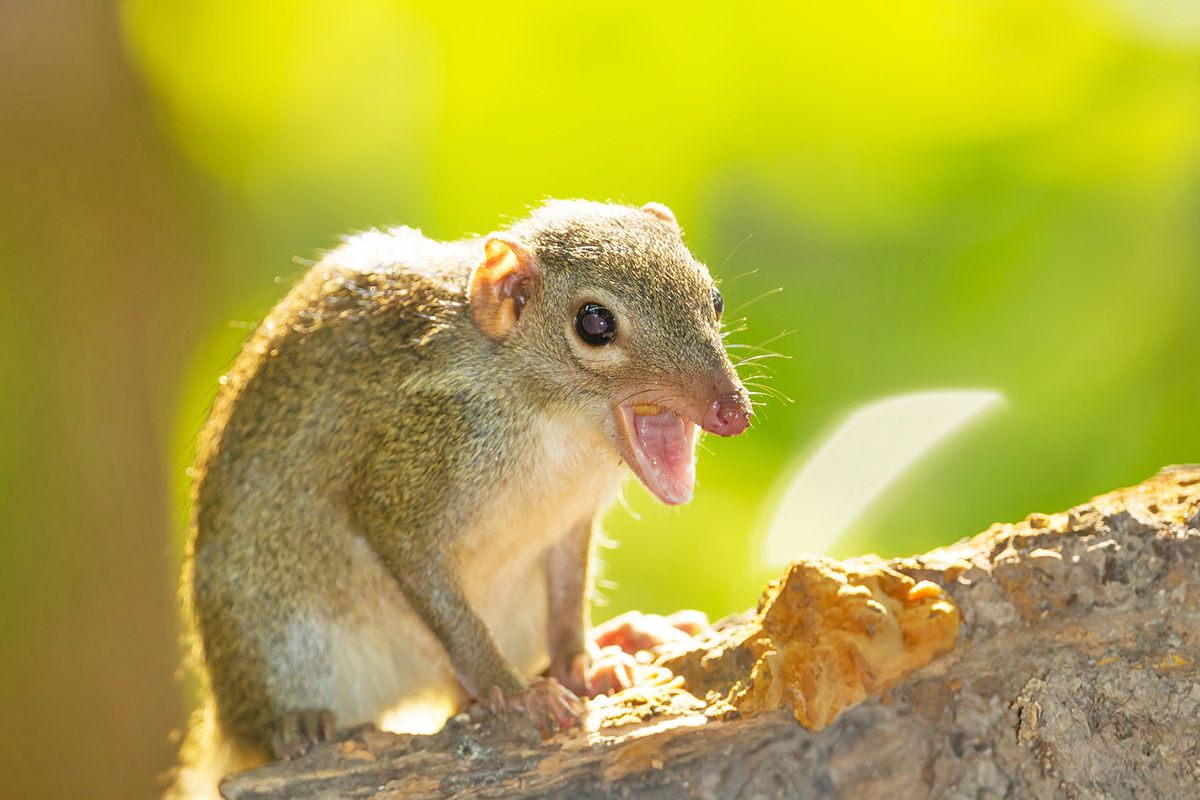
With its brain making up roughly 10% of its body weight, the treeshrew has the biggest brain-to-body-mass ratio of any mammal on Earth. Although treeshrews look like rodents, the animal is actually more closely related to primates. In fact, a treeshrew’s hands and feet, which are well adapted for grasping, are evidence of this close primate relationship.
Primates are some of the smartest animals on the planet, and treeshrews similarly possess a few impressive cognitive abilities. A 2017 study analyzing an adult treeshrew’s mind found the animal possessed higher brain functions, such as spatial learning and social emotion. The creature also showed signs of mild brain folding, similar to the folds found in the human brain, which result in an increased neuron surface area.Rodent brains, on the other hand, were smooth by comparison.
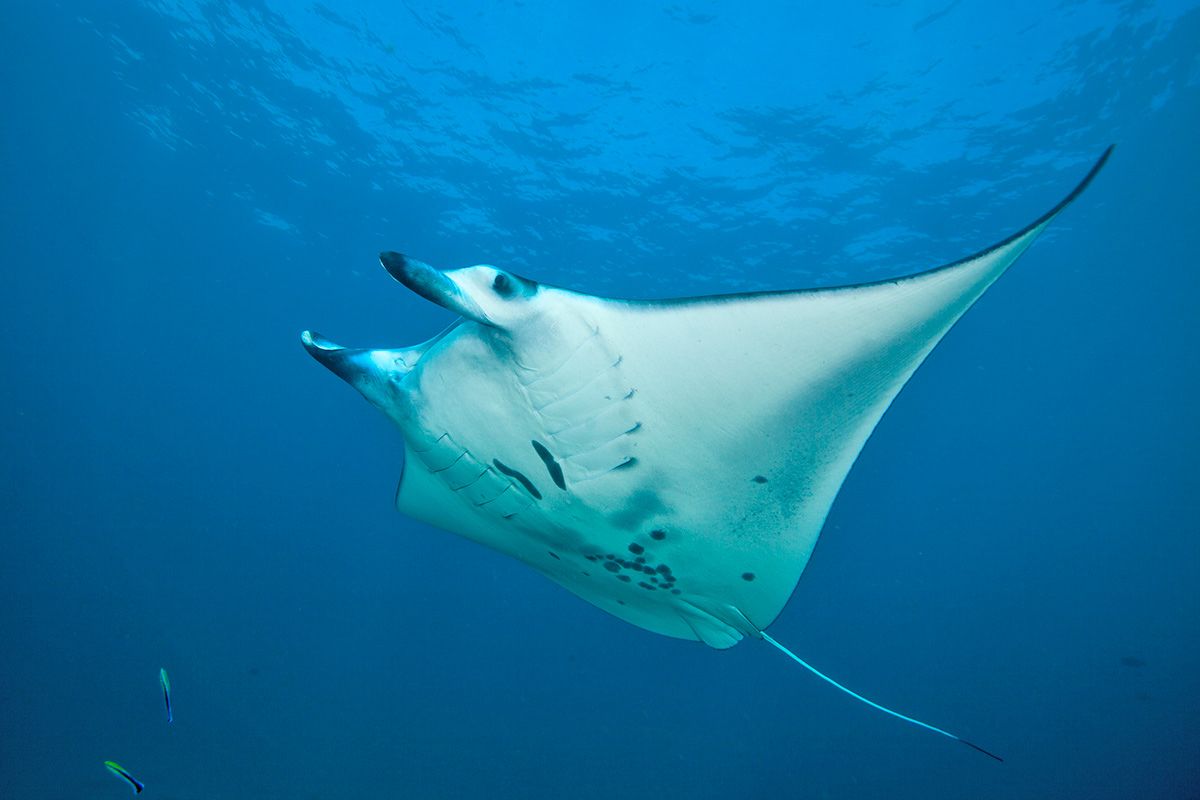
Mammals and birds typically have brains 10 times larger than bony fish of a similar body size. However, some aquatic denizens, most notably the manta ray, are the exceptions. With a brain roughly the size of a fist, the manta ray has the highest brain-to-body-mass ratio of any other fish.
That brain gets put to good use: A 2016 study testing a manta ray’s intellectual capabilities found the animals displayed human-like self-awareness by accurately identifying themselves in a mirror. Rays also hunt in groups, which suggests a sophisticated level of social intelligence, and they’ve displayed the ability to map their environment using sight and smell while also retaining an impressive long-term memory.
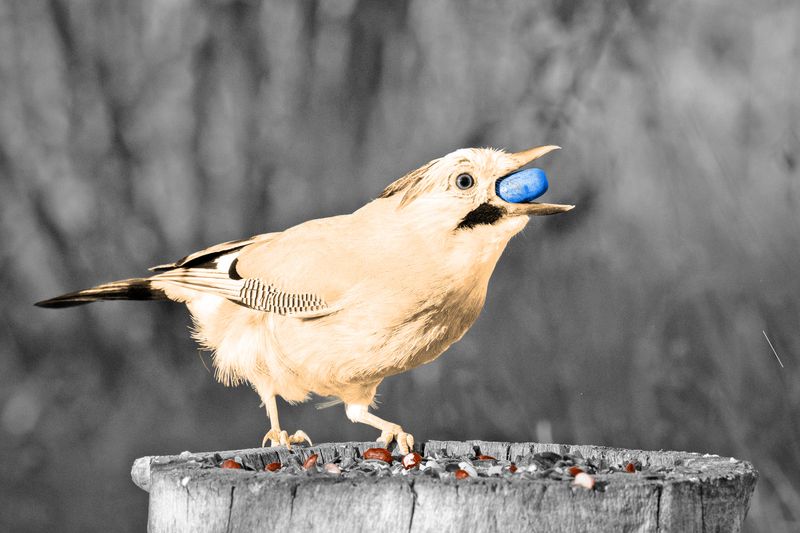
When it comes to our feathered friends, corvids — crows, ravens, magpies, and jays — have the highest brain-to-body-mass ratio of any birds at around 1:33. The intelligence of corvids, particularly ravens and crows, has been well-documented in several studies. These animals are capable of incredible mental feats, including the use of tools — a skill once believed to be unique to primates.
One 2020 study reported that ravens, for example, possess the cognitive abilities of a full-grown great ape by just 4 months old, and that at full maturity, a crow’s capacity for problem-solving rivals that of a 7-year-old human. Corvids have also displayed the ability to plan for the future, another cognitive task typically believed to be exclusive to humans and some primates.
The human brain is a remarkable piece of biological engineering, even if the treeshrew’s got us beat on sheer brain-to-body-mass ratio for mammals. But with a ratio of 1:40, we still have a whole lot of brainpower compared to most animals. That’s partly because the human brain contains far more neurons in the cerebral cortex — the part of the brain associated with higher brain function — than other animals. In fact, we have three times as many neurons as the runner-up, elephants. Indeed, humans have the largest cerebral cortex-to-body-mass ratio of any mammal, which explains why we’re the brainiest creatures on the planet.
Darren Orf
Writer
Darren Orf lives in Portland, has a cat, and writes about all things science and climate. You can find his previous work at Popular Mechanics, Inverse, Gizmodo, and Paste, among others.
Advertisement
top picks from the Inbox Studio network
Interesting Facts is part of Inbox Studio, an email-first media company. *Indicates a third-party property.
Innovation doesn’t always follow a straight line. Some of history’s most famous inventions, including the microwave, were born from accidents. Others, though not strictly accidental, ended up serving a completely different purpose than originally intended — such as the blood pressure medication that ended up becoming a famous hair loss remedy.
These inventions, though all surprising in their own way, share some commonalities: ingenuity, adaptability, and a keen eye for potential. While their creators may not have set out to change the world in the ways they ultimately did, they recognized and seized the opportunities that lay before them. Here are five inventions whose original purposes were completely different.
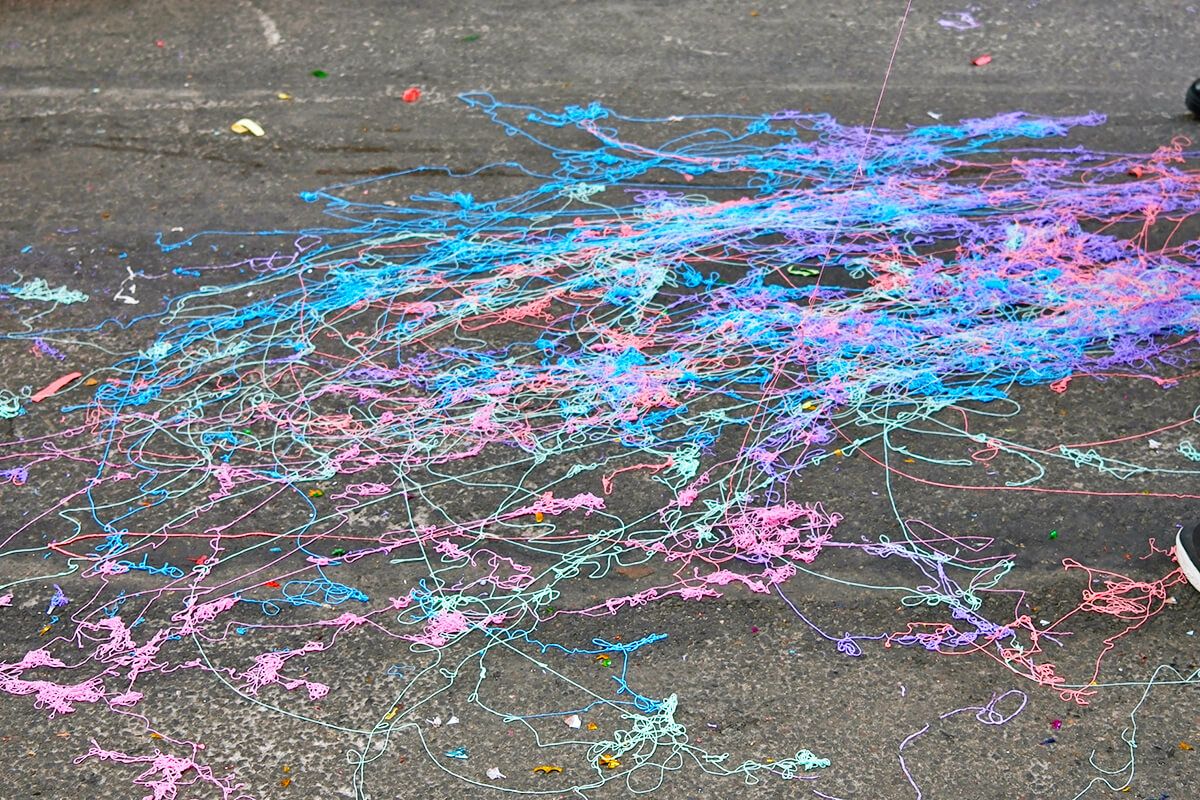
Silly String may be a nostalgic party staple now, but it was originally a medical product. In the 1960s, chemist Robert P. Cox and inventor Leonard A. Fish set out to create an instant spray-on cast for broken bones. During their experiments, which included testing upward of 500 different spraying vessels, they discovered the material could be sprayed in long, sticky strands from a certain pressurized can.
The pair saw the potential in their silly substance and brought it to California toy company Wham-O, home to such popular toys as the Frisbee and the Slip ‘N Slide. The meeting didn’t exactly go as planned. Cox and Fish excitedly demonstrated the spray to — and on — the Wham-O employee, and they were subsequently asked to leave.
The following day, however, the eager inventors were asked to send 24 cans to Wham-O for a second look. Despite being reformulated over the years to comply with changing regulations — notably the 1978 U.S. ban on Freon as a propellant — Silly String has remained a staple on store shelves ever since. According to Cox’s 2008 obituary, he couldn’t help but feel a bit frustrated that, of all his endeavors, it was his silliest invention that ultimately took off.
Anyone who’s cleaned Play-Doh out of carpet or picked up all its little crumbs knows how messy it can be, so it may come as a surprise that it was originally used as a cleaner. In the 1930s, Cincinnati-based soap manufacturer Kutol began making its own version of a doughy putty used to remove soot from wallpaper. This was a common need at a time when homes were still primarily heated by coal furnaces, and after Kroger stores agreed to carry Kutol’s wall cleaner, the once-struggling company found new footing. But by the end of World War II, homes largely switched to gas and oil heating, and demand for the cleaner began to wane.
By the 1950s, the company had yet again fallen on tough times. But its fate turned once more after a Kutol executive’s sister-in-law, Kay Zufall — who also happened to be a nursery school teacher — suggested repurposing the dough as a children’s toy.
With a few tweaks to the formula and the introduction of bright red, blue, and yellow colors, the rebranded product was launched as Play-Doh. It was first sold to Cincinnati schools in single-gallon cans; three-packs of smaller jars were introduced for retail sale in 1956. It was a smash hit: By 1958, the company, which just four years prior was barely cracking $100,000 in annual sales, was raking in nearly $3 million yearly. In the mid-2010s, it was estimated that more than 3 billion cans of the stuff had been sold around the world since its debut as a toy.
Listerine’s minty burn wasn’t always meant to freshen breath. When the product was created in 1879 by surgeon Joseph Lawrence in St. Louis, Missouri, it was intended as a surgical antiseptic. Its name was even an homage to British surgeon Joseph Lister, who pioneered sterile surgery in the 1860s.
In the 1880s, Lawrence was working with pharmacist Jordan Wheat Lambert to sell the product. Doctors sang its praises, claiming it effective against everything from ulcers to gonorrhea. By the 1890s, Listerine was officially being marketed for uses beyond the doctor’s office, primarily to dentists as a “perfect tooth and mouth wash,” as advertisements of the time touted.
Throughout the ensuing years, Listerine’s uses varied. At different times it was marketed as a floor cleaner, a cure for dandruff, and even an elixir for sore throats, coughs, and colds — it was only in 1975 that the U.S. Federal Trade Commission ordered the company to stop falsely claiming that health purpose.
Its most lucrative market, however, was established in the 1920s, when the Warner-Lambert pharmaceutical company began advertising Listerine to treat “halitosis,” aka bad breath. Listerine’s ads painted this fairly minor affliction as a troublesome medical condition for which they had the cure. The campaign was so successful that not only did Listerine emerge and remain best known as a mouthwash, but the phrase “halitosis appeal” became standard marketing speak to refer to the use of fear to sell a product.
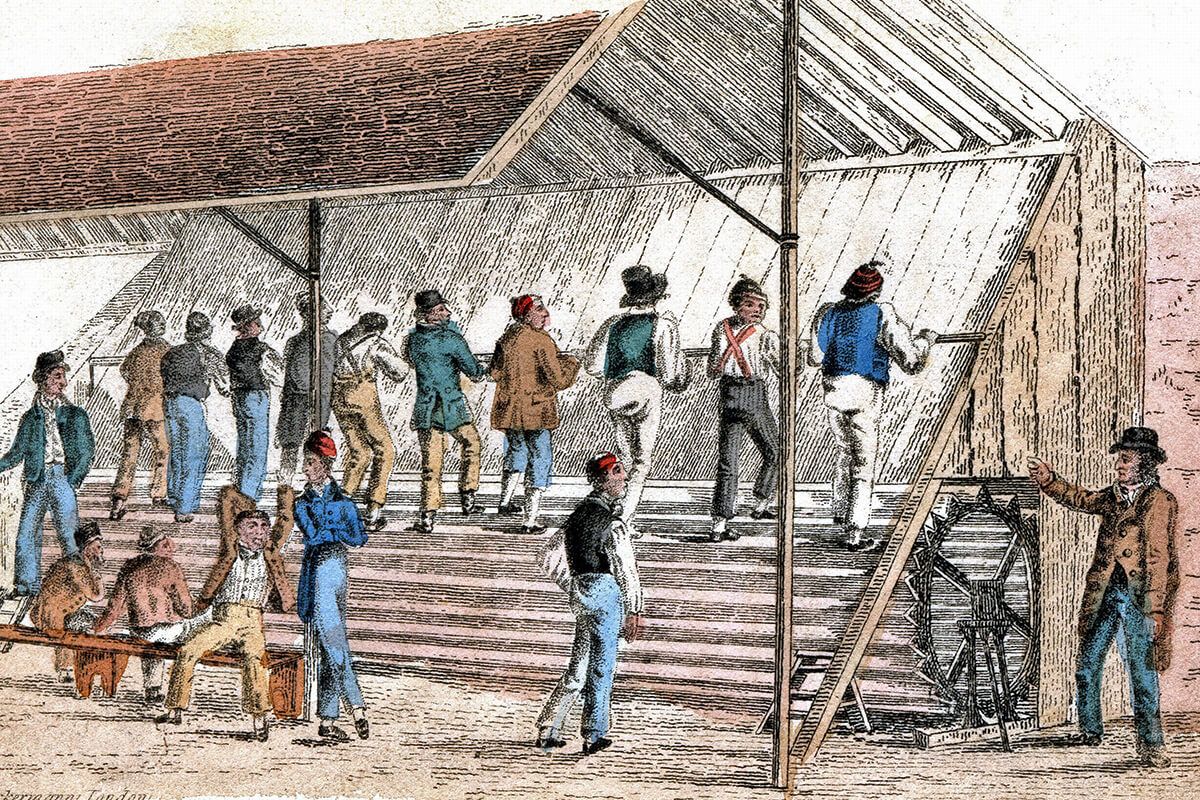
We know treadmills as a modern fitness staple that, depending who you ask, are more pain than pleasure. This is somewhat fitting, given the exercise tool’s punishing origins. In the early 19th century, British engineer William Cubitt designed the first treadmill as a form of prison labor. Inmates, often in groups, were forced to walk on large rotating wheels for upward of eight hours a day. The wheel power was typically used to grind grain or pump water, supposedly making it a productive means of punishment designed to rehabilitate prisoners.
By the early 20th century, treadmills had been abandoned in prisons. But as heart disease started to skyrocket in the U.S., doctors began rethinking the machine, first as a testing tool for cardiovascular performance.
American doctor of medicine Kenneth Cooper used treadmills in the 1960s to test endurance in pilots, and in 1968, his book Aerobics promoted running as a way to prevent heart disease. The work inspired New Jersey engineer William Staub, who built his own treadmill — a simple, compact motorized machine — and in the 1970s, his PaceMaster treadmill brought indoor running to the masses.
Rogaine has long been a popular hair loss treatment, but that use was discovered as a happy side effect of another drug. Its evolution began in the 1950s, when chemists at the Upjohn pharmaceutical company — also responsible for developing Xanax and Motrin before being acquired by Pfizer — developed a drug called minoxidil to treat ulcers, which was later found to lower blood pressure. In the 1970s, the FDA approved minoxidil as an oral blood pressure medication, and patients who took the drug began noticing increased hair growth as well.
As the unexpected side effect became more widely known, Upjohn acted before competitors could, refining minoxidil into a topical solution. In 1988, the FDA approved the newly named Rogaine as a prescription first for men and eventually for women (three years later). In 1996, Rogaine became available over the counter.
When it was initially released, there was some skepticism about whether the product could live up to the hype — it wasn’t a miracle cure for hair loss, after all. Upjohn focused on marketing directly to consumers instead of doctors, namely with aggressive television and magazine campaigns. As a result, sales grew from around $67 million in 1989 to $140 million in 1990. As of 2020, an estimated 2.87 million Americans counted themselves as Rogaine customers.
Nicole Villeneuve
Writer
Nicole is a writer, thrift store lover, and group-chat meme spammer based in Ontario, Canada.
Advertisement
top picks from the Inbox Studio network
Interesting Facts is part of Inbox Studio, an email-first media company. *Indicates a third-party property.
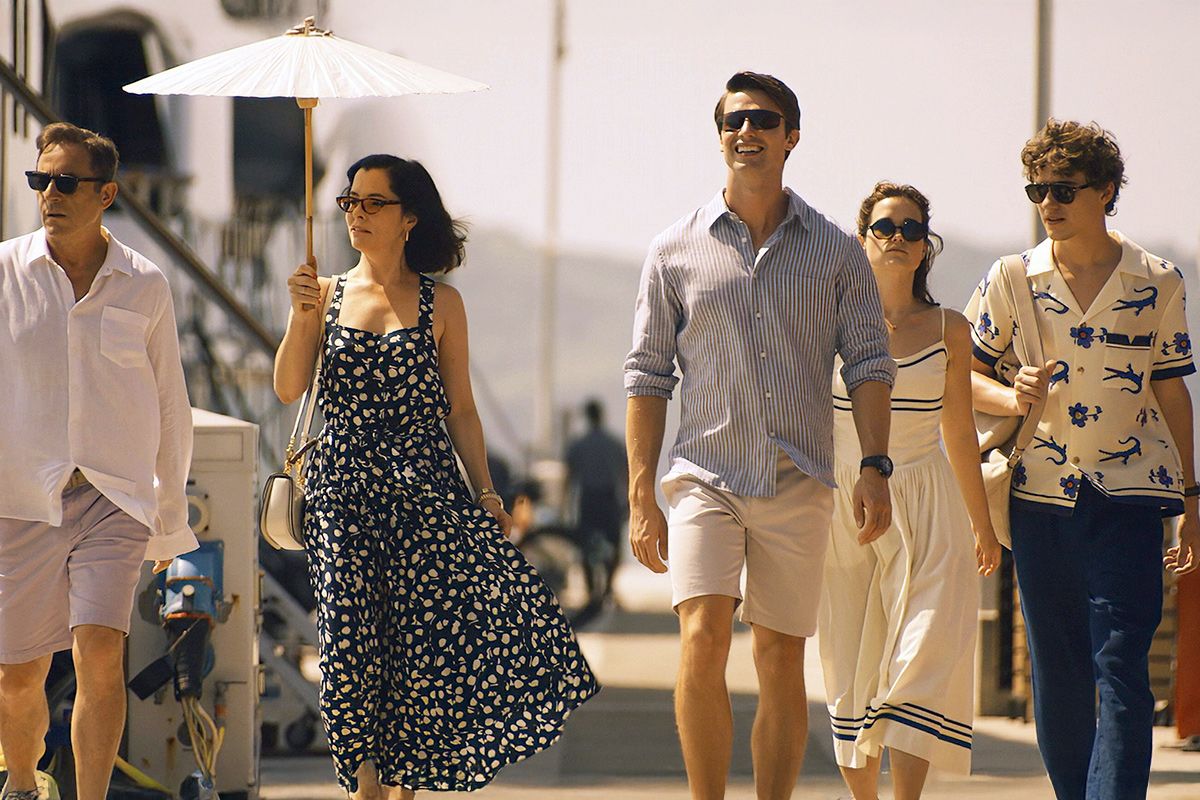
The beloved HBO series The White Lotus has gathered a devoted following, sparking a cultural buzz reminiscent of the days of “water cooler” discussions about the latest must-see TV. Each season explores the lives of guests and employees at the eponymous fictional chain of luxury resorts, ultimately revealing dark truths about these idyllic locales and the lives of the people they attract.
The show’s third season took place in Thailand, and its finale aired on April 6, 2025, resulting in mixed feedback among fans. But no matter your thoughts on the overall narrative, you may be left with one question in particular (warning: spoilers ahead!): Is the poisonous fruit from the show real, and if so, is it actually deadly?
Let’s take a look at the fruit known throughout Southeast Asia as pong pong, which played a key role in the recent White Lotus finale.
In the last episode of season 3, “Amor Fati,” the character Lochlan (portrayed by Sam Nivola) nearly dies after inadvertently consuming seeds from the poisonous pong pong fruit. The seeds had been left in a blender by his father, Timothy (Jason Isaacs), who considered offing his whole family before getting cold feet. But Timothy didn’t think to clean out the remnants of the blender before Lochlan made a protein shake the next morning, resulting in a nearly fatal accident. These events were not entirely the stuff of fiction: The pong pong fruit is indeed very real, and potentially lethal if eaten.
The pong pong tree is native to Thailand and other parts of Southeast Asia, as well as India, various Pacific Islands, and the state of Queensland in northeastern Australia. The plant is biologically classified as Cerbera odollam and, as mentioned in the show, is sometimes referred to by the morbid moniker the “suicide tree.”
Pong pong trees typically grow to nearly 40 feet tall, naturally occurring in forests and on Pacific shorelines. They’re also popular pieces of ornamental vegetation, providing shade and flowers that produce a pleasant jasmine-like scent. Those flowers also help to easily identify a pong pong tree, as the blooms each have five small, white petals with a yellow hole in the center.
But in addition to these delightful florals, pong pong trees are also the source of the notorious fruit in question. Visually, an immature pong pong fruit looks much like an unripened mango, with a greenish color and a slightly oblong rounded shape. As the fruit ripens, it develops a brownish-black color, ultimately turning reddish-purple when it matures. But it’s not the rind you have to worry about — it’s what’s inside.
If you stumble upon a pong pong fruit in the wild, there’s no risk in touching or smelling the exterior. The danger is contained within the fruit’s seeds, which contain a toxin called cerberin that may prove fatal in as little as four hours after being consumed. Cerberin is known to disrupt cardiac activity, including slowly the heart rate and potentially leading to cardiac failure.
Matthew Badgett, a doctor of internal medicine at the Cleveland Clinic, warned of these risks in an interview with Everyday Health, saying, “One seed from the pong pong fruit can be fatal, and half seeds have been shown to make people very sick and cause abnormal heart rhythms … it’s likely that two seeds or one whole fruit (including seeds) could very likely kill a person.”
Despite the show’s heightened drama, The White Lotus accurately portrayed what it would be like to consume pong pong seeds — for the most part. The seeds have a bitter taste and may be mixed into beverages to cover their acrid flavor, so Lochlan’s smoothie could feasibly have masked the taste of the seeds. And Joshua King, the medical director at the Maryland Poison Center, noted in an interview with TIME that vomiting, as Lochan did shortly after ingestion, is a common reaction to consuming the toxin.
Another thing the show got right was that Lochlan wouldn’t have necessarily died after consuming the seeds. Eating trace amounts isn’t always fatal, but it can induce sickness. Also, people react quite differently to the same amount of toxin depending on body mass: A half seed may be enough to kill a smaller person, while that same amount may only induce serious illness in someone larger. That being said, it is unlikely that Lochlan would have been unscathed without any medical intervention.
The most unrealistic aspect of the White Lotus portrayal was how quickly Lochlan’s symptoms set in. Experts say it would likely take at least an hour for symptoms to show after consuming the toxin, and in some instances, symptoms don’t appear for as many as 15 hours.
If someone does consume the toxic pong pong fruit, it’s imperative they seek medical help immediately. While the poison can’t be removed from the blood system, certain medications can counteract its effects, such as atropine, an antidote often used for cardiac resuscitation after poisonings. Interestingly, atropine is also a plant-derived poison, but it increases heart rate, counteracting the slowed heart rate associated with cerberin. So maybe take some with you on your next visit to the notorious White Lotus resort.
Interesting Facts
Editorial
Interesting Facts writers have been seen in Popular Mechanics, Mental Floss, A+E Networks, and more. They’re fascinated by history, science, food, culture, and the world around them.
Advertisement
top picks from the Inbox Studio network
Interesting Facts is part of Inbox Studio, an email-first media company. *Indicates a third-party property.
Grown in 125 countries worldwide, potatoes are one of the most important crops on Earth. From the cool climate of Alaska to the sunny fields of Florida, all 50 U.S. states cultivate the beloved spud, helping to feed the average American’s annual potato consumption of 124 pounds.
Whether mashed, baked, or fried, there’s no shortage of ways to prepare this versatile vegetable. Potatoes can also be found in unexpected places, such as chocolate cake or vodka, adding to their renowned flexibility. With a rich history spanning many millennia, the humble potato has fed humankind for thousands of generations. Yet when it comes to this celebrated spud, there’s much more than meets the eye. Here are six terrific tuber facts that might surprise you.
Potatoes and Sweet Potatoes Aren’t Closely Related
At first glance, potatoes and sweet potatoes appear to have a lot in common — they’re physically very similar, and they’re even prepared in many of the same ways. But they actually come from completely different botanical families, rendering them distant relatives.
Sweet potatoes hail from the morning glory family (Convolvulaceae), meaning they’re more closely related to morning glories and bindweeds than potatoes. Regular potatoes, on the other hand, belong to the nightshade family (Solanaceae), which includes tomatoes, eggplants, and peppers. So while potatoes and sweet potatoes may bear a strong resemblance and even share a name, these vegetables are quite different biologically.
The World’s Most Expensive Potato Costs Up to $300 Per Pound
When it comes to luxurious foods, we often think of truffles, caviar, and wagyu beef, but very rarely do images of potatoes come to mind. However, a select variety of spuds commands an equally extravagant price tag. The Bonnotte de Noirmoutier, or “La Bonnotte” potato, is considered the most expensive in the world. It’s worth more than wagyu beef, fetching prices between $215 and $270 per pound and occasionally even more (high-grade Japanese wagyu averages around $200 per pound).
Cultivated on the small island of Noirmoutier off the west coast of France, these potatoes feature delicate skin and a waxy interior. Their unique natural flavor — lemony, nutty notes with a sea salt finish — comes from the sandy soil and seaweed-based fertilization of their environment. Only harvested for one week in May, these spuds must be handpicked due to their fragile skins, making them a rare and labor-intensive treat.
Though this 19th-century agricultural disaster hit Ireland the hardest, the infamous potato famine originated thousands of miles away, in Peru. The famine was caused by a fungus-like microorganism called Phytophthora infestans, meaning “plant destroyer.” It likely made its way to northern Europe on ships carrying guano (bird excrement used as fertilizer) from Peru, arriving first in Belgium in the summer of 1845.
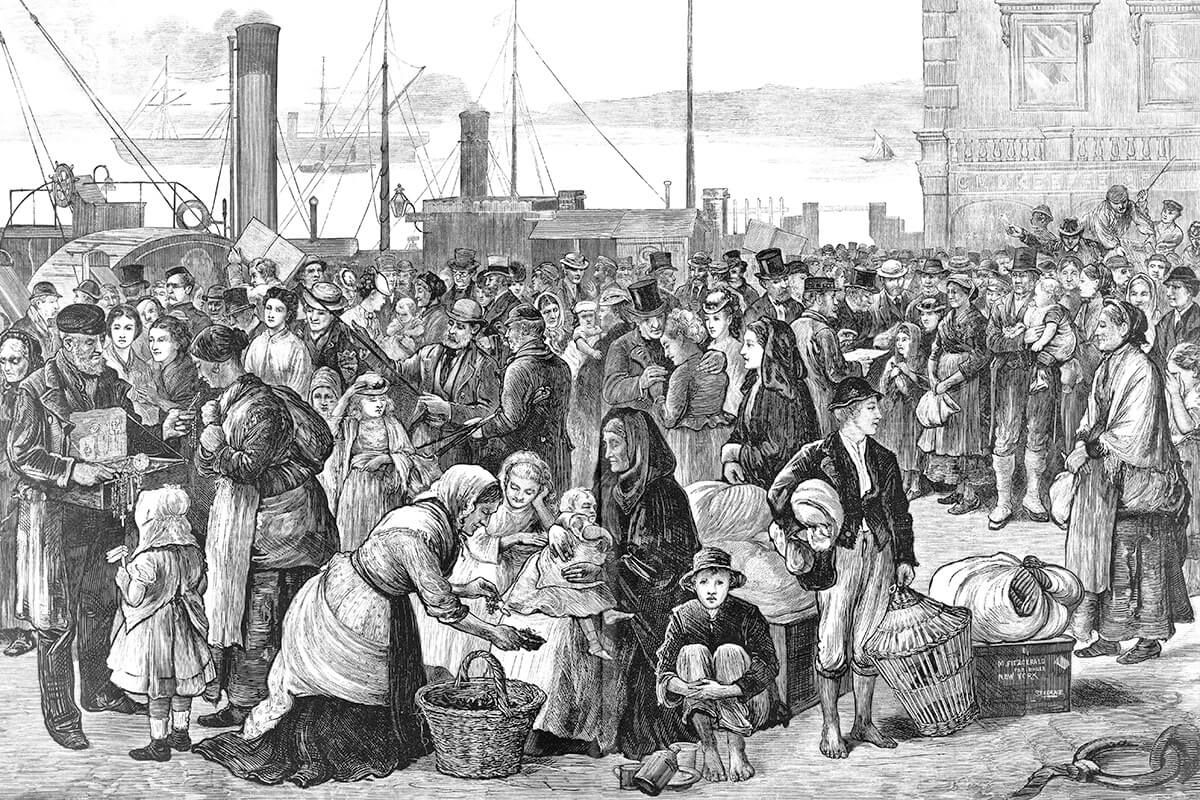
The disease was reported in Ireland a few months later, on September 13, 1845. At the time, roughly 40% of the Irish population ate no solid food other than potatoes, making this crop essential. Within just a few months, nearly half of the 2 million acres of potato plants in Ireland were diseased, contributing to the deaths of a million people. Over the next decade, 2 million Irish residents left the country, many of them fleeing to the United States.
Potatoes are a hearty addition to any meal; from a wintertime stew to a starchy mash, they’re always deliciously filling. So it might come as a surprise that potatoes are composed of 80% water. It’s the remaining 20% that gives potatoes their substance. The solid matter of a potato is composed of 85% starch (giving potatoes their signature texture) and 15% protein.
And not only are potatoes filling, but they’re also naturally nutritious. The vegetable contains a variety of essential vitamins, such as vitamin C, niacin, riboflavin, and thiamin, and minerals, including calcium, iron, magnesium, phosphorus, potassium, sodium, and sulfur. With fewer than 100 calories in a typical 6- to 8-ounce potato, they can be a healthy addition to most diets.
While today’s french fries and hash browns are nontoxic, early potato varieties posed a serious health threat. Potato plants were domesticated in the Andes Mountains of South America by Indigenous tribesmore than 7,000 years ago. To domesticate the crop, Andeans had to breed varieties of wild potato plants containing solanine and tomatine, toxic compounds that protect the plant from predators and fungi.
The toxins were not affected by heat, so the Andeans turned to nature for answers. They found a clever solution in the practices of guanacos and vicuñas (wild relatives of llamas), who licked clay before eating the toxic plants. The clay binds to the toxins, allowing them to pass through the digestive system without incident. Andeans began dunking their spuds in a mixture of clay and water before consumption.To this day, clay dust is sold in markets across Peru and Bolivia as a supplement for the few remaining varieties of these toxic potatoes, although the toxins themselves have since been bred out.
In 1995, a groundbreaking experiment aboard the Space Shuttle Columbia forever changed extraterrestrial agriculture. Scientists had long speculated that crops could be cultivated in outer space, so a mission was designed to test this hypothesis. Researchers placed five clipped leaves from a potato plant into beds of moistened soil and sent them into space, with a control group remaining on Earth.
Within a few weeks, all 10 cuttings had sprouted similarly sized potatoes, around the size of a gumball, proving the space spuds that orbited Earth were doing just as well as their counterparts on the ground. This mission paved the way for modern space farming, as seen in current operations on the International Space Station, allowing astronauts to grow fresh food during their time in orbit.
Rachel Gresh
Writer
Rachel is a writer and period drama devotee who's probably hanging out at a local coffee shop somewhere in Washington, D.C.
Advertisement
top picks from the Inbox Studio network
Interesting Facts is part of Inbox Studio, an email-first media company. *Indicates a third-party property.
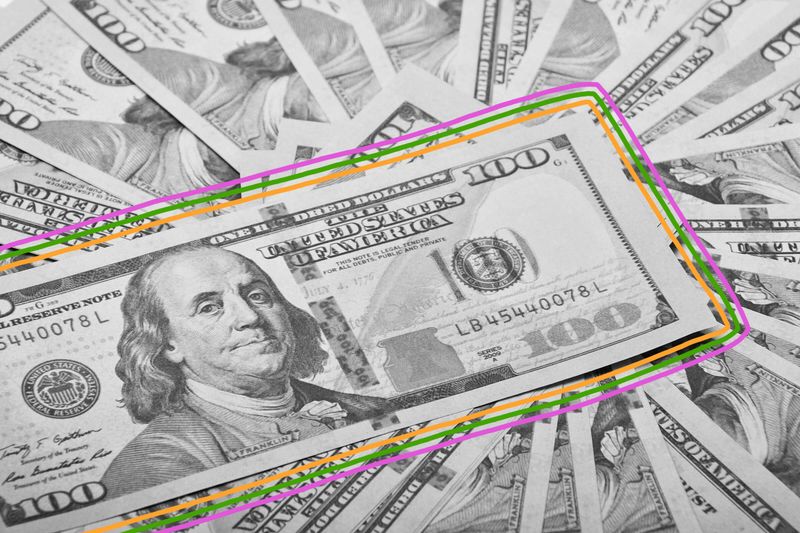
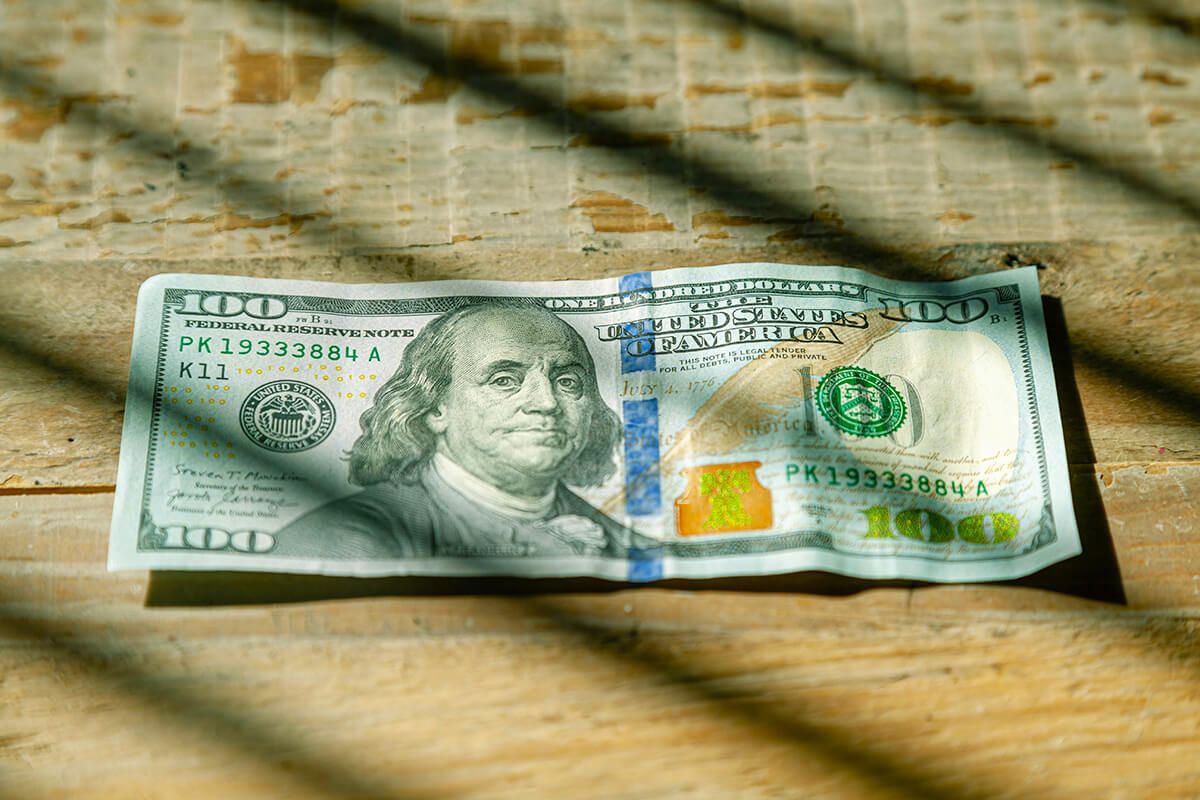
In the United States, the $100 bill, which features the familiar image of founding father Benjamin Franklin, is the highest currency denomination printed today. But this wasn’t always the case. We don’t have to go too far back in history to find bills far exceeding that value, with individual notes reaching even into the thousands. While these larger bills remain legal tender, they were removed from circulation decades ago. But why?
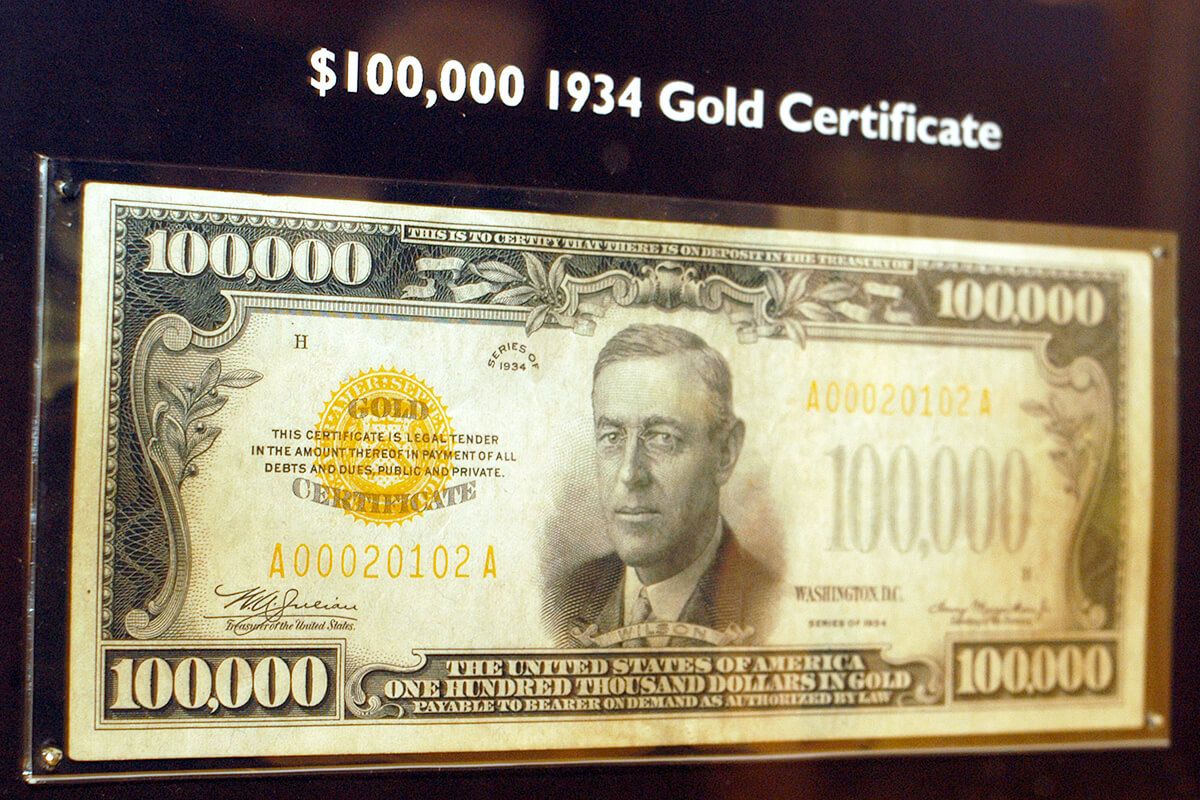
The United States used to print currency in denominations that would seem extreme to most modern-day citizens. The highest value note ever issued by the federal government was the $100,000 gold certificate. Printed between December 1934 and January 1935, it was meant to be used only for official transactions between Federal Reserve Banks and was never circulated among the general public — it was even illegal for a private individual to own one.
The gold certificate remains something of an anomaly, but several other high-value notes were widely circulated for much of American history. There was a $500 bill featuring President William McKinley, a $1,000 note featuring President Grover Cleveland, a $5,000 bill with President James Madison, and a whopping $10,000 bill that bore the lesser-known visage of Salmon P. Chase, who served as Abraham Lincoln’s Secretary of the Treasury from 1861 to 1864.
All these notes were last printed in 1945 and were later discontinued (no longer issued) in 1969. They remain legal tender even now, but the ones still in circulation today are likely in the hands of private numismatic dealers and collectors. The rarest of these notes are worth a lot of money — in 2019, a rare $1,000 bill from 1891 was valued at between $2 million and $3 million. So if you do ever come across one of these notes, do not use it at face value — it’s probably worth a lot more as a collector’s item.
On July 14, 1969, the Department of the Treasury and the Federal Reserve System announced that currency notes above $100 would be discontinued immediately due to lack of use. A couple principal factors drove this decision. First, these large bills had served a practical purpose up until the mid-20th century, primarily used for large bank transfers, real estate transactions, and settlements between financial institutions. But the rise of electronic banking and wire transfers, particularly in the 1960s and 1970s, reduced the need for physical currency in large denominations — and electronic transfers were faster, safer, and more efficient anyway.
Secondly, then-President Richard Nixon was justifiably concerned that large bills made it easier for criminals to launder money and conceal large sums of illicit cash. A single briefcase, for example, could hold millions of dollars in $1,000 or $10,000 notes, creating a convenient vehicle for money laundering, tax evasion, and other financial crimes. Even to this day, high-denomination notes are often viewed as a security risk around the globe. As recently as 2016, the European Central Bank began phasing out the €500 note (equivalent to about $542) — a bill nicknamed the “Bin Laden” because of its association with money laundering and terror financing.
The lack of high-denomination bills in America today aligns with global anti-money-laundering efforts and the rise of digital transactions. So for now, at least, the $100 bill will remain the highest denomination banknote available in the United States, keeping those Benjamins at the top of the pile when it comes to paper money.
Tony Dunnell
Writer
Tony is an English writer of nonfiction and fiction living on the edge of the Amazon jungle.
Advertisement
top picks from the Inbox Studio network
Interesting Facts is part of Inbox Studio, an email-first media company. *Indicates a third-party property.
The celebrated American graphic designer Paul Rand, who designed the logos for IBM, UPS, and ABC, once said, “Design is the silent ambassador of your brand.” In our fast-paced modern world, logos are a perfect embodiment of this idea. They often say or portray very little on their own, but they nonetheless become vital symbols used to identify and promote companies.
Perhaps nowhere are logos more important than in the automotive industry, which has churned out some of the most instantly recognizable designs in the world. These emblems, displayed prominently on vehicles worldwide, often contain fascinating stories — stories that many of us have never heard, despite being very familiar with the resulting symbols. Here are the meanings behind the logos of five of the world’s most famous car manufacturers. — iconic emblems that provide a glimpse into automotive history.
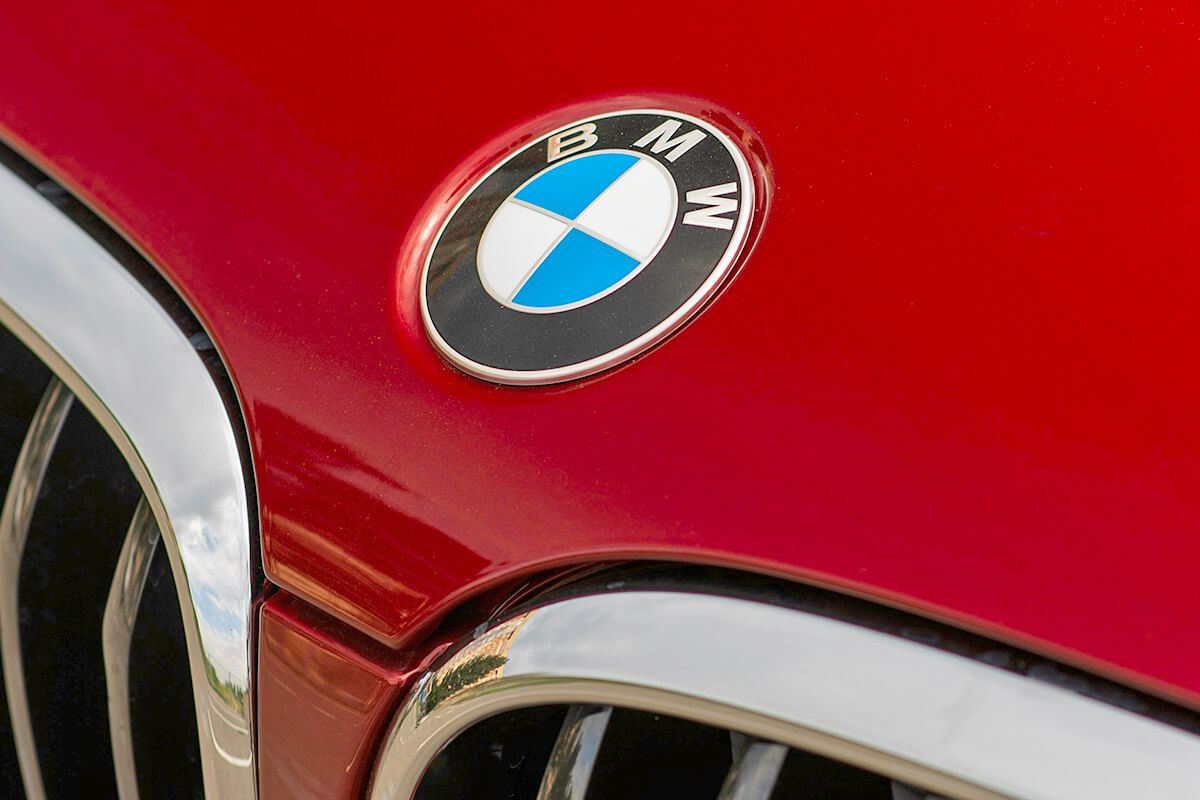
In 1917, the aircraft engine manufacturer Rapp Motorenwerke was renamed Bayerische Motoren Werke (Bavarian Motor Works), which most of us now know by its three-letter abbreviation. BMW retained some elements of the Rapp logo, including its circular shape and black outer ring. But in the center of the ring, the logo’s designers placed the now-iconic blue-and-white quadrants, the colors of which were taken directly from the flag of Bavaria, where BMW’s founding city of Munich is located.
Contrary to popular belief, the emblem wasn’t designed to evoke a spinning airplane propeller against a blue sky. This oft-repeated myth began with a 1929 advertisement promoting a new aircraft engine the company was developing, which featured an airplane with the BMW logo represented in its rotating propeller. While this myth fits with the company’s roots in aircraft manufacturing, it isn’t the real reason behind the logo — that honor stays firmly in Bavaria.
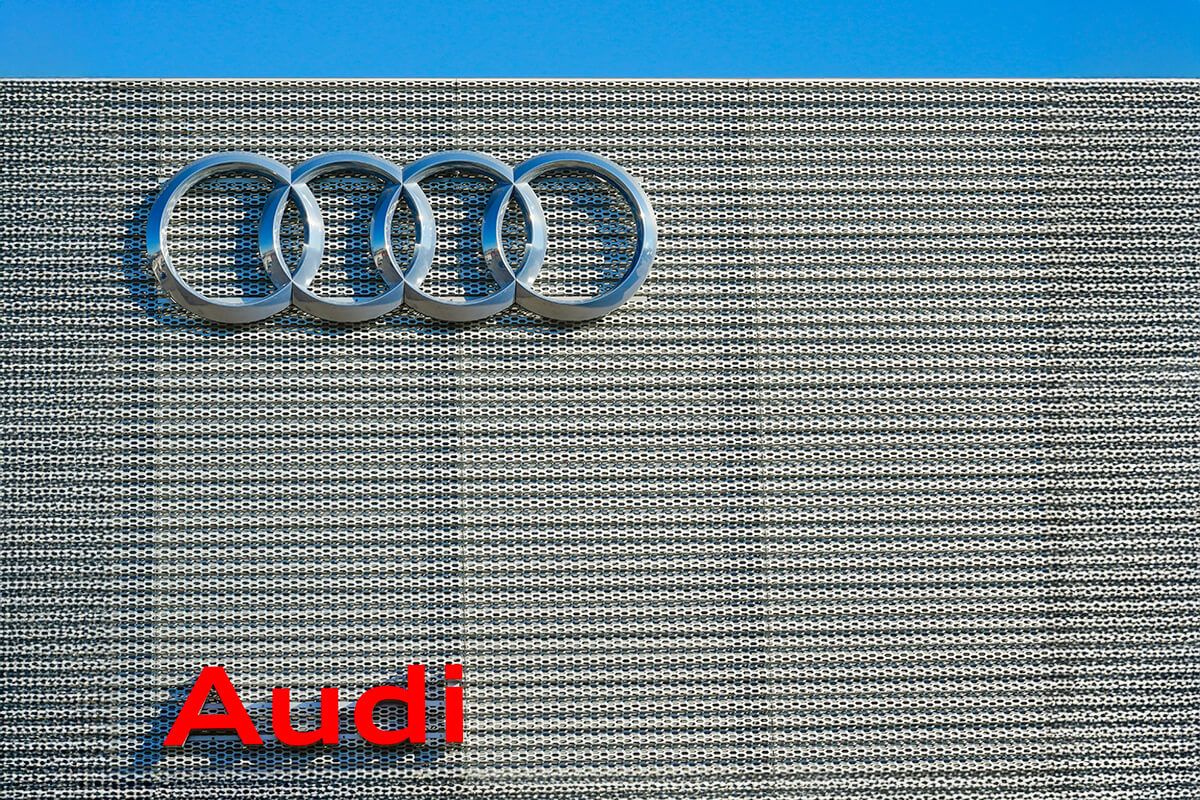
Audi’s distinctive four interlocking rings represent the 1932 merger of four previously independent automobile manufacturers. In 1932, Audi, Horch, DKW, and Wanderer merged to form Auto Union AG, becoming one of the largest motor vehicle manufacturers in Germany. Initially, each ring contained the name and logo of one of the founding companies. In 1949, a simplified version of the Audi logo was introduced, with the name Auto Union affixed over the four rings. The lettering was later removed entirely, leaving us with the simple, clean, easily recognizable Audi logo we know today.
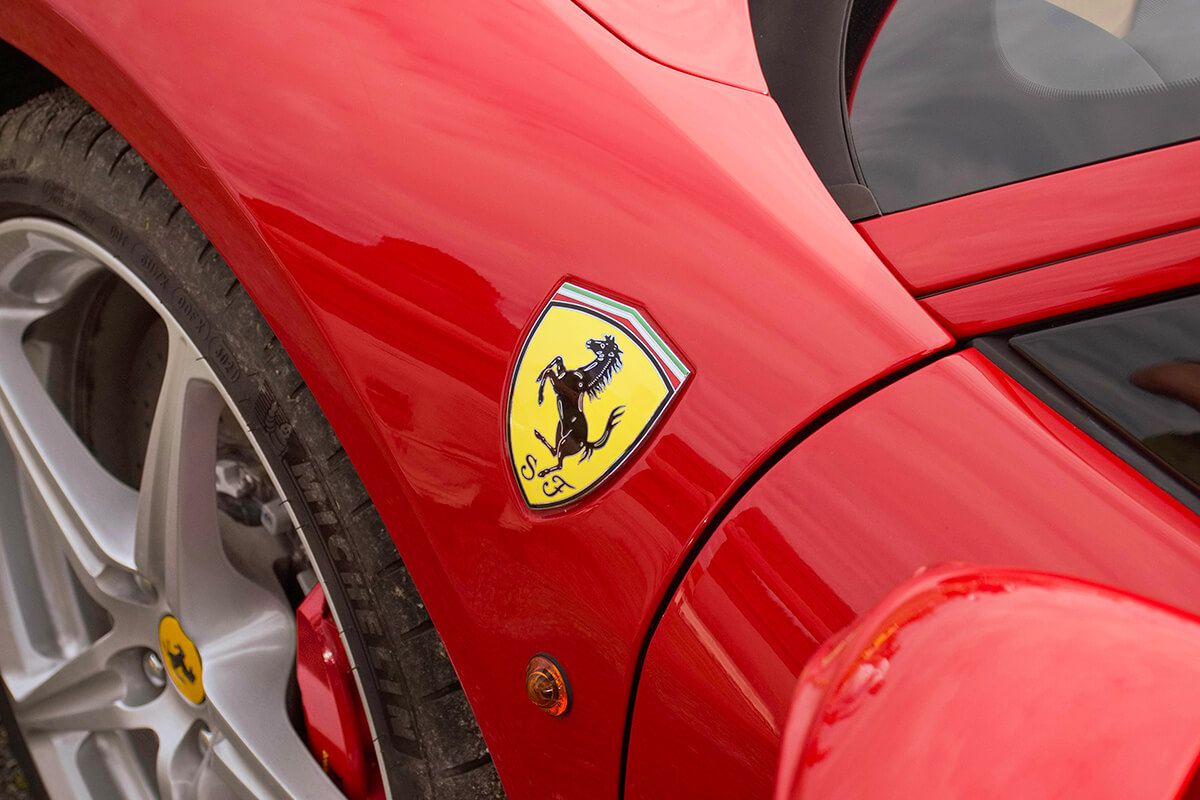
The history of Ferrari’s iconic prancing horse emblem (cavallino rampante, as it’s known in Italy) can be traced back to 1923, when Enzo Ferrari — the company’s founder — was still a competitive race car driver. After winning a race in Ravenna, Enzo met Enrico Baracca and Baracca’s wife, Paolina. They were the parents of Francesco Baracca, Italy’s top fighter pilot during World War I, who was credited with 34 aerial victories before he was killed in battle in 1918. He was known for having the emblem of a prancing black horse on his plane, and when Francesco’s mother met Ferrari, she suggested he use the logo on his cars.
When Ferrari founded his racing team, Scuderia Ferrari, in 1932, he took the suggestion, applying the prancing horse logo to the team’s race cars and later to the company’s luxury sports car. Ferrari wrote about the logo in his autobiography, “The horse was and remained black; I added the canary yellow background, which is the color of Modena’s gonfalon” — a gonfalon being a type of heraldic flag, and Modena being the city in which Ferrari was founded.
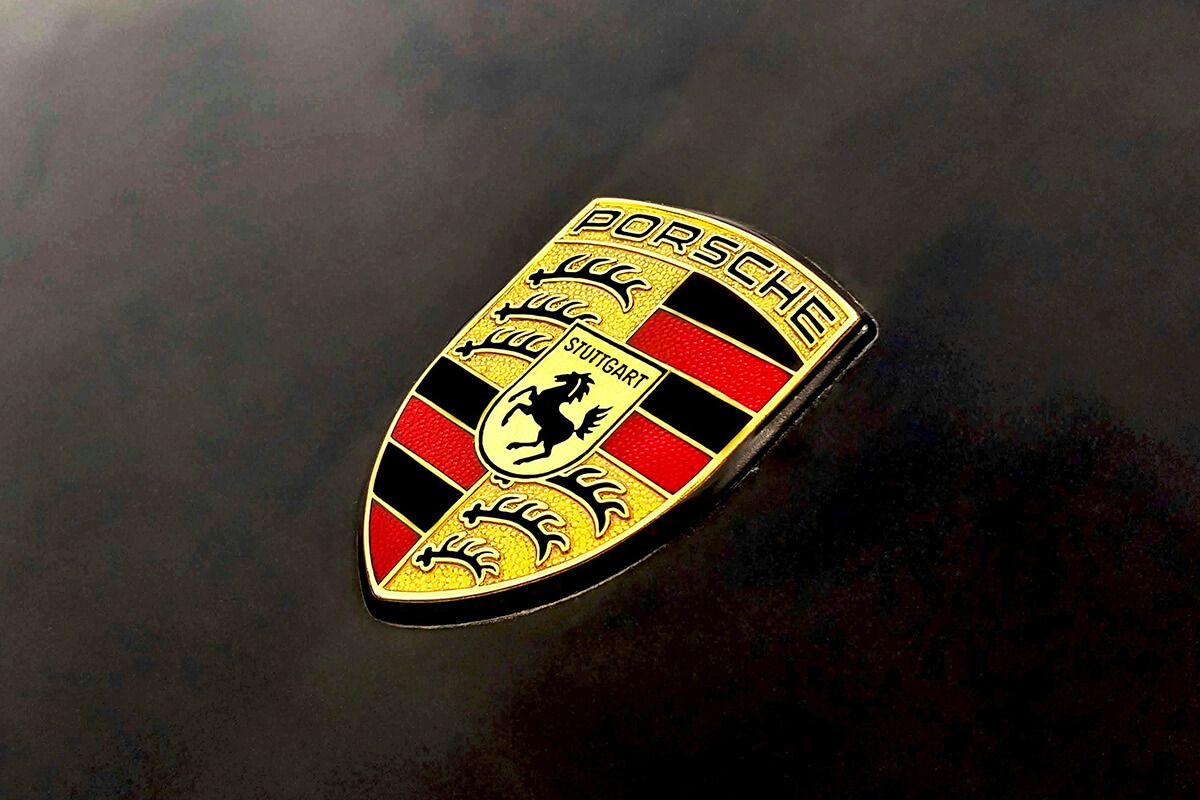
Porsche was founded in Stuttgart, Germany in 1931, but its logo wasn’t designed until the early 1950s, after the development of the first production Porsche model, the Porsche 356. The manufacturer, under the leadership of the founder’s son, Ferry Porsche, decided an impactful logo was needed. In 1952, Porsche’s head of advertising, Hermann Lapper, and designer Franz Xaver Reimspieß presented a logo that remains nearly unchanged to this day.
The design plays on Porsche’s history and birthplace. In the center of the emblem is a prancing horse on a golden shield, directly inspired by the Stuttgart city seal (the name of the city itself appears above the horse). Behind this central shield, and forming the rest of the logo, is a design based on the coat of arms of Württemberg-Hohenzollern, which once claimed Stuttgart as its capital. While Porsche has made some minor adjustments over the years, the logo essentially remains the same as the original 1952 design.
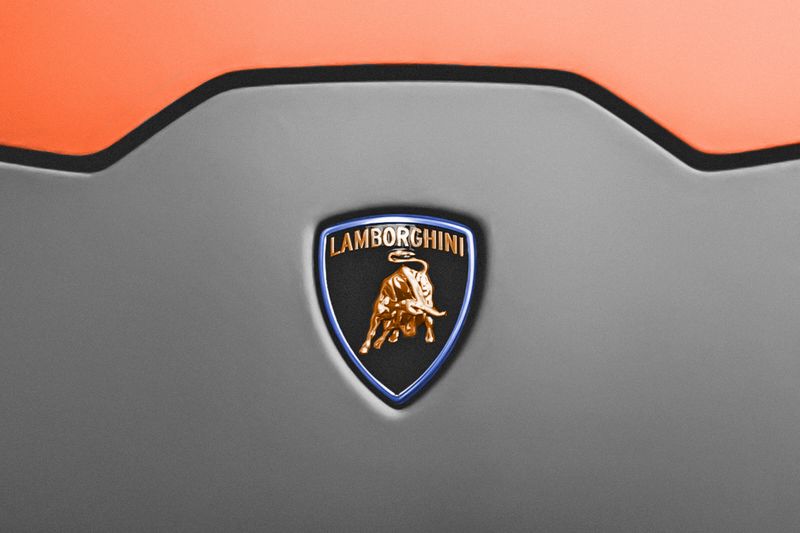
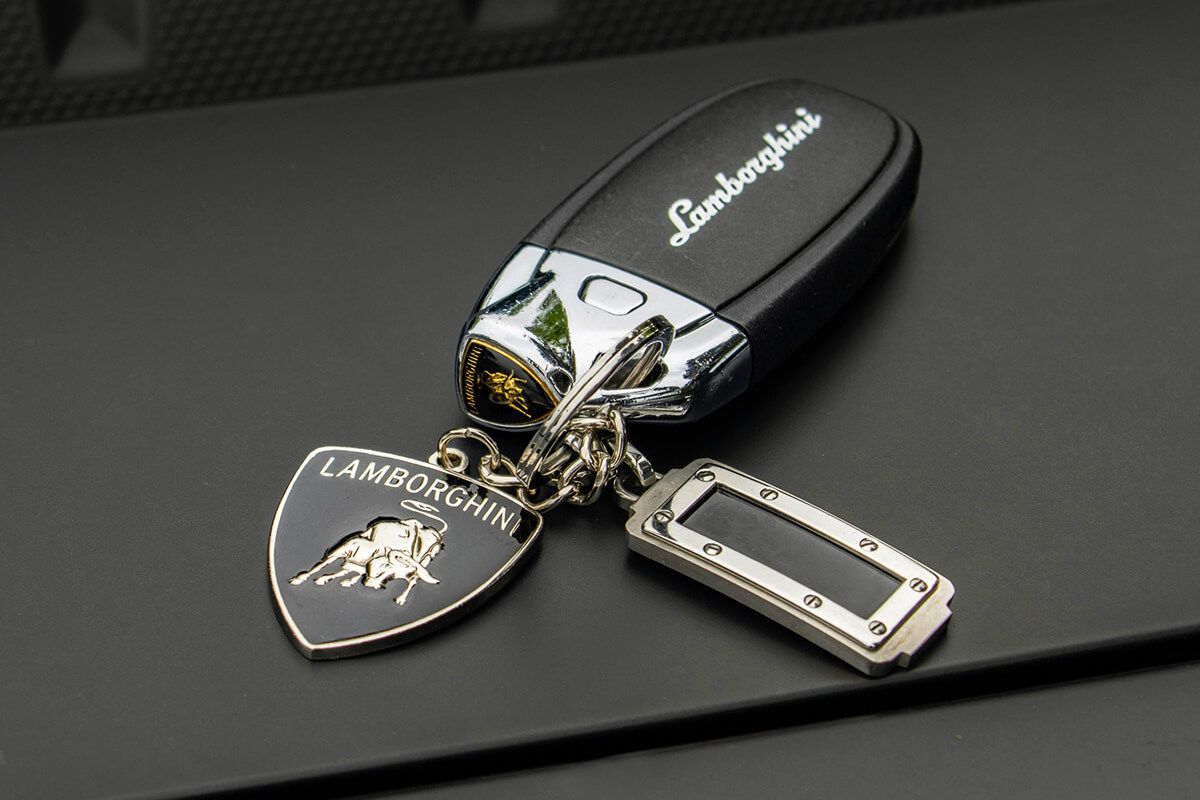
Automobili Lamborghini was founded by Ferruccio Lamborghini in 1963, after he decided to transition from manufacturing tractors to building top-of-the line sports cars. This change was accompanied by a new logo, featuring Lamborghini’s now-famous raging bull. The design was meant to represent more than just power, however. Ferruccio Lamborghini was born on April 28, 1916, making his astrological sign Taurus, which is symbolized by a bull. He took this to heart as both a personal and professional symbol, hence his desire to incorporate a bull into his company’s emblem.
Lamborghini was also a big fan of bullfighting. In 1962, shortly before founding the company, he visited the ranch of Don Eduardo Miura Fernández, a famous breeder of Spanish fighting bulls. This visit further inspired the logo that went on to adorn Lamborghini sports cars — and perhaps explains the aggressive posture of the bull on the resulting emblem.
Tony Dunnell
Writer
Tony is an English writer of nonfiction and fiction living on the edge of the Amazon jungle.
Advertisement
top picks from the Inbox Studio network
Interesting Facts is part of Inbox Studio, an email-first media company. *Indicates a third-party property.
We’ve all been there: You walk into Walmart, Target, Costco, or BJ’s with a short list of essentials — maybe you need a greeting card, some dog food, and a pack of socks for your teenager. But by the time you reach the checkout, your cart seems to have magically filled itself with extra snacks, home decor, and that cool kitchen gadget you didn’t know existed but are now convinced you need.
Big-box and department stores are specifically designed to make us spend more than we intend. Retailers use a variety of clever strategies to encourage impulse purchases, extend our shopping time, and make sure we leave with more — much more — than just the necessities. While these tactics may seem subtle, they’re highly effective at boosting sales and emptying wallets.
Here are five of the most common methods stores use to get you to spend more money than you otherwise might.
Retailers don’t just randomly throw products on shelves — each section of a store is carefully planned to maximize spending. In big-box stores, essential items including dairy, bread, and meats are often placed at the farthest corners of the store, requiring customers to walk past dozens of enticing displays before reaching what they actually came for. Along the way, you may spot a tempting seasonal sale, a colorful endcap filled with limited-time snacks, or an eye-catching electronics display.
Additionally, store layouts are designed to keep you inside for as long as possible. Many retailers use the “decompression zone” — the first few feet inside the entrance — to transition shoppers into the store, making them more receptive to impulse purchases. This area is typically open and uncluttered and contains minimal signage to prevent sensory overload, preventing consumers from being immediately overwhelmed and lulling them into the optimal relaxed state of mind for shopping.
Wide aisles, bright lighting, and carefully placed promotional displays are all part of the plan to slow shoppers down, increasing the likelihood of adding extra items to their carts. Some big-box stores even place high-demand items such as batteries or phone chargers in less obvious spots so customers must search harder for them, passing even more tempting merchandise along the way.
Pricing strategies influence how we perceive value. One of the most common tricks is charm pricing, also known as psychological pricing — in other words, setting prices just below a round number. For example, a product priced at $9.99 instead of $10.00 seems cheaper in our minds, even though the difference is just a penny. This is due to the left-digit bias, the phenomenon in which our brains tend to focus primarily on the first number we see, because we read left to right.
Some stores also use something called “prestige pricing,” wherein higher prices make products seem more luxurious or desirable. Think about how high-end brands rarely end their prices in .99 — designer handbags and perfumes are often priced at round numbers such as $100 or $250, reinforcing their premium appeal.
Big-box and department stores carefullycraft their atmosphere to encourage shoppers to linger, which often means spending more money. Slow, relaxing music subtly influences customers to move at a leisurely pace, increasing the likelihood of impulse purchases. Strategic lighting enhances the appeal of merchandise, with warm, inviting tones making products appear more desirable, while spotlights draw attention to high-margin items including premium electronics, designer handbags, or seasonal must-haves.
Even scents come into play — some department stores use signature fragrances to create a sense of luxury, while big-box retailers might pump out the smell of fresh coffee or popcorn near their cafés to further tempt shoppers and make them feel more at home. Plush seating areas, stylish displays, and open layouts make browsing feel more like an experience than just a shopping trip. And the longer you stay, the more you’re likely to buy.
Loyalty programs may seem like just an easy way to save money, but they’re primarily designed toencourage repeat spending. Whether it’s a rewards credit card, a points system, or member-exclusive discounts, these programs create a sense of obligation and incentive to shop more frequently. In fact, research indicates members of loyalty programs generate 12% to 18% more revenue per year than non-members.
For example,Costco’s membership model makes customers feel invested in getting the most value out of their annual fee, leading them to shop there more often. Similarly,Target’s Circle program offers personalized deals based on shopping history, subtly encouraging customers to return for what feels like tailor-made discounts. These programs often increase spending by offering “rewards” that require additional purchases to redeem — and in doing so, you usually spend more money redeeming those rewards than you end up actually saving.
They Influence Us With Product Placement and Bundling
You may have noticed how expensive name-brand products are placed at eye level while cheaper alternatives are stocked on lower or higher shelves. That’s no accident; that’s product placement in action. Retailers strategically reserve prime shelf space for high-margin items, ensuring they catch customers’ attention first. Similarly, impulse-buy products including candy, magazines, small gadgets, and gift cards are positioned near checkout lanes, where shoppers are more likely to grab them while waiting in line.
Bundling is another sneaky tactic designed to increase spending. Department stores may display complementary items close to one another — e.g., handbags next to shoes or skincare products alongside makeup — to subtly encourage customers to buy more than they originally planned. Electronics departments modify this approach by bundling accessories with major purchases, making it seem logical to add an extra charger, case, battery, or warranty. These strategies work by creating convenience and perceived value, nudging shoppers toward higher spending.
Kristina Wright
Writer
Kristina is a coffee-fueled writer living happily ever after with her family in the suburbs of Richmond, Virginia.
Advertisement
top picks from the Inbox Studio network
Interesting Facts is part of Inbox Studio, an email-first media company. *Indicates a third-party property.
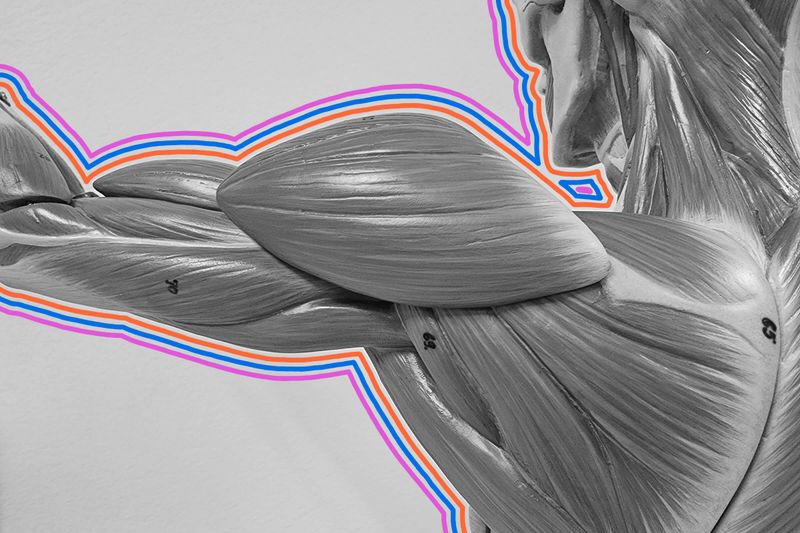
The human body is a complex network of bones, sinews, tendons, organs, and muscles all working together to propel us through our daily lives, but it’s the latter member of this biological lineup that literally does much of the heavy lifting. More than 600 muscles spread across three muscle groups — skeletal, smooth (found in the walls of some organs), and cardiac — make up the human body, and this intricate system accounts for up to 40% of your total body mass.
With such a complicated system keeping you moving (it takes the coordination of more than 200 muscles just to walk, for example), the human muscular system is a treasure trove of head-scratching and awe-inspiring facts. Here are five facts that will make you better appreciate what your hundreds of muscles do for you every day.
You’re familiar with the body’s five senses (taste, touch, smell, sight, and hearing) but there’s a little-known sixth sense provided by receptors in your muscles, tendons, and skin known as “proprioception.” The information sent by those receptors, once processed by the cerebellum, allows your brain to interpret the position of your body in space.
Impairment of this sense can affect even the most physically fit among us. During the 2020 Olympics (held in 2021 due to the COVID-19 pandemic), U.S. gymnast Simone Biles famously experienced a condition known as the “twisties,” which is essentially a temporary impairment of a type of proprioception known as “air awareness” — basically your brain and body have a slight communication breakdown that results in the body no longer accurately sensing its position while airborne. Luckily, most of us don’t require gymnast-level attunement to our proprioceptors in our daily lives, but it goes to show how our muscles do much more than just physically move us from place to place.
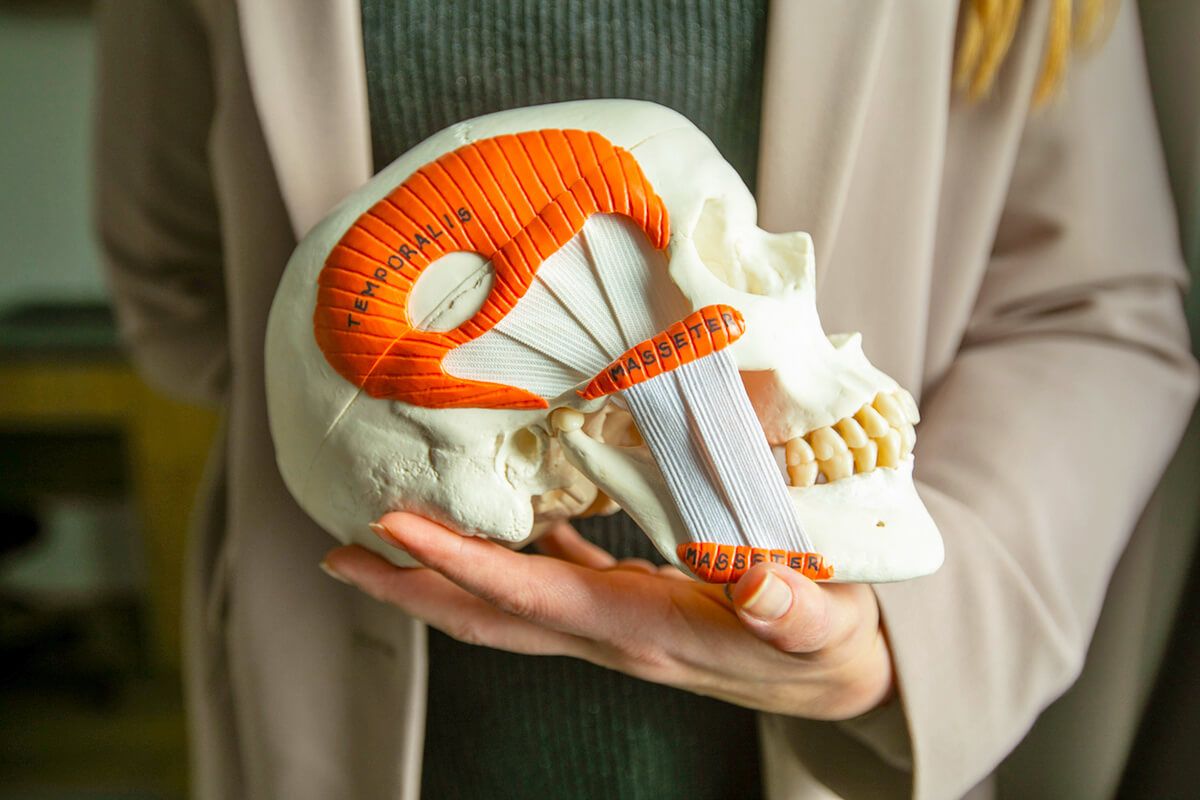
People often say the tongue is the strongest muscle in the human body, but that’s actually incorrect in more ways than one. First off, the tongue isn’t one muscle but a collection of eight muscles, each with an important role for talking, eating, and anchoring to the skeleton. And while it’s true a healthy tongue rarely shows signs of fatigue, its strength by volume is dwarfed by that of the masseter, known more commonly as the jaw muscle.
Working in coordination with other muscles located in the jaw, the masseter can deliver up to 200 pounds of force on the molars. While the gluteus maximus (aka your butt) is the largest muscle and the heart is by far the hardest working, no muscle singlehandedly delivers as much power as the masseter.
Although mammals are often referred to as “warm-blooded,” muscles actually provide up to 85% of the warmth in your body, because every time a muscle contracts, it produces heat. When your body gets cold, the brain’s hypothalamus first reduces blood flow to the skin while blood returning from your limbs enters deep veins. This helps entrap heat in the body for longer. But when this doesn’t quite do the trick, the brain then sends random signals to your skeletal muscles, causing them to contract and produce more heat to help warm your body — what we experience as shivering.
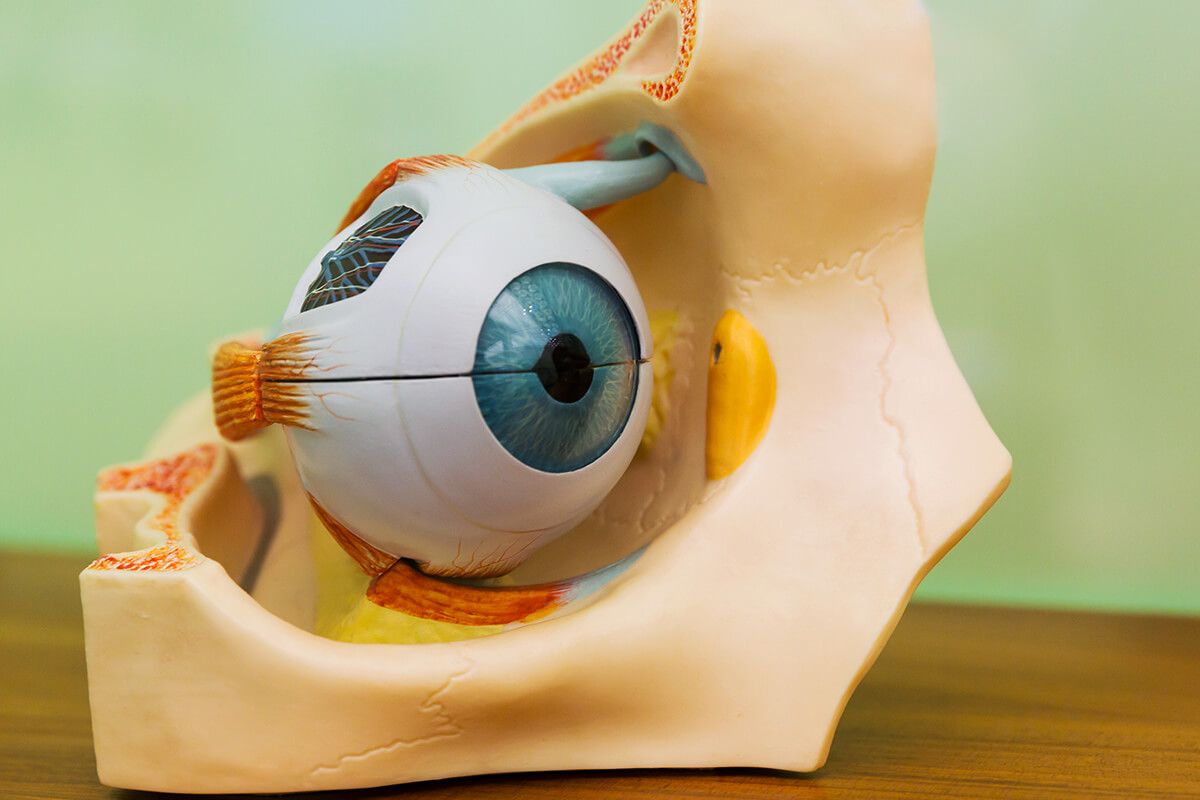
When you think of muscles, you may picture the elegant pulley system that is the bicep/tricep duo or maybe your heart, the primary muscle that makes life possible. However, there are many other hard-working muscles that fly more under the radar, and chief among them are the six muscles (per eye) required for human vision. These muscles make approximately three coordinated movements per second, which comes to about 100,000 such movements total per day.
So why isn’t our vision blurred due to all that constant movement? Well, it turns out our brains anticipate where we’re going to look and ignore the blurry movement it takes to move our eyes in those directions. People have long marveled at the ingenuity of the human eye, but it’s the surrounding muscles that truly enable us to take in the world around us.
Your Body Contains a Few Muscles That Don’t Do Anything
Human bodies are still an evolutionary work in progress, and this can be seen in the many vestigial (aka nonfunctional) muscles left over from our primate past. One example, the pyramidalis muscle in the abdomen, is believed to contract the thin band of connective tissue that runs down the front of your abdomen (known as the linea alba), but it’s no longer needed for that function — in fact, some people don’t have this muscle at all.
Another vestigial muscle is the palmaris longus, which stretches from the wrist to the elbow and is suspected to have aided our ancestors in their grip strength. Around 10% of people don’t have this muscle in either arm. And then there are the auricular muscles, which theoretically aid in the physical movement of our ears by changing the shape of the pinna, the ear’s visible outer portion. Our ancestors stopped using these muscles for that function millions of years ago, although 2025 research shows these muscles may still be handy when trying to distinguish competing sounds.
Darren Orf
Writer
Darren Orf lives in Portland, has a cat, and writes about all things science and climate. You can find his previous work at Popular Mechanics, Inverse, Gizmodo, and Paste, among others.
Advertisement
top picks from the Inbox Studio network
Interesting Facts is part of Inbox Studio, an email-first media company. *Indicates a third-party property.
Evolution is an incredible natural process, allowing all living things to gradually change and adapt to their surroundings. These adaptations are typically geared toward survival: becoming stronger, faster, more intelligent, more attractive, and so on. Those useful characteristics are then passed on to offspring and the process continues — albeit very, very slowly in most cases.
The animal kingdom is filled with many extraordinary creatures that have evolved remarkable adaptations, from the ability to thrive in extreme environments to senses that far exceed those of humans. Some of these animal abilities are as bizarre as they are impressive, so we decided to explore the strangest and most astonishing skills found in the animal kingdom, from resurrecting frogs to creatures that can survive in space.
Wood frogs are found in some of the chillier regions of North America, from Alaska to the boreal forests of Canada, and they’re also the only frogs that live north of the Arctic Circle. These little amphibians have developed an extraordinary ability to survive the freezing winters — an ability that very closely resembles resurrection.
To endure the subarctic winters, wood frogs have adapted to allow around 65% to 70% of their bodies to freeze solid. While frozen, they have no detectable vital signs: no heartbeat, breath, blood circulation, muscle movement, or detectable brain activity. To prevent permanent cell damage, they produce glucose that acts as a natural antifreeze to protect specific vital organs. Incredibly, they can remain in this semi-frozen state for up to seven months, acclimating to their frozen environment by freezing along with it. And when the temperatures rise once again, they happily hop on with their lives.
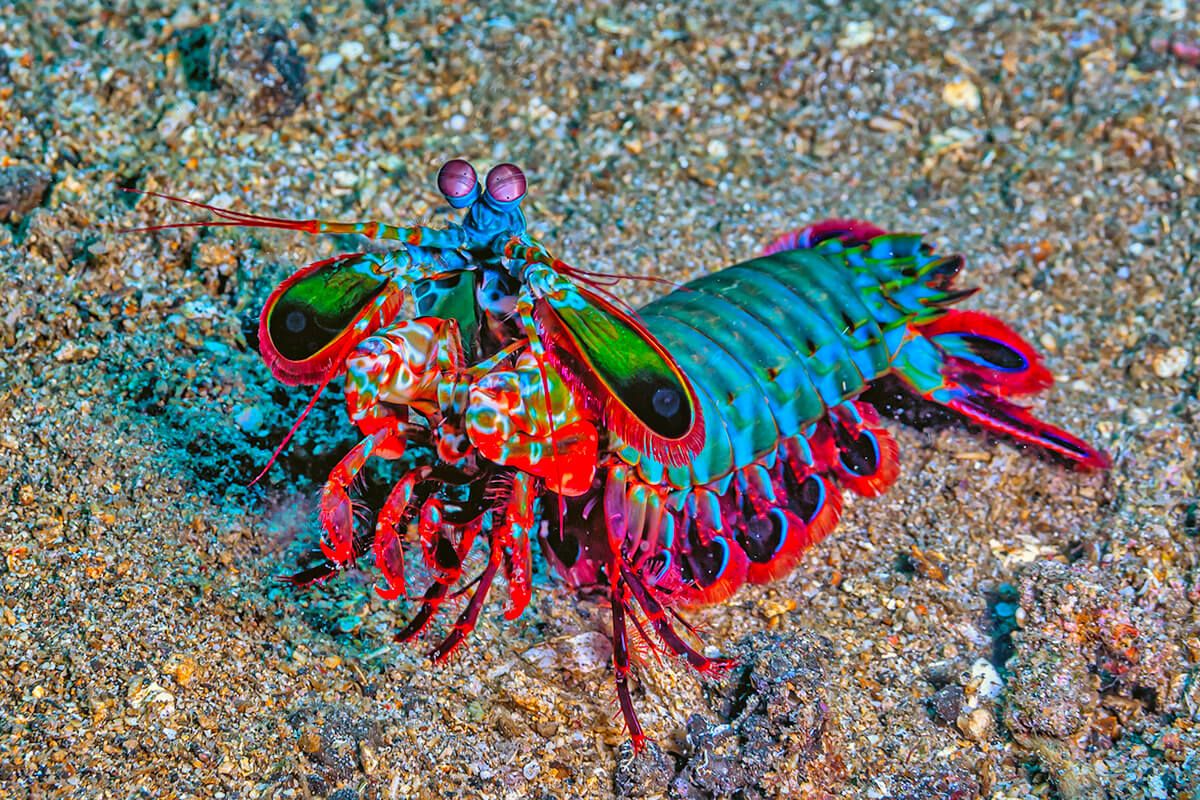
Mantis shrimp typically grow to about 4 inches in length. That’s certainly not an intimidating size, but when it comes to punching power, they are not to be messed with. Pound for pound, the mantis shrimp possesses the most powerful punch in nature. Their strikes accelerate at speeds comparable to a 22-caliber bullet, with each blow landing about 1500 newtons of force. This allows them to use their hammer-like clubs to smash through hard-shelled prey such as crabs and clams; they’ve even been known to smash through aquarium glass.
This punching power comes from elastic energy storage. The shrimp stores energy in its muscles while it cocks its club into position, then releases the compressed energy in a ferocious hammer blow. The punch is so fast and creates so much pressure that the shrimp actually vaporizes the water in front of it, creating small cavitation bubbles that emit bright light and produce temperatures of around 7,200 degrees Fahrenheit. (The surface of the sun, by comparison, is 9,930 degrees Fahrenheit.)
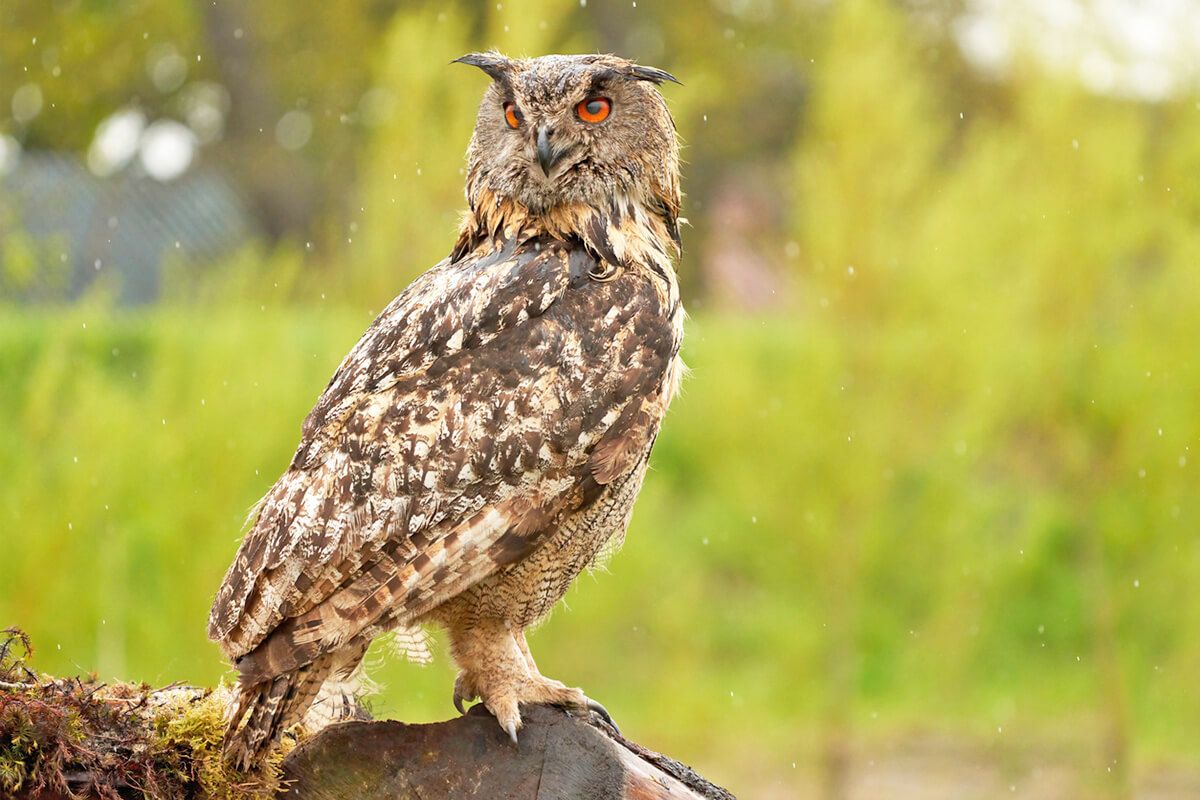
Imagine if your eyes were fixed in place and couldn’t move in their sockets. It would be quite difficult and arduous to take in the world around you, because you’d have to constantly move your head around to direct your eyes. This is a problem owls have had to work around. Their large eyes, which are more elongated than ours (making them more adept at night vision), are fixed in place by bony structures called sclerotic rings, making their eyes nearly immobile.
To compensate for this, owls have evolved the ability to turn their necks incredibly far in either direction. While this famous owl trait doesn’t allow them to turn their heads all the way around, they can rotate them 270 degrees, or three-quarters of a full circle, in either direction, as well as 90 degrees up and down. An owl’s vertebrae and vertebral arteries have become specially adapted to allow for such an extreme range of movement, which in other animal species — including humans — would cause all kinds of physical issues.
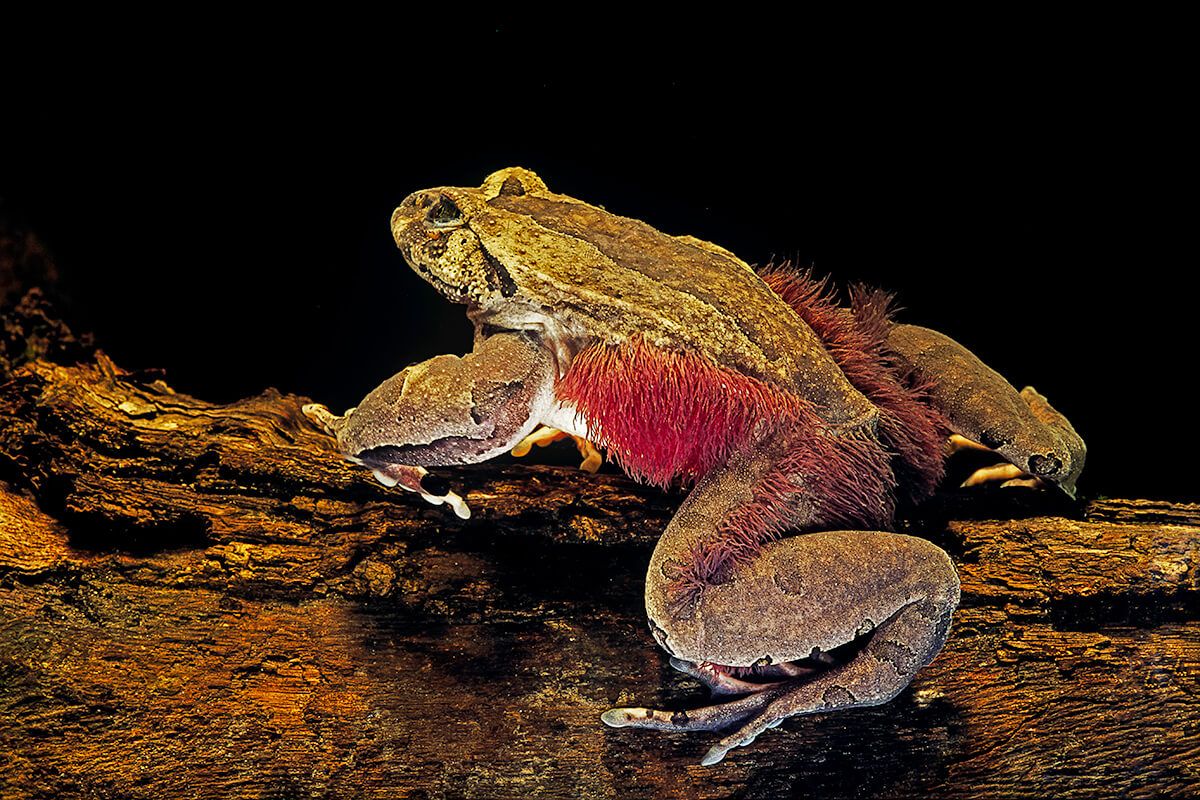
Hairy Frogs Break Their Own Bones To Use Them as Weapons
The hairy frog is also known as the Wolverine frog, and you’ll soon understand why. This peculiar frog grows to about 4 to 5 inches long, and its flanks and thighs are covered in tiny, hair-like projections that are actually modified scales, likely to help with oxygen absorption. Its most bizarre characteristic, however, is one of the strangest defensive mechanisms in the natural world.
When threatened, the hairy frog deliberately breaks its own toe bones, forcing the sharp, claw-like bone fragments through the skin of its toes to create formidable weapons (hence the reference to the X-Men superhero Wolverine, known for his retractable claws). The frog can then kick its foes to inflict painful lacerations. The triggered bones eventually move back into place on their own without any known retracting mechanism, and the toe wounds heal over — at least until the next time something makes the mistake of picking a fight with this remarkable and somewhat devious creature.
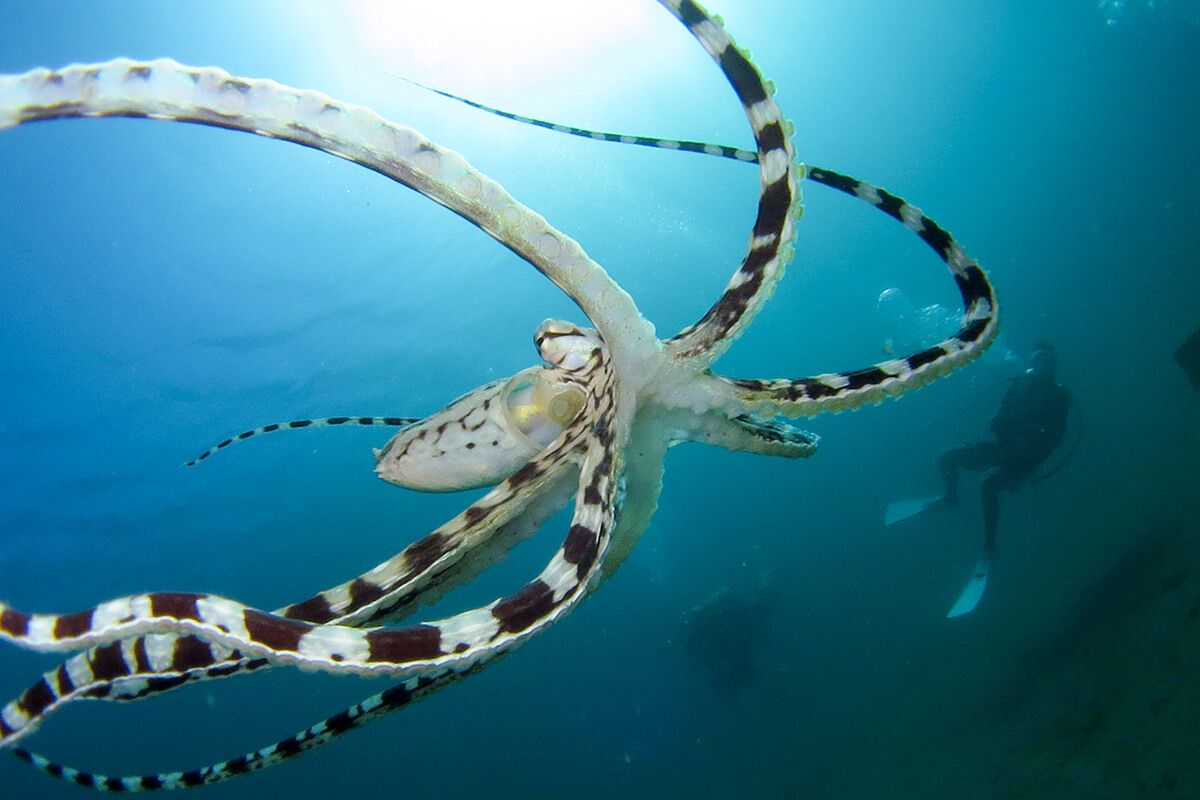
The Mimic Octopus Is the World’s Most Amazing Shapeshifter
The mimic octopus was discovered in 1998 off the coast of Sulawesi, Indonesia, and it’s perhaps no surprise that it took so long to spot them. These masters of camouflage not only change shape and color to match various objects and surroundings, but they can even mimic other species.
While most mimics in the animal kingdom can take on the characteristics of just one other species, the mimic octopus impersonates several, including lionfish, jellyfish, sea snakes, shrimps, and crabs, as well as small sponges and even tube-worm tubes. What’s more, this amazing shapeshifter can switch between mimicking other creatures rapidly. It chooses which form to take based on threat assessment, selecting whatever sea creature poses the greatest threat to the predator they’re currently facing. For example, if the octopus is about to be attacked by territorial damselfish, it mimics the banded sea snake — a common predator of damselfish.
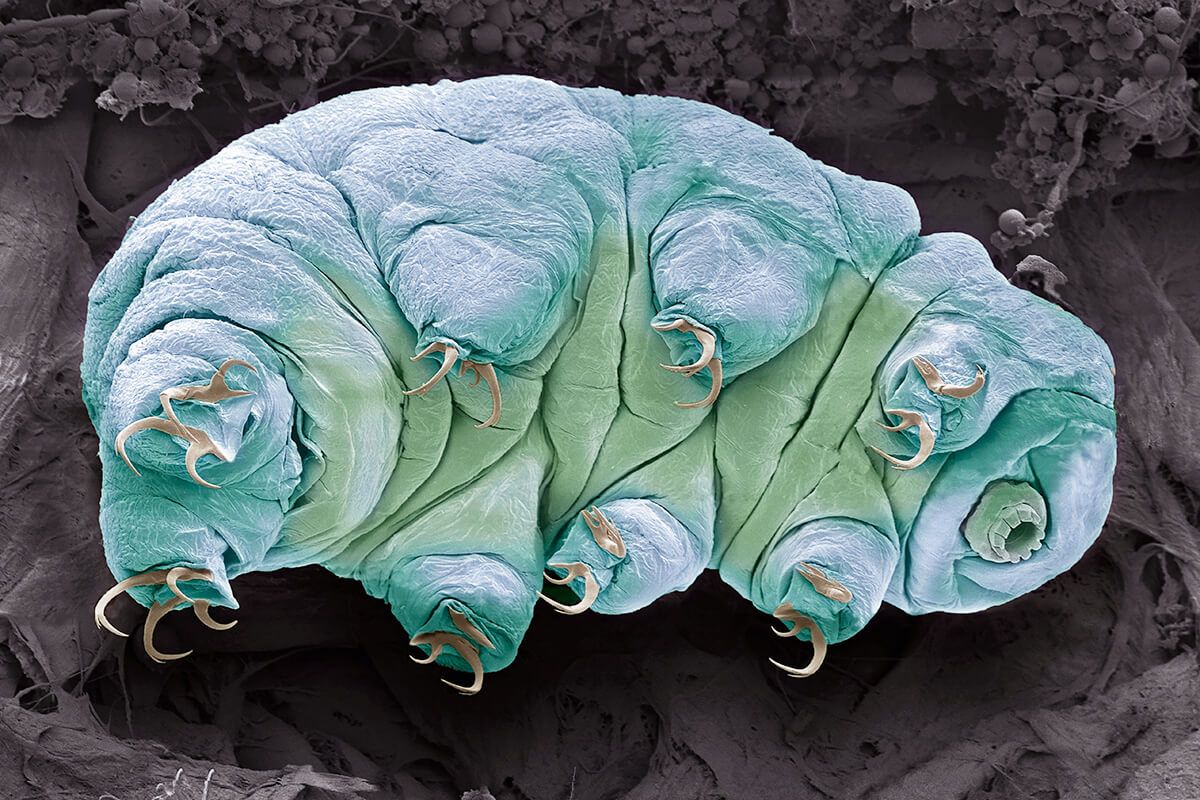
Tardigrades Are the Animal Kingdom’s Greatest Survivors
Tardigrades, also known as water bears or moss piglets, are microscopic eight-legged animals that are the most resilient creatures known to science. These extremophiles can survive in conditions that would be instantly fatal to almost any other organism, including extremes of heat, cold, pressure, and radiation. They can even survive in the usually uninhabitable vacuum of space. Add to this the ability to go without food or water for 30 years, and you have one very tough little creature.
This incredible resiliency can largely be chalked up to two amazing adaptations. Their bodies contain a protein unique to the tardigrade called DSUP (short for “damage suppressor protein”) that protects their DNA from harmful radiation. They also possess an amazing survival trick called cryptobiosis: a state of inactivity triggered by dry environments in which the tardigrade squeezes all the water out of its body, retracts its heads and limbs, rolls up into a little ball, and becomes dormant. They can stay like this for years, only unfurling themselves and going on with their lives when conditions improve, making them the ultimate specialists in survival.
Tony Dunnell
Writer
Tony is an English writer of nonfiction and fiction living on the edge of the Amazon jungle.
Advertisement
top picks from the Inbox Studio network
Interesting Facts is part of Inbox Studio, an email-first media company. *Indicates a third-party property.
Though they’re part of a single nation, the 50 U.S. states all have unique identities of their own. Some states are particularly renowned for their one-of-a-kind geological features, others are celebrated as the birthplace of notable past presidents, and one state is even home to the largest living organism on Earth. There’s so much history and culture to discuss, but we narrowed it down to one fascinating tidbit from each. Here’s a look at some of the most interesting facts from all 50 U.S. states.
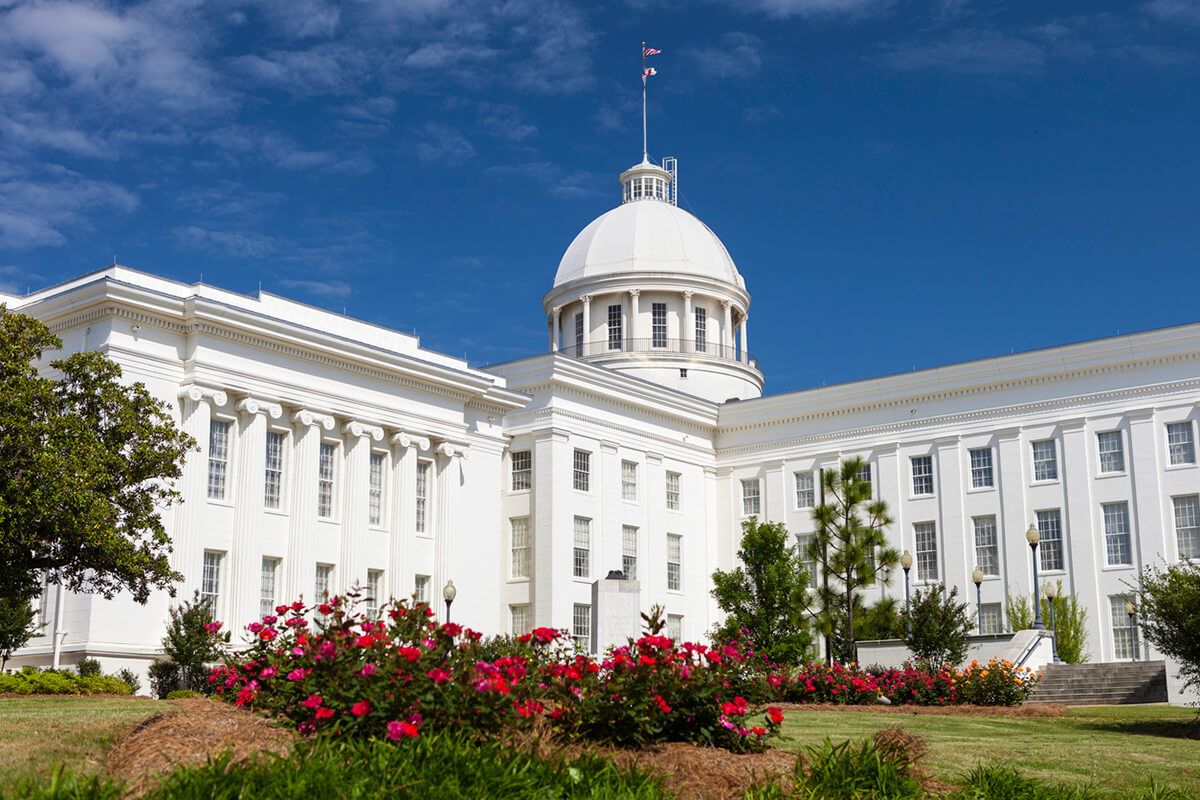
The Alabama Constitution is the longest state constitution in the United States, exceeding 360,000 words at nearly 500 pages. This makes it more than three times the length of the next largest state constitution (Texas).
Alaska
Alaska’s Aleutian Islands cross over the 180th meridian, which separates Earth’s eastern and western longitudes. From a geographic perspective, this means some of the Aleutian Islands are located at the easternmost reaches of the Eastern Hemisphere while others are at the westernmost points of the Western Hemisphere. Thus, Alaska manages to contain both the easternmost and westernmost points of the United States.
Arizona
With the exception of the Navajo Nation located within its borders, the state of Arizona doesn’t observe Daylight Saving Time. This has been the case since 1968, when Arizona made a permanent switch to Mountain Standard Time, no matter the time of year. It’s one of only two states that don’t observe DST; the other is Hawaii.
Arkansas is home to the only public diamond mine in the world, located at Crater of Diamonds State Park in Murfreesboro. The park contains 37 acres formed around 100 millions years ago by volcanic activity, and visitors to the site can keep whatever diamonds they’re able to find.
California
The tallest tree in the world is located in California’s Redwood National Park: It’s called Hyperion and measures 380.8 feet tall. In order to preserve the surrounding terrain, the park intentionally keeps the exact location of the tree a secret.
Colorado
The Centennial State is home to the highest incorporated city anywhere in the United States: Leadville, which is located 10,152 feet above sea level. You’ll also find the highest incorporated U.S. town in Alma, Colorado, with an elevation of 10,578 feet.
Former Connecticut Governor Ella Grasso was the first woman — who wasn’t the wife or widow of a past governor — to be elected to the highest state office. She was first elected in 1974 and again in 1978.
Delaware
Delaware is appropriately nicknamed the “First State,” as it was the first of the original 13 colonies to ratify the U.S. Constitution. It ratified the document on December 7, 1787, predating Pennsylvania’s ratification by five days.
Florida
The Florida Everglades are the only place on Earth where alligators coexist in the wild with crocodiles. The sprawling wetland is also the only place in the United States where people can witness crocodiles in nature.
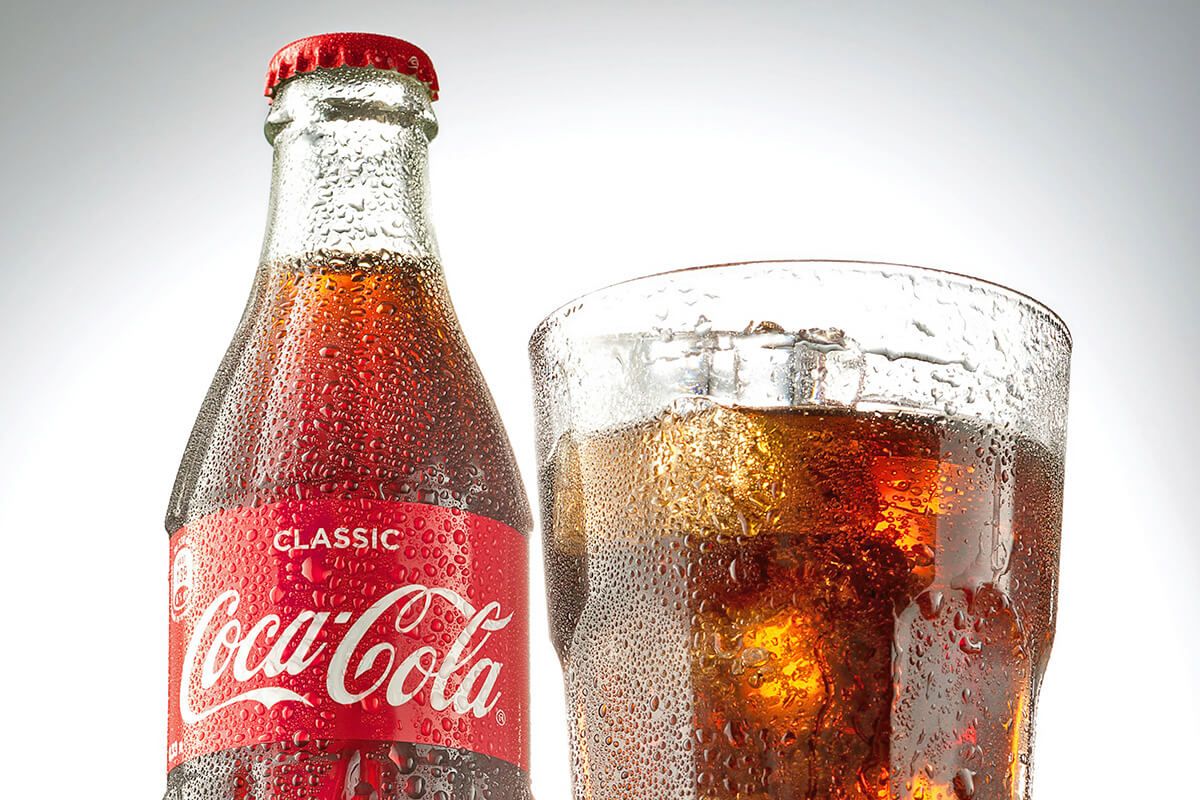
Coca-Cola was invented by pharmacist John Pemberton in Atlanta, Georgia, back in 1886. The syrupy mixture was originally sold at Jacobs’ Pharmacy in downtown Atlanta, where a historical marker currently stands denoting the birthplace of the popular beverage.
Hawaii
The Hawaiian alphabet consists of just 13 letters, half as many as the English alphabet. The letters are A, E, H, I, K, L, M, N, O, P, U, W, plus ‘okina, of which is often written as simply an apostrophe or single left quotation mark, and indicates a pause (more specifically, a glottal stop) in speech.
Idaho
Idaho is known not only for its local brand of potatoes, but also for the 72 types of precious and semi-precious stones that can be found within state lines. Many of these gems occur naturally only in Idaho, earning it the nickname the “Gem State.”
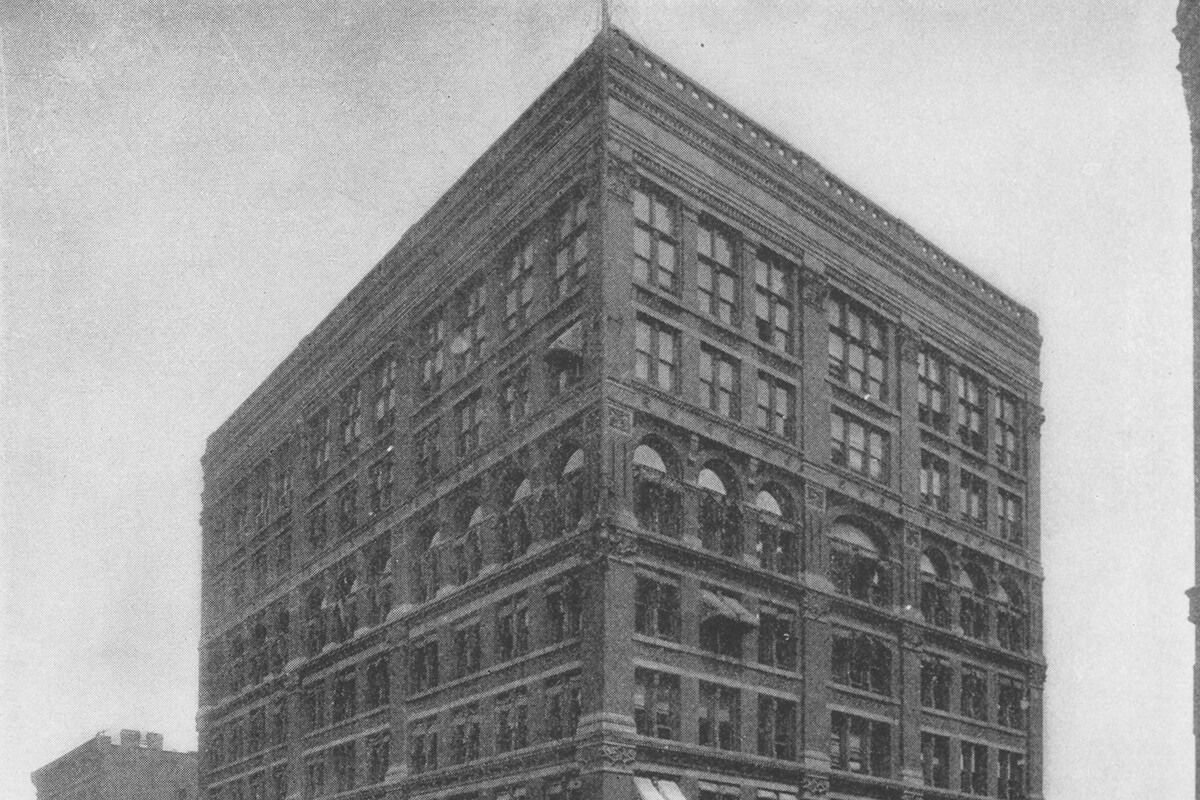
From 1885 until its demolition in 1931, the Home Insurance Building stood in Chicago, Illinois and was considered to be the world’s first skyscraper. The 10-story building stood 138 feet tall, making it the tallest building with an iron frame at the time. Two additional floors were added in 1891, bringing the finished height to 180 feet.
Indiana
The first major league professional baseball game took place in Fort Wayne, Indiana, at the Kekionga Base Ball Grounds. It was played on May 4, 1871, with the Fort Wayne Kekiongas defeating the Cleveland Forest Citys by a score of 2-0.
Iowa
Music legend Buddy Holly’s final performance took place at the Surf Ballroom in Clear Lake, Iowa, on February 2, 1959. He, Ritchie Valens, and musician Jiles Perry Richardson Jr., better known as the Big Bopper, perished in a plane crash the following day just miles away. The event is now known as “the day the music died.”
While former President Dwight D. Eisenhower was born in Texas, he and his family moved to Abilene, Kansas, when baby Ike was just one year of age, where he spent his formative years. The town is home to the Dwight D. Eisenhower Presidential Library and Museum, which includes both Eisenhower’s boyhood home and final resting place.
Kentucky
Kentucky’s Mammoth Cave is the longest known cave system in the entire world. To date, 426 miles of the cave have been explored — thanks in large part to Stephen Bishop, a former enslaved man and self-taught geologist, who hand-drew a map of the cave off-site from memory in 1842. Hundreds of miles more are still believed to be unexplored.
Louisiana
The Lake Pontchartrain Causeway is a 24-mile-long bridge that connects the city of Mandeville to the New Orleans metropolitan area. It’s the longest bridge in the U.S. as well as the world’s longest bridge to run continuously over a body of water.
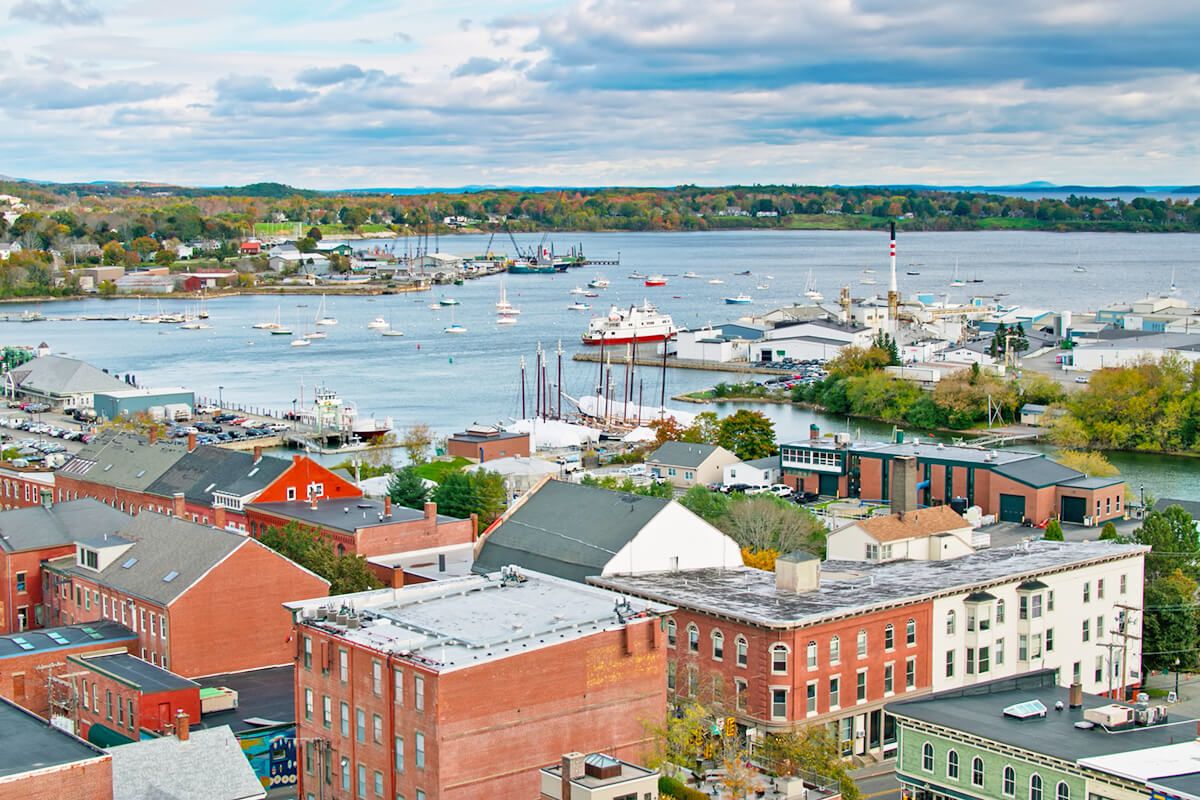
Maine has a geographic makeup unlike any other state, with more than 4,600 islands located off its coast. This gives the entire state a total of 3,478 miles of coastline, roughly 50 miles longer than the coastline of the state of California.
Maryland
The Maryland State House is the oldest U.S. state capitol building in continuous legislative use, with the cornerstone laid back in 1772. It’s also the only state house to have served as the nation’s capitol, which was located in Annapolis from 1783 to 1784.
Two Olympic-level sports were invented in Massachusetts. The first is basketball, which was created by Springfield resident James Naismith in 1891. The other, developed in 1895 by a gym teacher named William Morgan, came to be known as volleyball.
Michigan
In 1835, Michigan and Ohio nearly went to war over the area that makes up modern-day Toledo. Michigan ultimately ceded control in exchange for the promise of statehood as well as for territory in what’s now known as the Upper Peninsula.
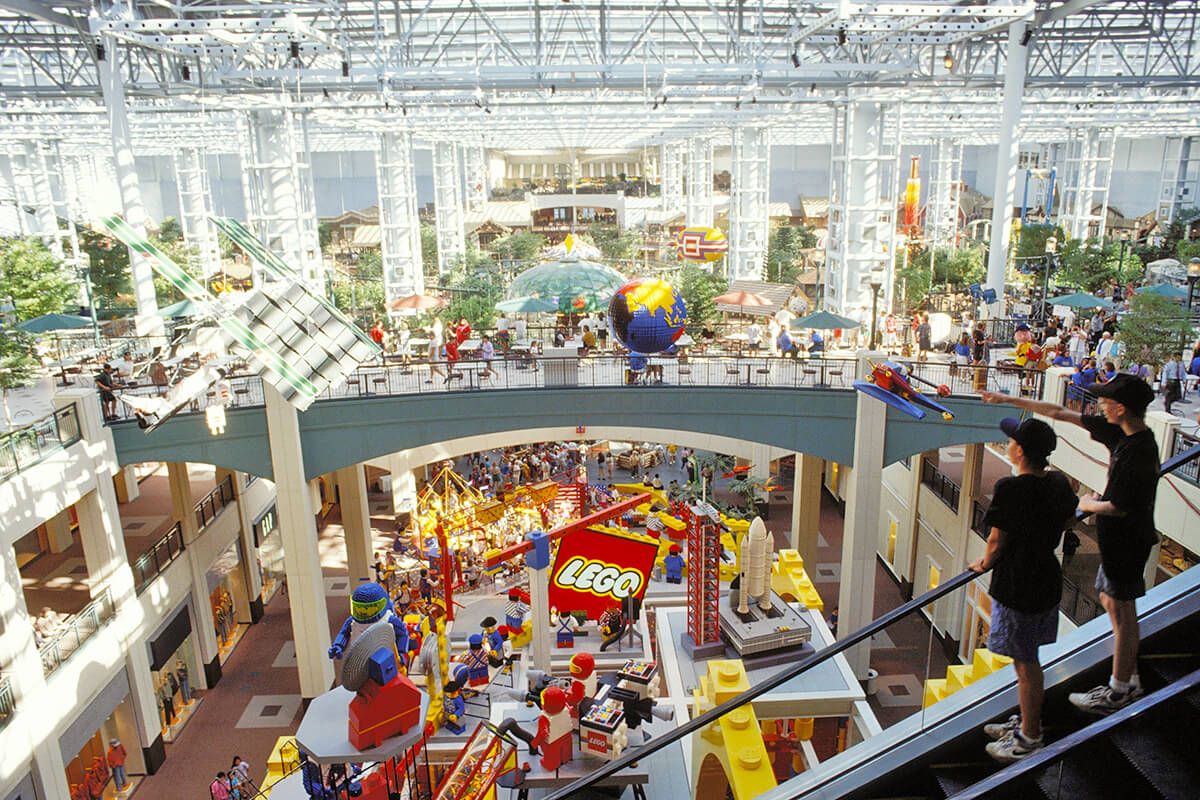
The Mall of America in Bloomington is considered the largest mall in the entire country. It opened back in 1992 and contains more than 5.6 million square footage of retail space, welcoming around 40 million visitors annually.
Mississippi
The capital city of Jackson, Mississippi, is built atop a dormant volcano located 2,900 feet below the city. It was discovered in the early 19th century and is thought to have been extinct for at least 66 million years, with the most recent eruption having likely occurred during the Cretaceous Period (145 million to 65 million years ago).
Missouri
Missouri contains the tallest monument in the U.S., the 630-foot-tall Gateway Arch in St. Louis. The landmark opened in 1965 and is meant to commemorate St. Louis’ role in the 19th-century westward expansion of the United States. In 2018, the area was designated as Gateway Arch National Park, becoming the only national park in the United States to be located entirely within a city.
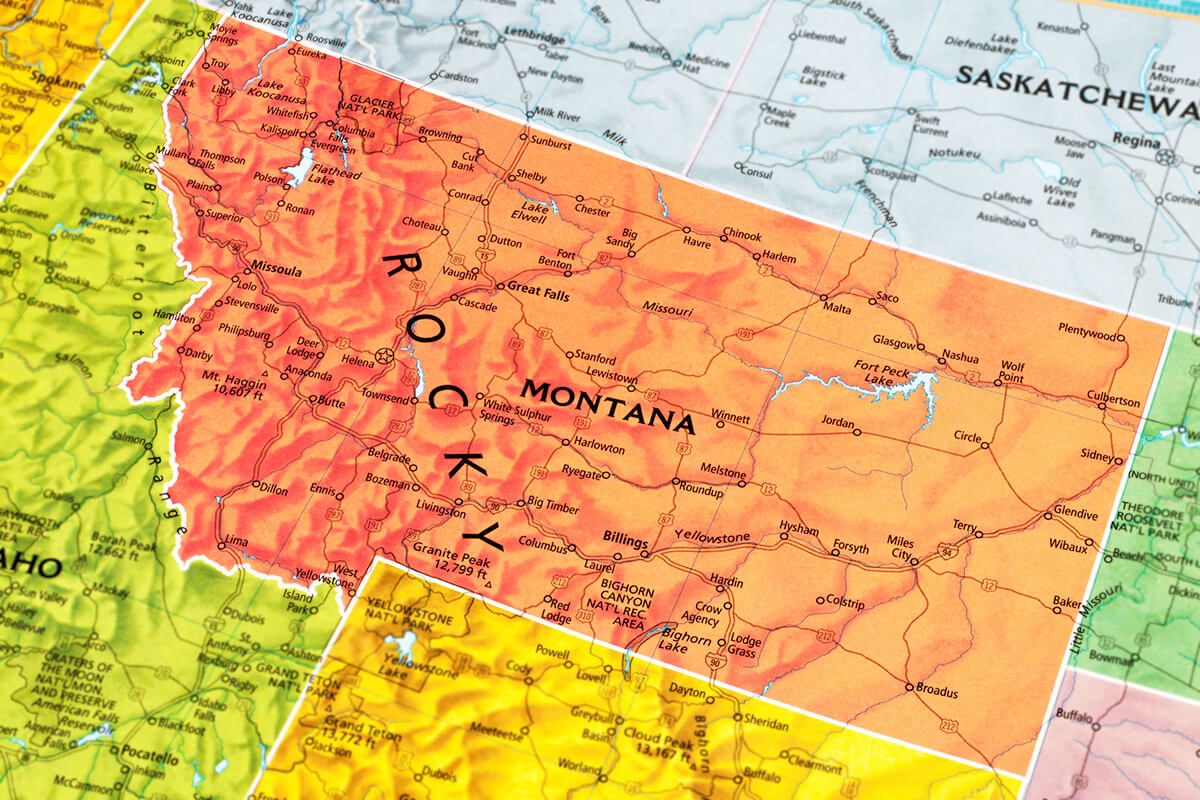
Montana is the only state that’s exactly one time zone wide; it’s located entirely within the Mountain Time Zone. The state’s western border runs along the Pacific Time Zone, while a chunk of its eastern border runs along the Central Time Zone.
Nebraska
Nebraska’s state government is unique for being the only unicameral legislature in the country. This means that while most states have two legislative chambers (for instance, a state house and state senate) Nebraska only has one. This explains why it’s also the smallest legislative branch in the country with just 49 members.
Nevada
According to figures provided by the Las Vegas Convention and Visitors Authority, there are more than 150,000 hotel rooms located in Sin City. This is the highest number of any U.S. city and also puts it in the top five for the most of any city in the world.
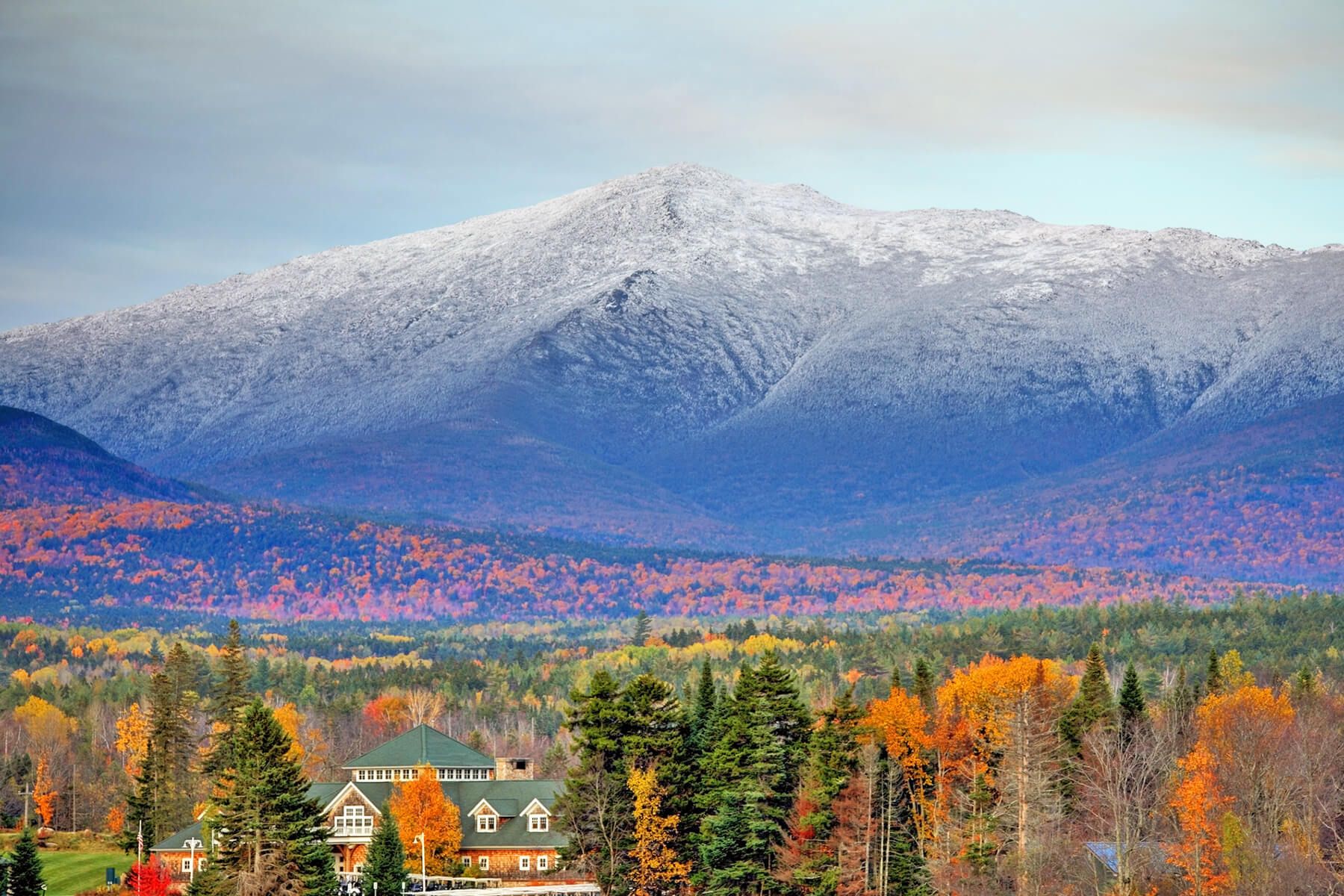
On April 12, 1934, wind speeds of 231 mph were recorded atop New Hampshire’s Mount Washington. This was the fastest non-tornadic wind speed recorded anywhere in the world at the time, and today it remains the second fastest recorded wind speed in human history. (The fastest is 253 mph, recorded on Australia’s Barrow Island on April 10, 1996.)
New Jersey
The spaces on a standard American Monopoly board are modeled after locations in Atlantic City, New Jersey. Board game designer Charles Darrow sold the design in 1935 to Parker Brothers, who kept those locations while marketing it to a national audience.
New Mexico
In March 1950, Hot Springs, New Mexico, officially changed its name to Truth or Consequences. This was done in honor of a radio show of the same name, whose host promised to air a 10th-anniversary episode from any town that made the name change.
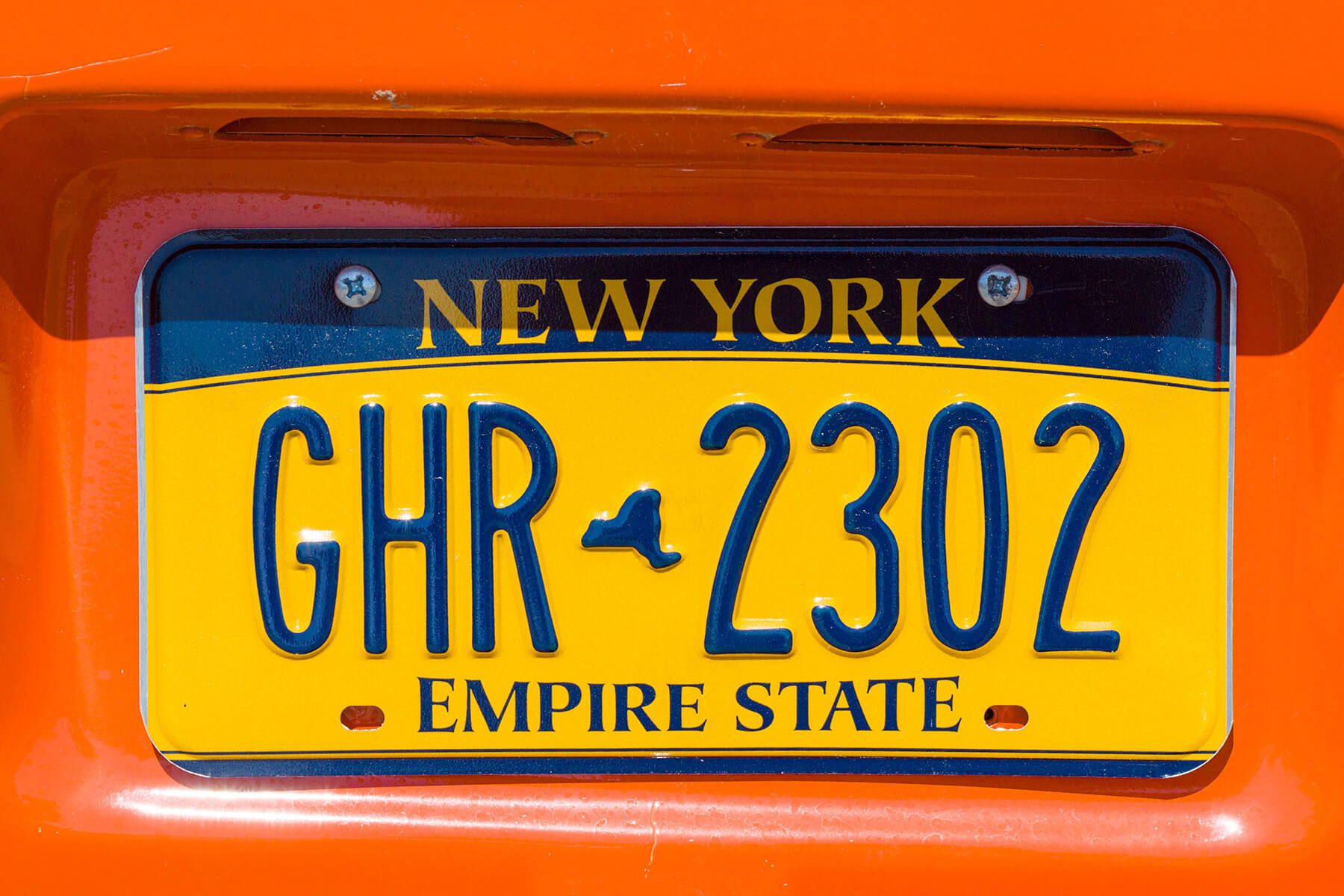
New York was the first state to require automobile license plates, implementing the rule for drivers in 1901. Many of the original plates were made of leather using DIY kits at home, and they often featured the owner’s initials in lieu of numbers.
North Carolina
The infamous pirate Blackbeard — whose real name was Edward Teach — met his demise off the coast of North Carolina in November 1718. His flagship, Queen Anne’s Revenge, had run aground and been abandoned earlier that year in what’s now known as Beaufort Inlet. The ship wasn’t rediscovered until 1996.
North Dakota
The town of Medora, North Dakota, held a fond place in the heart of President Theodore Roosevelt, who established Elkhorn Ranch 35 miles north of the city in 1884 when he was 26. The area is now home to Theodore Roosevelt National Park and will be the site of Roosevelt’s presidential library.
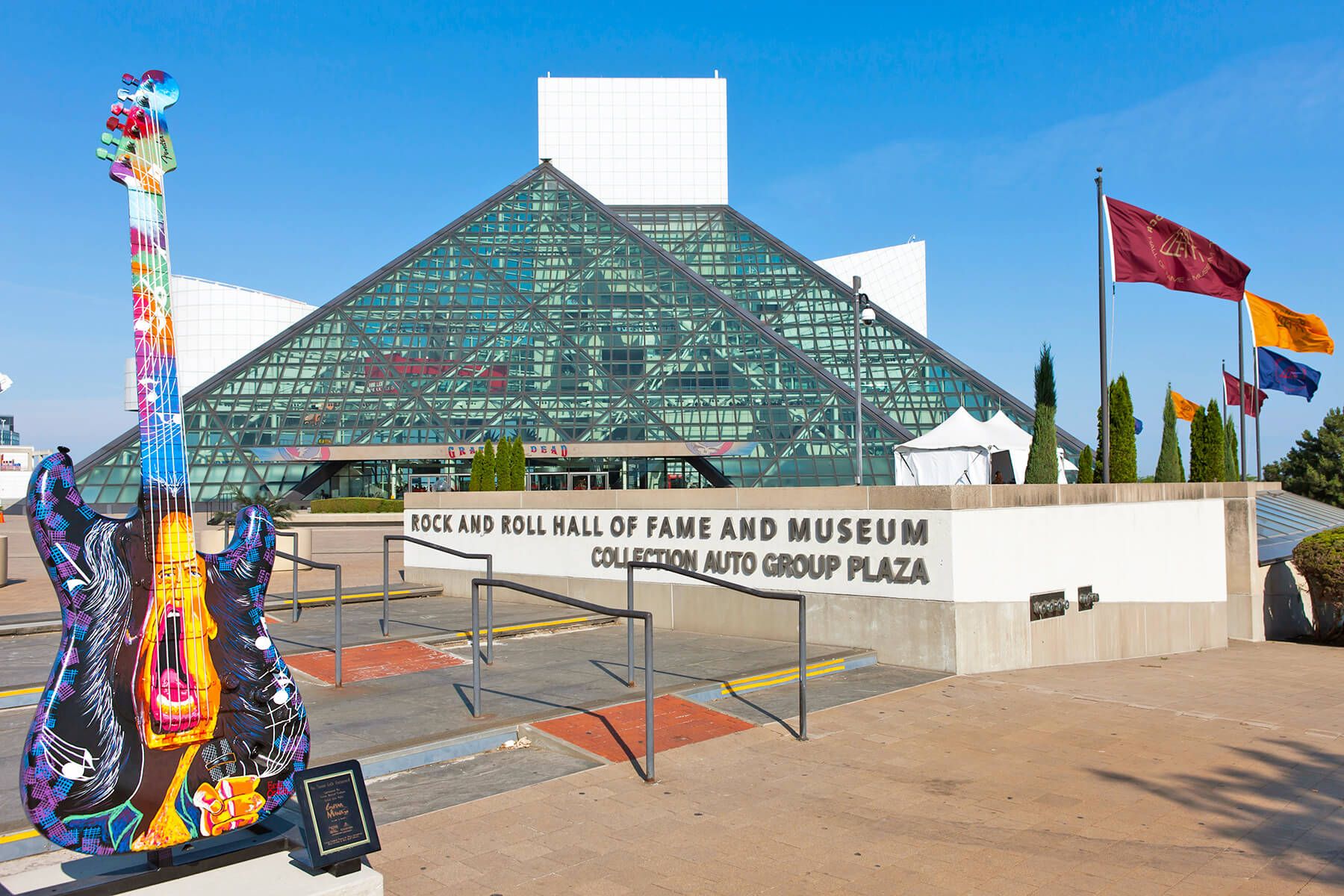
Northeast Ohio is home to two prestigious halls of fame: the Rock & Roll Hall of Fame in Cleveland, known for its distinctive pyramidal structure created by architect I.M. Pei., and the Pro Football Hall of Fame located in Canton.
Oklahoma
Cimarron County is situated at the westernmost tip of the Oklahoma Panhandle and is the only county in the U.S. that touches five states. This includes the rest of the state of Oklahoma, plus Colorado, Kansas, New Mexico, and Texas.
Oregon
A colony of the fungus species Armillaria ostoyae located in Oregon’s Malheur National Forest is believed to be the largest living organism on Earth. Nicknamed the “Humongous Fungus,” the 2,384 acres of fungi that sweep through the state’s Blue Mountains were discovered in 1998.
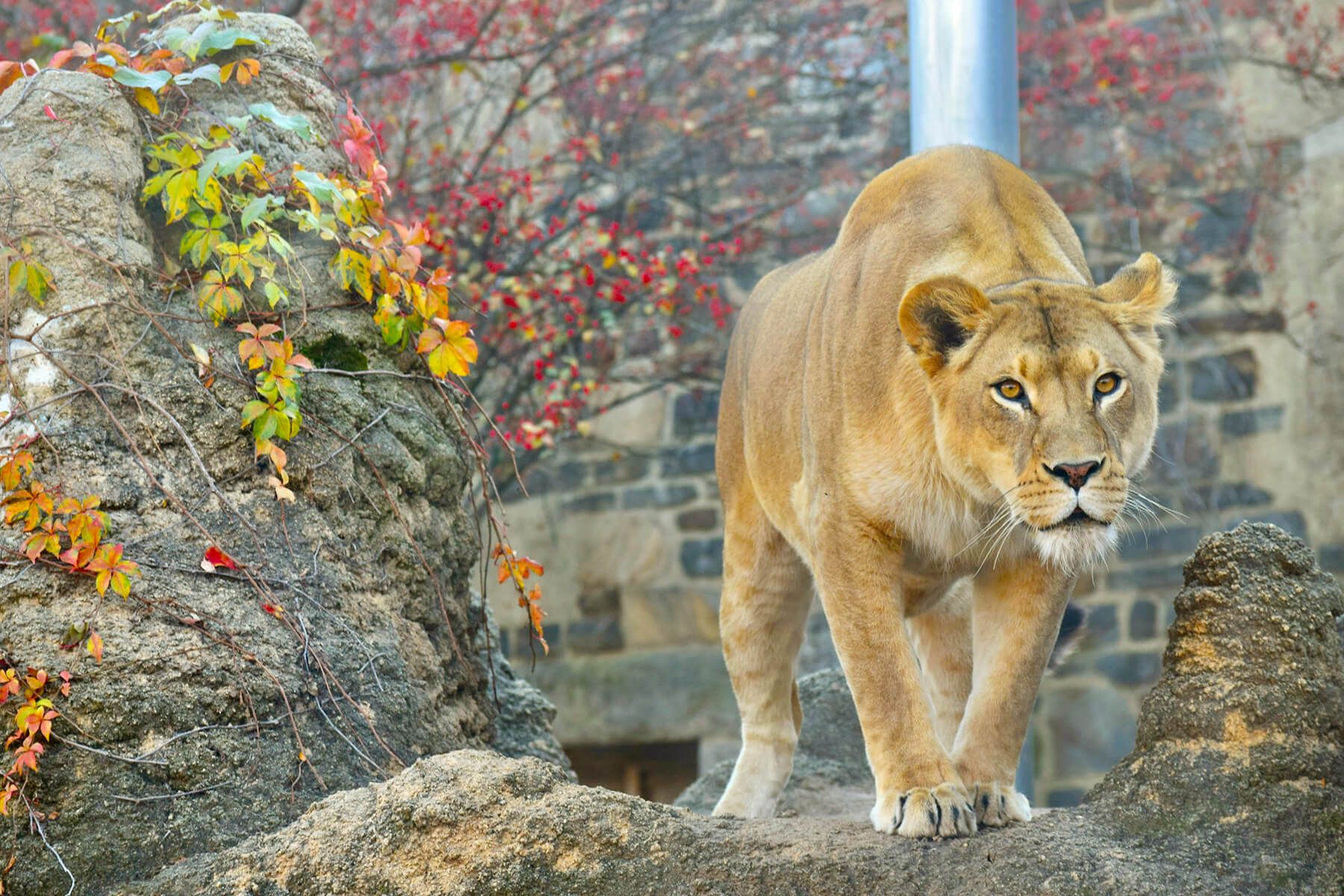
The Philadelphia Zoo was the first public zoo in the U.S. The charter was originally signed in 1859, though progress was halted for 15 years due to the Civil War. The zoo finally opened its doors on July 1, 1874.
Rhode Island
Newport, Rhode Island, is home to the Touro Synagogue, the oldest synagogue in the U.S. The building was dedicated in 1763 and continues to provide services for members of the local Jewish community.
South Carolina
Morgan Island, also called “Monkey Island,” is a private island located off the coast of Beaufort that’s home to more than 4,000 free-ranging rhesus monkeys. Around 1,400 monkeys were originally placed on the island in 1979 for research purposes, and the population has continued to grow since then.
Despite being located in the middle of the country, South Dakota actually contains more miles of shoreline than the state of Florida. This is due to the many lakes and rivers found in the Mount Rushmore State, including the 231-mile-long Lake Oahe reservoir.
Tennessee
Having first aired in November 1925, the Grand Ole Opry is the longest-running radio program in U.S. history. The show broadcasts live country music each week from the Grand Ole Opry House in Nashville.
Texas
With more than 15 million Mexican free-tailed bats calling it home, Bracken Cave — located near San Antonio — contains the world’s largest bat colony. Millions of bats also reside under Austin’s Congress Avenue Bridge, which has become a popular tourist attraction for that reason.
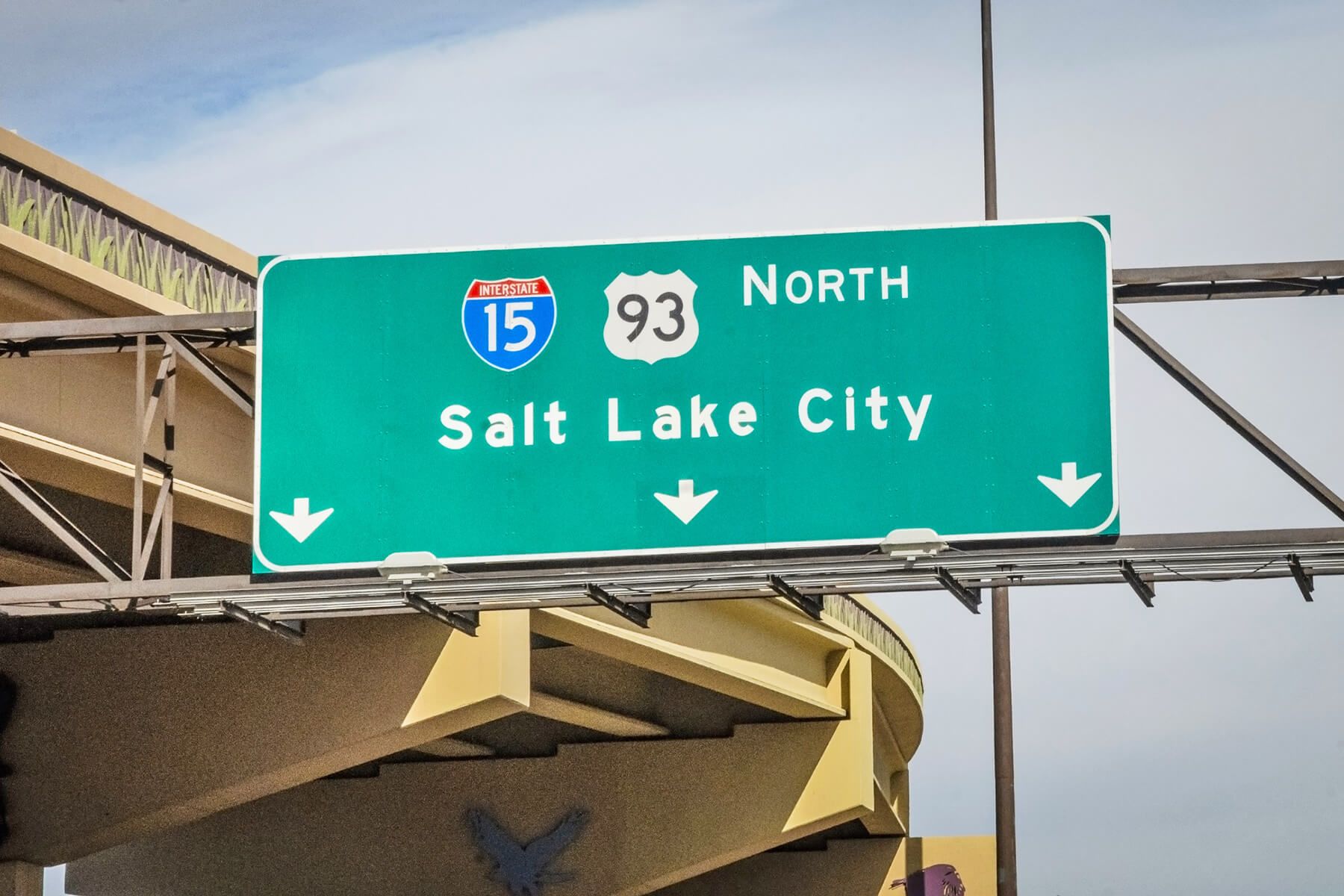
Salt Lake City is the only state capital in the U.S. whose name is more than two words long. It actually used to be even longer, as it was originally called Great Salt Lake City before dropping the “Great” in 1868.
Vermont
From 1777 to 1791, Vermont existed as an independent entity known as the Vermont Republic. During that time, it became the first independent government entity in North America to ban slavery. It joined the U.S. as the 14th state in 1791.
Virginia
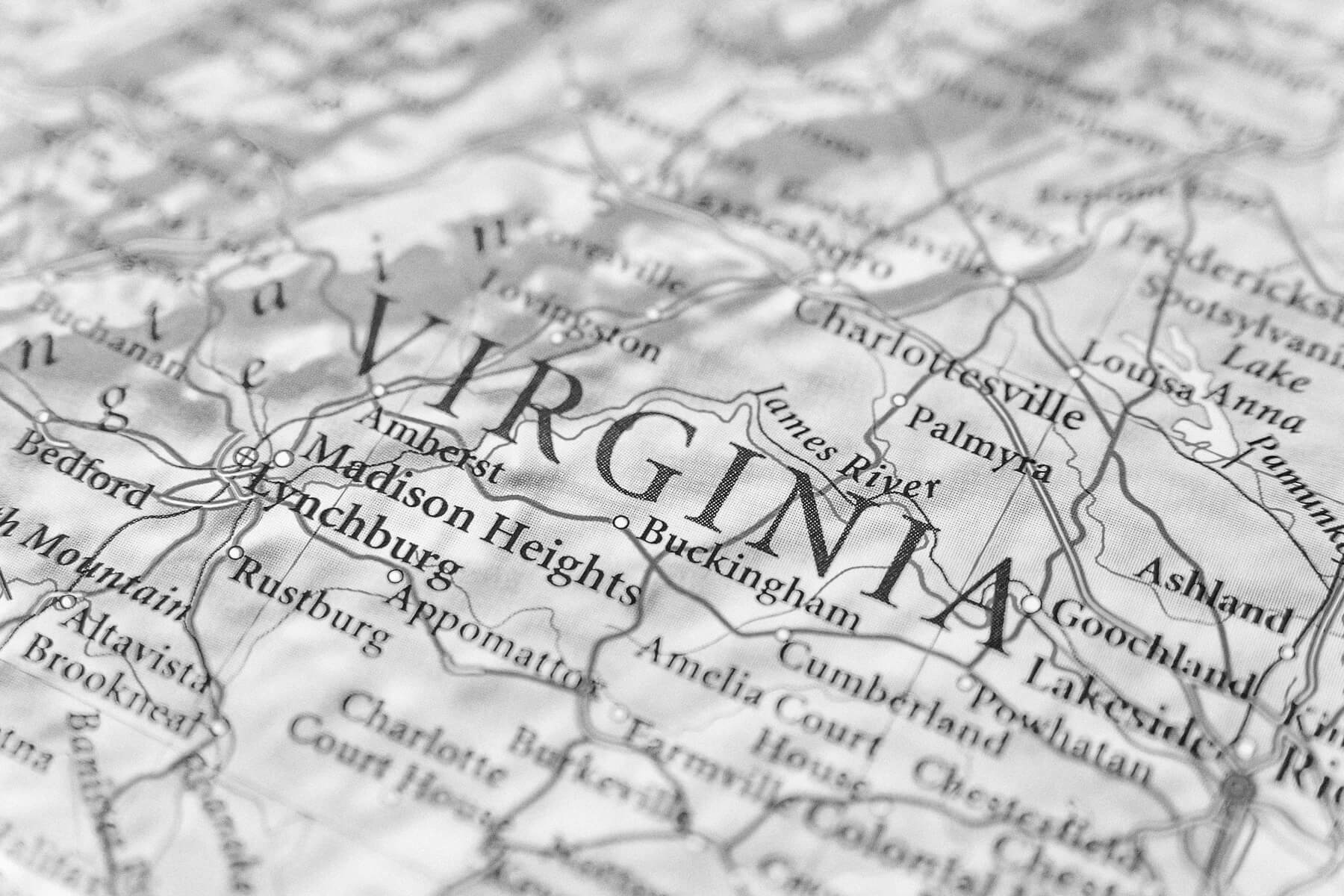
Eight U.S. presidents have been born in Virginia to date — the most of any state. The list includes George Washington, Thomas Jefferson, James Madison, James Monroe, William Henry Harrison, Zachary Taylor, John Tyler, and Woodrow Wilson.
Washington
Though it’s recognized nationwide today, the first Father’s Day was celebrated on June 19, 1910, in Spokane, Washington. It wasn’t until 1972 during campaign season that then-President Richard Nixon signed a proclamation to make it a national holiday.
West Virginia
The New River Gorge Bridge is the longest steel span bridge in the Western Hemisphere, measuring 3,030 feet long. In 2020, it became the focal point of the country’s newest national park, New River Gorge National Park and Preserve.
Wisconsin
The Green Bay Packers are the only publicly owned team in any of the four major U.S. sports leagues (the NFL, MLB, NBA, and NHL). Ownership is composed entirely of shareholders, many of whom are local Wisconsinites who are also devoted fans of the franchise.
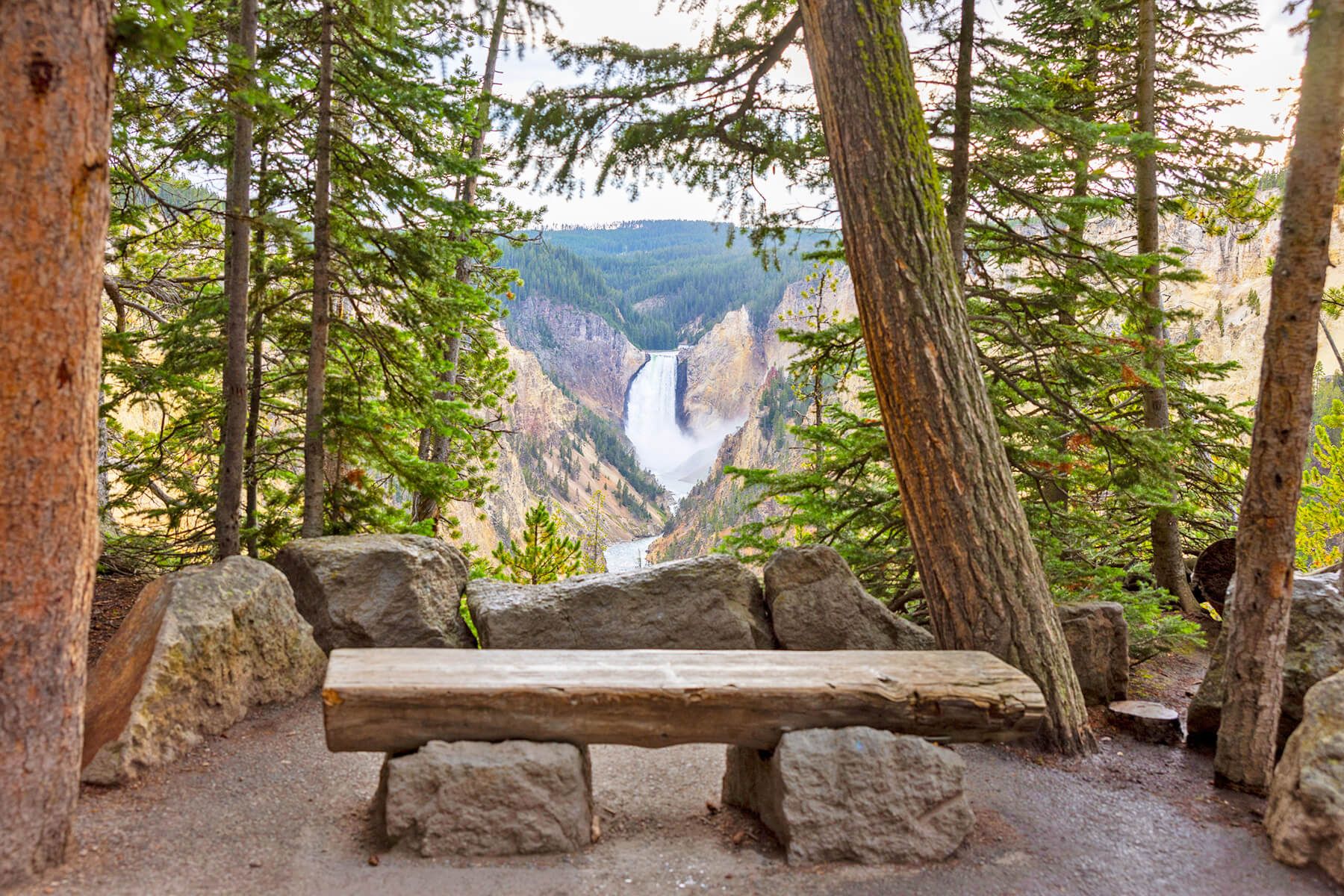
The majority of Yellowstone National Park, which became the country’s first national park back in 1872, is located in Wyoming. The park features popular natural attractions such as the Old Faithful geyser, the Grand Prismatic Spring, and bountiful wildlife.
Bennett Kleinman
Staff Writer
Bennett Kleinman is a New York City-based staff writer for Inbox Studio, and previously contributed to television programs such as "Late Show With David Letterman" and "Impractical Jokers." Bennett is also a devoted New York Yankees and New Jersey Devils fan, and thinks plain seltzer is the best drink ever invented.
Advertisement
top picks from the Inbox Studio network
Interesting Facts is part of Inbox Studio, an email-first media company. *Indicates a third-party property.