
Interesting Facts

On a clear, dark evening, when the air is still and the world seems to slow, the night sky puts on a show — all you have to do is look up. For thousands of years, humans have done just that, looking to the stars in awe, seeking comfort and meaning in the sparkle of distant celestial bodies.

Beyond the haze of artificial light, the night sky is filled with wonders that connect us to nature, history, and one another. You don’t need a telescope or technical knowledge to explore it — just a little patience and curiosity. From ancient constellations to fleeting streaks of light and orbiting spacecraft, the sky above Earth holds countless surprises. Here are six fascinating facts that reveal just how remarkable the night sky can be.
Credit: © Allexxandar/iStock

You See Roughly the Same Stars Your Ancestors Did

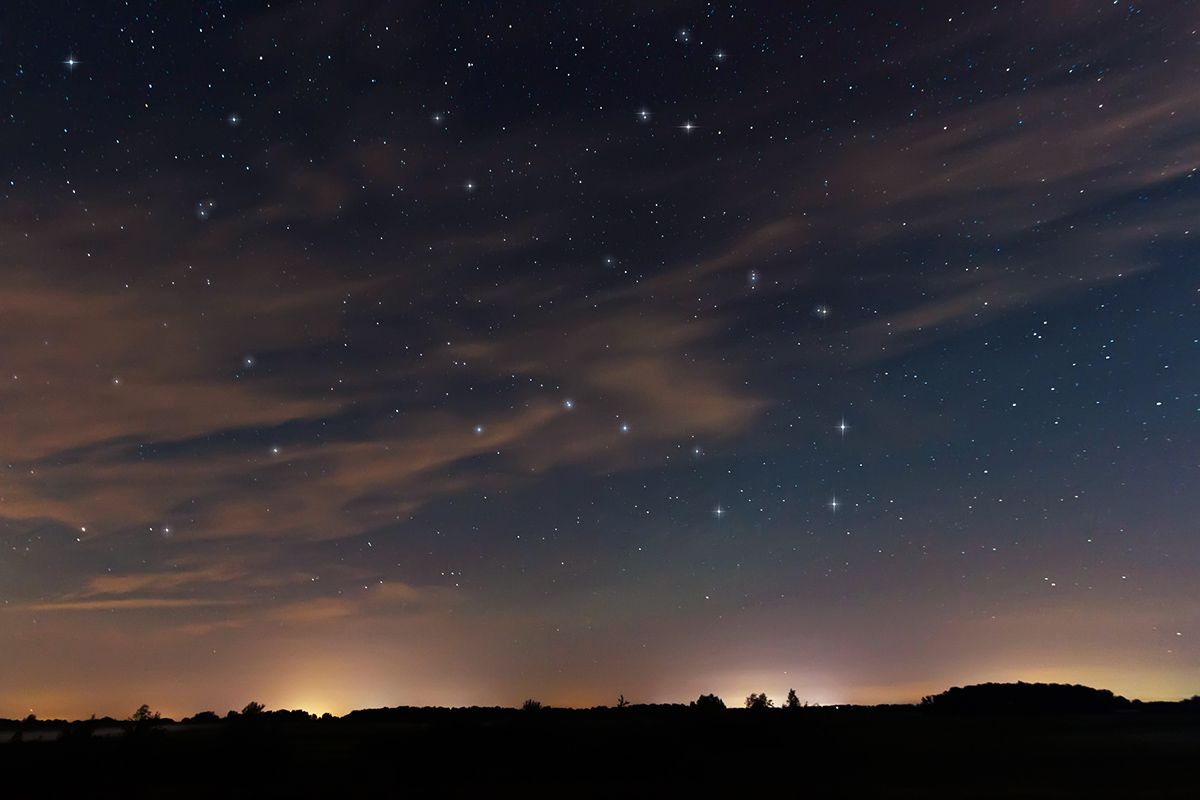
When you look up at the night sky, you’re seeing nearly the same star patterns people recognized thousands of years ago. Constellations such as Taurus, Orion, and Ursa Major were identified by ancient cultures long before modern science mapped them. Travelers used them for navigation, farmers tracked the seasons by their rising and setting, and storytellers built myths around their shapes.

The stars are constantly moving through space at tremendous speeds — thousands of miles per hour — in a slow drift astronomers call proper motion. They only appear fixed because they’re so far away. Over the course of a human lifetime, their positions shift so slightly that the patterns seem relatively unchanged. So while we don’t see exactly the same sky our ancestors saw, we see a version that’s changed only imperceptibly on a human timescale.
Credit: © jtyler/iStock

Polaris Hasn’t Always Been the North Star

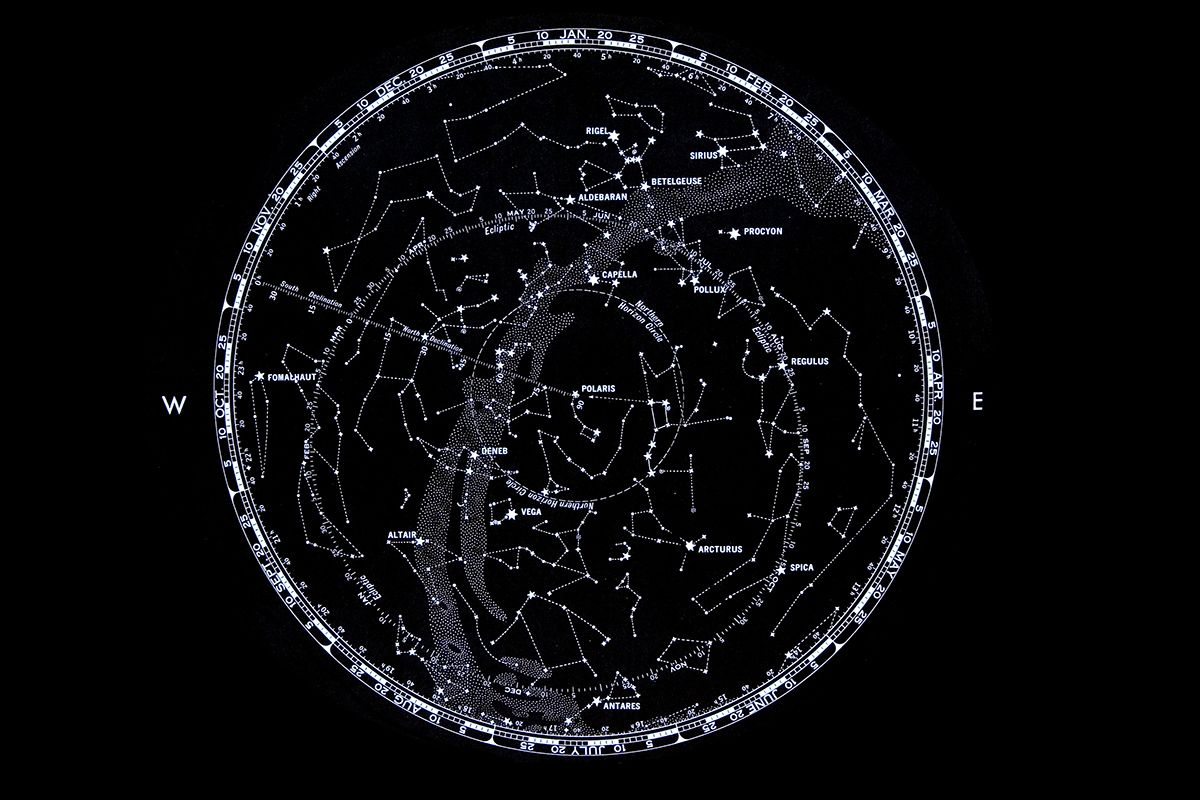
Even the stars that seem most fixed, such as the ones our ancestors relied on for direction, slowly shift over time. The North Star is the star that appears almost directly above Earth’s North Pole, sitting close to the north celestial pole, aka the point in the sky around which all the other stars seem to turn. 

Because Earth rotates on its axis, the night sky slowly shifts over the course of the night, causing the stars to gradually change position., The North Star, however, barely seems to move, holding nearly the same position while the rest of the stars circle around it. Today, that role belongs to Polaris (Alpha Ursae Minoris), the brightest star in the constellation Ursa Minor. But that hasn’t always been the case.

Earth’s axis slowly wobbles in a 26,000-year cycle called axial precession, gradually tracing a wide circle against the background stars. Between roughly 3942 BCE and 1793 BCE, the star Thuban, the alpha star of the constellation Draco the Dragon, lay closest to the north celestial pole and served as the North Star. 

Thousands of years from now, around 12,000 CE, the bright star Vega in the constellation Lyra the Harp will take its turn. And eventually, in the very distant 20,346 CE, Thuban will once again be the North Star.
Credit: © ylenia cancelli/stock.adobe.com

You Can See Only About 3,000 Stars on a Clear Night

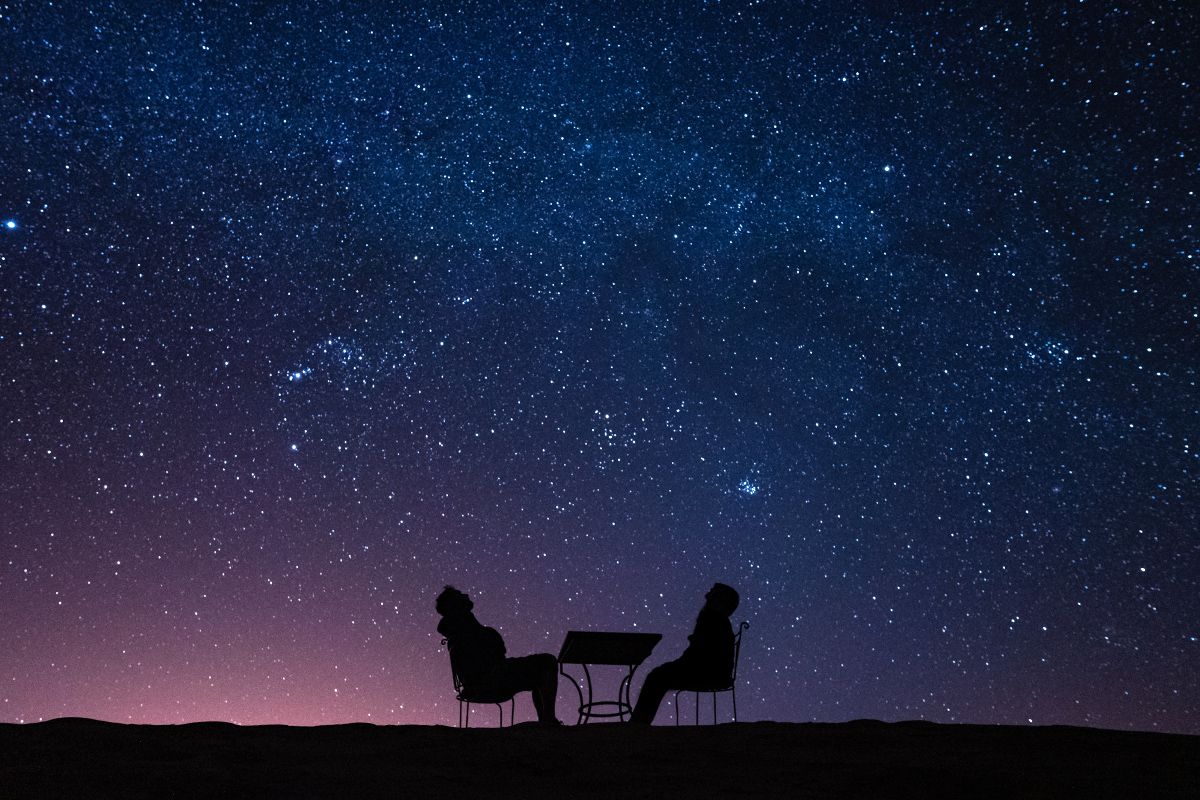
On a clear, moonless night far from city lights, it can feel as though the sky is crammed full of stars. In reality, the human eye can perceive only about 3,000 stars at one time under ideal conditions — exceptionally dark skies, no moonlight, and sharp vision. Because Earth itself blocks half the sky from view, there are only about 6,000 total stars visible to the naked eye across the entire planet.

That number may sound large, but it’s just a tiny fraction of what’s actually out there. Our galaxy, the Milky Way, contains an estimated 100 billion stars. Beyond it lie billions of other galaxies scattered across the observable universe. 

Most of those stars are simply too far away — and therefore too faint — for the human eye to detect without a telescope. Compared to the unfathomable number of stars that lie in our own galaxy and beyond, the few thousand stars we can see without a telescope represent only the barest surface layer of the cosmos.
Credit: © sripfoto/stock.adobe.com

A Star’s Color Reveals Its Temperature

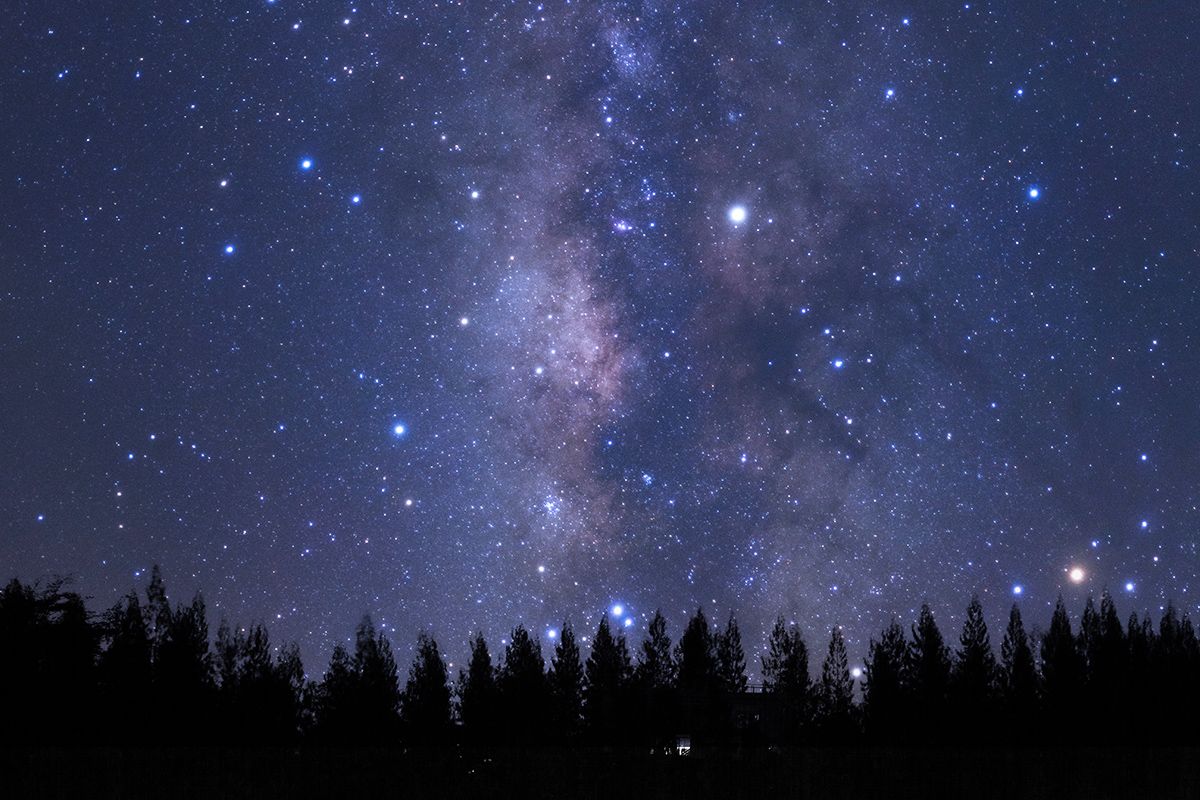
The color of a star — white, bluish, reddish, or golden — offers a direct clue about its surface temperature and, by extension, its size, age, and stage of life. Hot, massive stars burn bright and blue, consuming their fuel quickly and often living only a few million years. Reddish stars are actually the coolest and burn more slowly, sometimes for tens of billions of years, and may appear faint or deep crimson to the naked eye. 

Stars such as our sun are medium-sized and sit in the middle of that spectrum, with a yellowish-white glow and a lifespan of roughly 10 billion years. By observing a star’s color, you can gauge both its relative size and the cosmic clock it follows.

On a clear, dark night, you can see those colors with the naked eye. In the constellation of Orion, Betelgeuse appears reddish, Rigel shines bluish‑white, and even stars that look white to casual viewing often reveal subtle gold or blue tints when seen under ideal conditions. 

Stars can also undergo real color changes over long periods of time as they evolve. For example, historical records from cultures around the world suggest Betelgeuse was described as yellow‑orange about 2,000 years ago, indicating it may have been hotter and less red at that time than it is today. Those long‑term shifts reflect changes in the star’s outer layers and temperature as it advances through the late stages of stellar evolution.

Credit: © Imgorthand/iStock

We’re Looking at the Past When We Look at the Stars

Light travels at a finite speed (about 186,000 miles per second), and a light-year is the distance light can travel in one year (about 6 trillion miles), which means light from distant stars takes a long time to reach Earth. A star located 100 light-years away is seen as it appeared 100 years ago, because that’s how long its light has been traveling to us. Some of the faintest stars visible to the naked eye are thousands of light-years away, so the light we detect from them began its journey long before recorded human history.

We are effectively observing the past when we look at the night sky. In some cases, a star we see may no longer exist in the state we’re seeing — we’re seeing its light from before it changed, exploded, or died. The night sky is therefore a record of events that occurred across vast distances and timescales, with each star’s light carrying information about its condition from years, centuries, or even millennia ago.
Credit: © Darryl Fonseka/istock

You Can Observe Human Spaceflight From Your Backyard

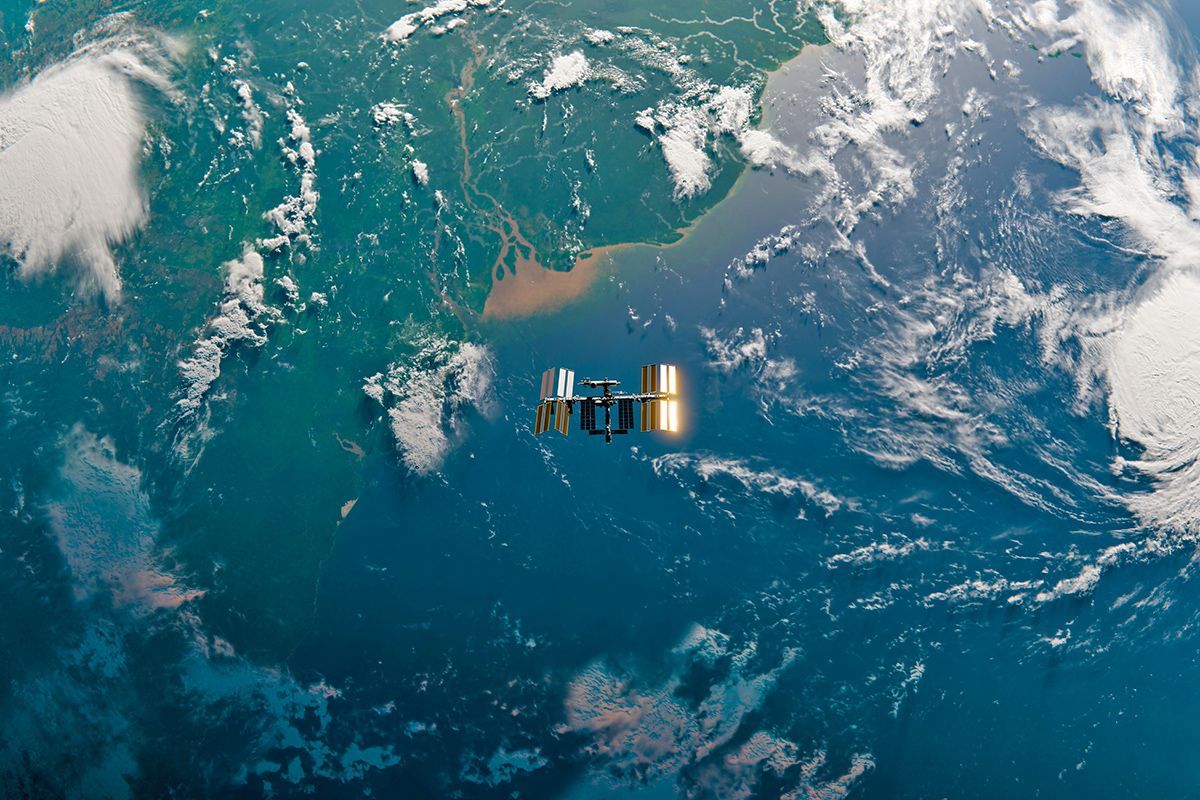
One of the brightest moving objects in the night sky is the International Space Station (ISS). Orbiting Earth approximately every 90 minutes at an average altitude of about 248 miles, it reflects sunlight, which makes it appear as a steady, bright point of light moving across the sky. How can you tell it’s the ISS? Unlike airplanes, the space station doesn’t have blinking lights, and unlike stars, it travels smoothly and quickly from horizon to horizon.

With precise timing, anyone can observe the ISS from their backyard using simple online tracking tools or smartphone apps that provide predictions on when it will pass. Depending on your location and the season, the station can be visible for several minutes, moving at roughly 17,500 miles per hour. The best time to see it is at dawn or dusk, when the sky is dark enough for visibility but the station is still high enough to catch sunlight and reflect it down to Earth.

Kristina Wright
Writer

Kristina is a coffee-fueled writer living happily ever after with her family in the suburbs of Richmond, Virginia.

Interesting Facts

You may be surprised to learn how many of the foods you see on restaurant menus and in supermarket aisles are named after real people. These monikers aren’t always as obvious as an Arnold Palmer or Shirley Temple; there are plenty of culinary delights that pay homage in a far more subtle manner.

Some foods are named after their inventors, such as a certain cheesy appetizer we all know and love. Others were named for more peculiar reasons, including after a talented artist whose works bear a striking resemblance to a certain plated dish. Let’s take a bite out of seven foods with surprising namesakes.

Credit: © Davey Gravy/Unsplash.com

Nachos

Some Mexican foods, such as enchiladas, have Spanish names that describe basic elements of the dish. (“Enchilada” is Spanish for “seasoned with chili.”) But nachos have a different backstory: They’re named for their creator, a maître d’hôtel named Ignacio Anaya. To those who knew him personally, Anaya was known as “Nacho,” a popular Spanish sobriquet for Ignacio.

Nachos were conceived in the Mexican border town of Piedras Negras in the early 1940s, where Anaya worked at a restaurant called Victory Club. One day, a group of hungry diners arrived outside of normal business hours, after the cooks had already gone home. Anaya nonetheless worked to satiate the guests’ appetites, whipping up a hodgepodge recipe using leftover food lying around the kitchen. 

The improvised dish, which included fried tortilla chips, melted colby cheese, and jalapeño peppers, was an immediate hit. When asked for the meal’s name, according to Saveur magazine, Anaya replied, “Nacho’s especiales” (“Nacho’s special”). It was soon added to the permanent menu, and the name was eventually shortened to just “nachos.”

Credit: © GL Archive/Alamy

Granny Smith Apples

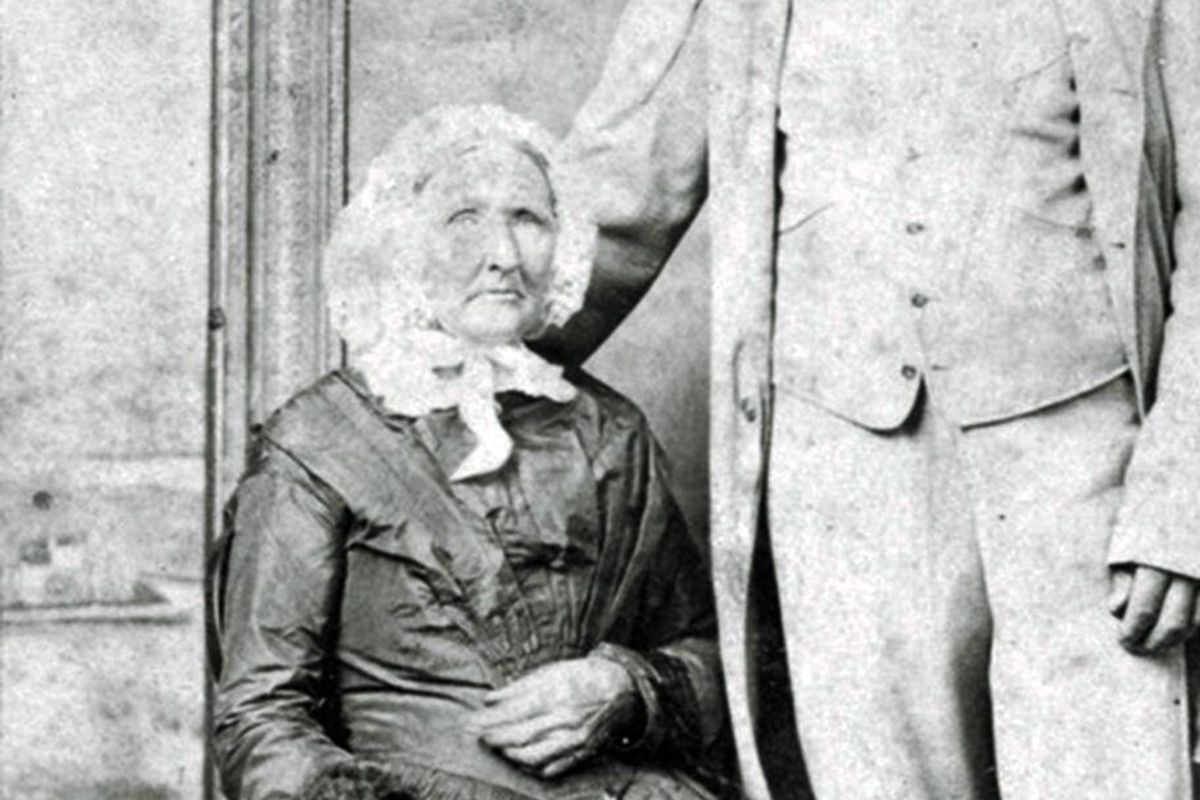
Unlike Mrs. Butterworth and Aunt Jemima, Granny Smith was a real person. The nickname was given to Australian agriculturist Maria Ann Smith by her grandchildren and later to the now-popular apple cultivar she discovered late in life.

In the mid-1850s, Smith and her husband, Thomas, purchased 24 acres of farmland to grow fruit. One of the crops that flourished was a green apple variety that was believed to have mutated from the scattered remnants of old French crab apples. 

The apples first appeared in 1868, and Smith passed away just two years later. However, local orchardists continued to grow the increasingly popular cultivar, and it was made ready for export in 1895 under the name “Granny Smith’s Seedling” to honor the woman who discovered it.

Credit: © MSPhotographic/stock.adobe.com

Salisbury Steak

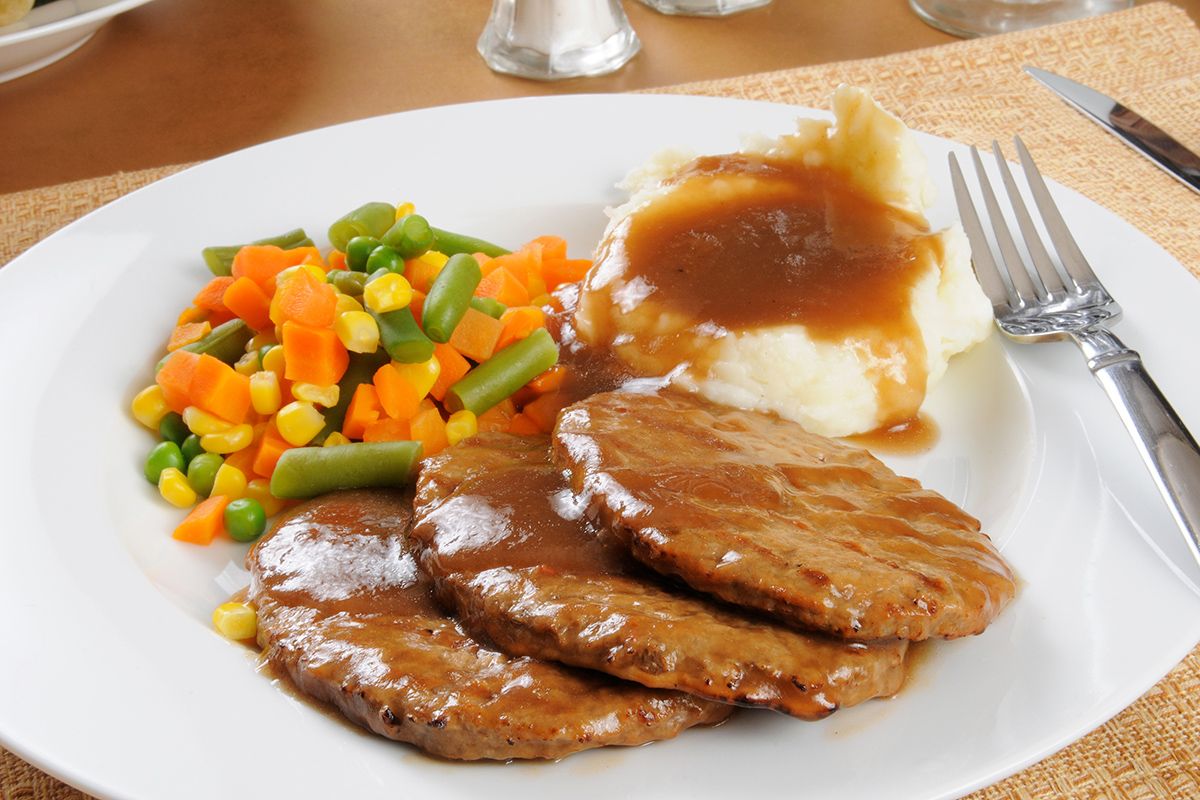
Whether served at a restaurant or as part of a frozen TV dinner, the Salisbury steak is an American classic. It was named for physician James H. Salisbury, who created the recipe and originally promoted it as a health food.

Salisbury was an early proponent of germ theory, the idea that diseases are caused by microorganisms. But back in Salisbury’s day, certain elements of the theory were dubious, including the misguided belief that vegetables released toxins into the digestive system. 

The physician considered beefsteak a healthy alternative, and thus created his namesake recipe in 1897. He originally referred to it in his 1888 book The Relation of Alimentation and Disease as “muscle pulp of beef” (yum!) and promoted the gravy-soaked ground beef as good for gut health. Salisbury died in 1905, but his creation lives on, even if not for the health reasons he initially intended.

Credit: © Gresei/stock.adobe.com

Carpaccio

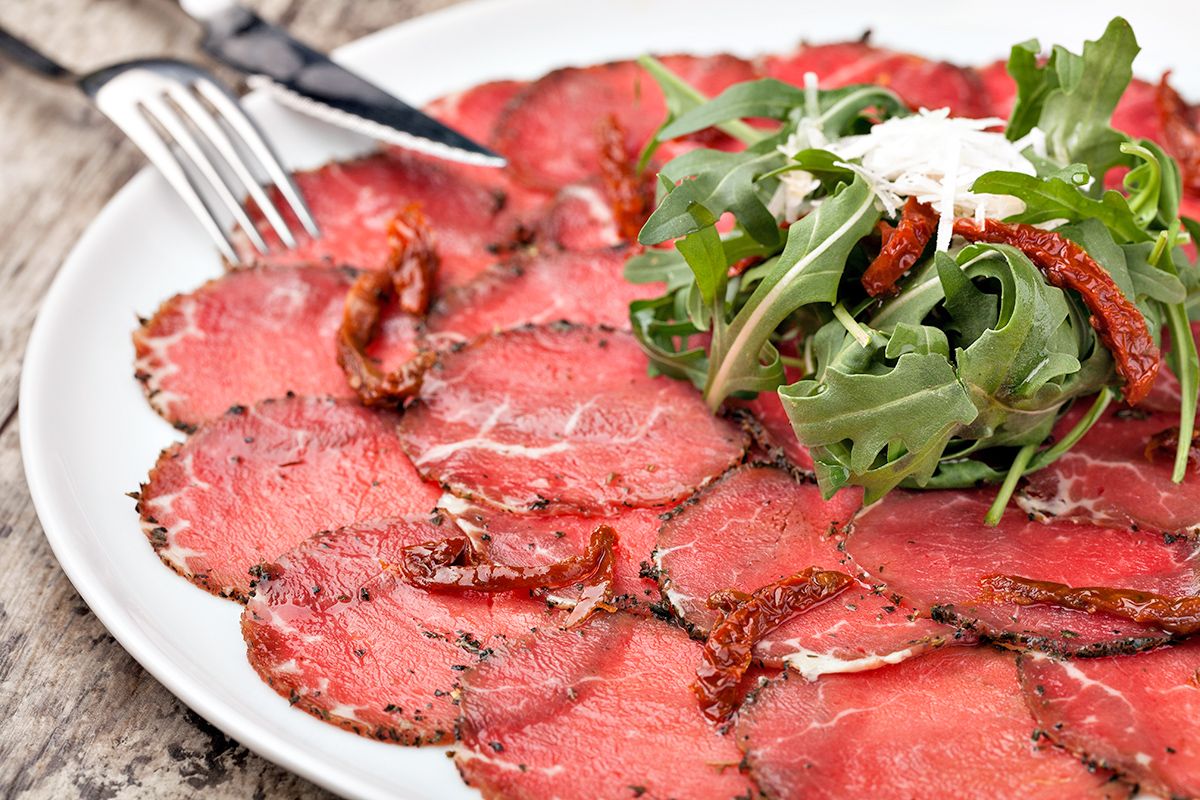
Carpaccio is a dish consisting of thinly sliced meat (typically beef or tuna) that’s served raw and topped with Parmesan cheese, lemon, olive oil, and other trimmings. It was invented in 1950 by a restaurateur named Giuseppe Cipriani, who owned an establishment named Harry’s Bar in Venice. 

Cipriani created the dish for one of his regular patrons who had been advised by their doctor to avoid cooked meat. But rather than naming it after the customer in question, he went another route, settling on Italian Renaissance painter Vittore Carpaccio as the meal’s namesake.

According to Cipriani’s daughter, Cipriani was inspired by the red-and-white paintings of Carpaccio, which Cipriani had seen on display at Doge’s Palace in Venice. The result was a platter of bright red raw beef covered with a white sauce, dubbed “beef carpaccio.”

Credit: Library of Congress, Washington, D.C. 

Graham Crackers

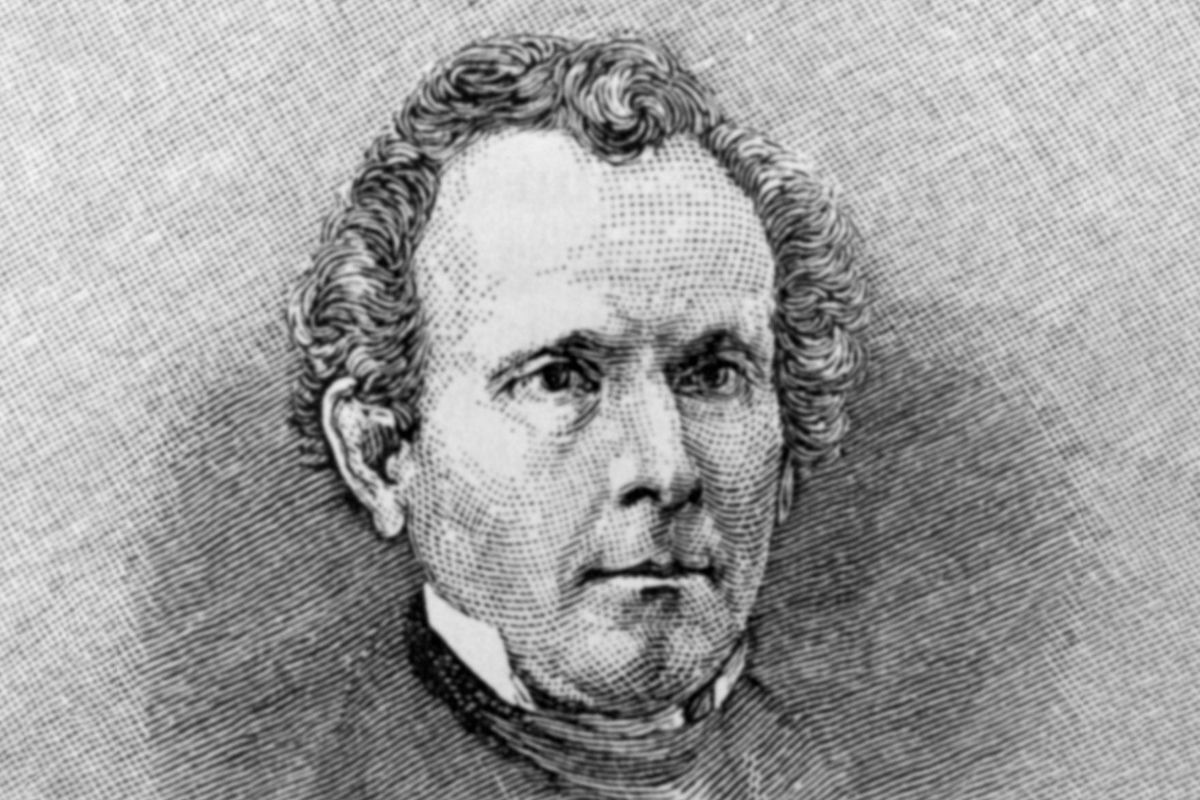
Sylvester Graham was a 19th-century Presbyterian minister who’s been referred to as the “father of vegetarianism.” Many of his teachings lambasted meats and refined grains as sources of sin, and he encouraged his followers to instead consume fruits, vegetables, and whole grains. Graham also experimented in developing a refined flour substitute called “graham flour” – a coarse, whole wheat flour used to create the first graham cracker.

The snack was invented in 1829, though the earliest versions were thinner and more savory than the modern sweet variety. While Graham believed the crackers could help people avoid the temptation of the foods he believed to be sinful, other bakers adopted the recipe for nonreligious reasons, believing it could gain popularity as a tasty treat. 

One of those bakers was J. Thompson Gill, who’s credited with creating the first sweet graham cracker in 1881, and Nabisco began mass-producing the product. Aside from the graham cracker name, the modern biscuit has little in common with the original food.

Credit: © Ivan Vi/Pexels

Hass Avocados

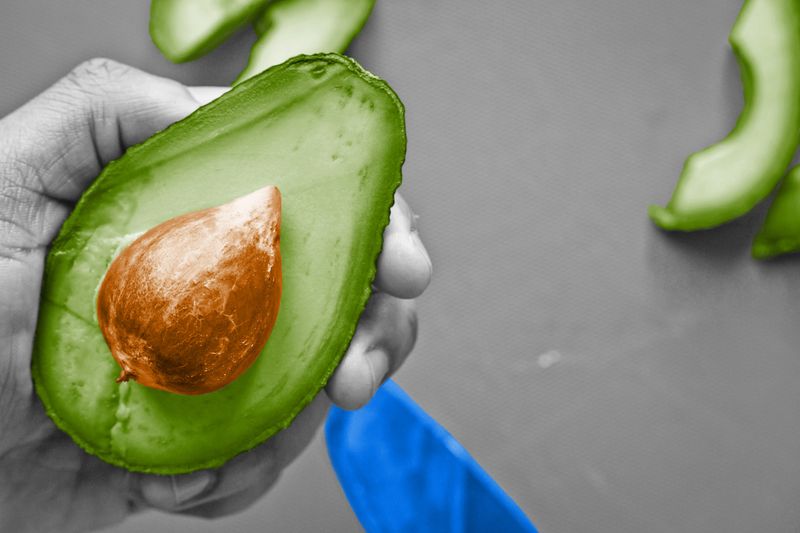
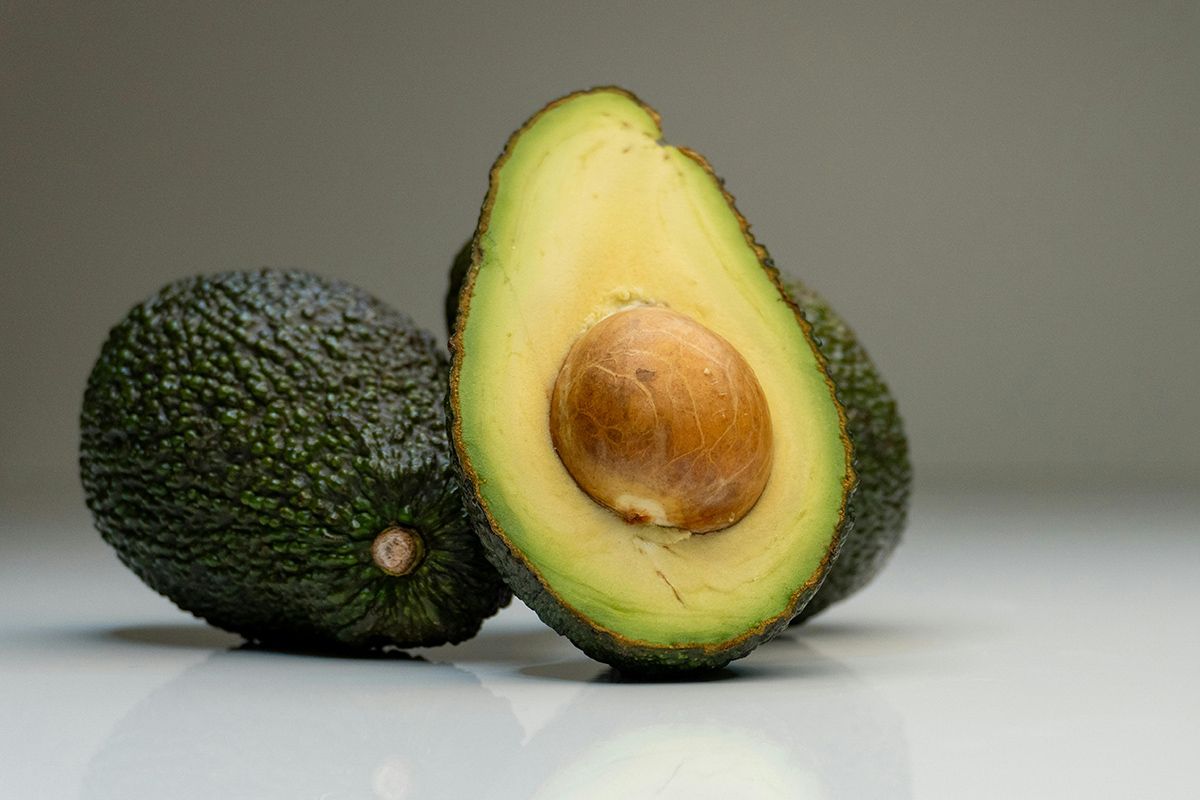
Of the hundreds of avocado varieties, the Hass avocado is the most popular, comprising 95% of the annual U.S. crop. But this wide-scale operation began with just one man: a Wisconsin-born, California-based mail carrier named Rudolph Hass.

In the 1920s, Hass bought some avocado tree seeds from horticulturist Albert Raymond Rideout, an early innovator in the modern avocado crop. At the time, the Fuerte avocado was the most popular cultivar, though the seeds that were sold to Hass sprouted a brand new variety. 

Hass planned to cut down the tree, but his children convinced him otherwise, as they preferred the taste of this new avocado. Hass opted to name the cultivar after himself, and he took out a patent in 1935. After Hass died in 1952, farmers kept his legacy alive by continuing to grow his beloved namesake avocados.

Credit: © ZUMA Press, Inc/Alamy

Caesar Salad

If you thought the Caesar salad was named after a real person, you’d be correct — but it may not be the person you think. Many people assume this classic salad was named after legendary Roman statesman Julius Caesar, but he had nothing to do with it. In reality, it was named after an Italian chef named Caesar Cardini, who emigrated to North America in the 1910s.

Cardini was a successful restaurateur in the San Diego area before Prohibition began in 1920. Following that turn of events, he moved operations south of the Mexican border to Tijuana, where he could freely serve alcohol. But it wasn’t the booze that made his restaurant so popular; it was the salad created on a busy Fourth of July weekend in 1924. 

According to Cardini’s daughter, her father found himself running low on ingredients, but he still had a number of hungry customers to feed, so he mixed together what he had on hand: a bit of lettuce, olive oil, raw egg, croutons, parmesan, and Worcestershire sauce. The recipe was a hit, and Cardini made his namesake salad a permanent fixture of his menu.

Bennett Kleinman
Staff Writer

Bennett Kleinman is a New York City-based staff writer for Inbox Studio, and previously contributed to television programs such as "Late Show With David Letterman" and "Impractical Jokers." Bennett is also a devoted New York Yankees and New Jersey Devils fan, and thinks plain seltzer is the best drink ever invented.

Interesting Facts

In a world where we spend an average of 25 minutes a day sending messages back and forth on a variety of apps, it’s easy to forget the vital importance of physical mail. Mail systems have been around for about 4,000 years, and throughout that time they’ve evolved to sort, route, and deliver your letters and packages with surprising precision. It may seem simple from the outside, but correctly transporting items from point A to point B with minimal hiccups is quite an undertaking.

Today, for example, the United States Postal Service operates one of the largest logistical networks in the world, delivering to nearly 170 million addresses across the country. Operations may be largely automated now, but mail systems still rely on lots of helping human hands — and even some animal hooves. Here are six facts you might not know about the mail.

Credit: © Sundry Photography/stock.adobe.com

The U.S. Accounts for Nearly Half the World’s Mail 

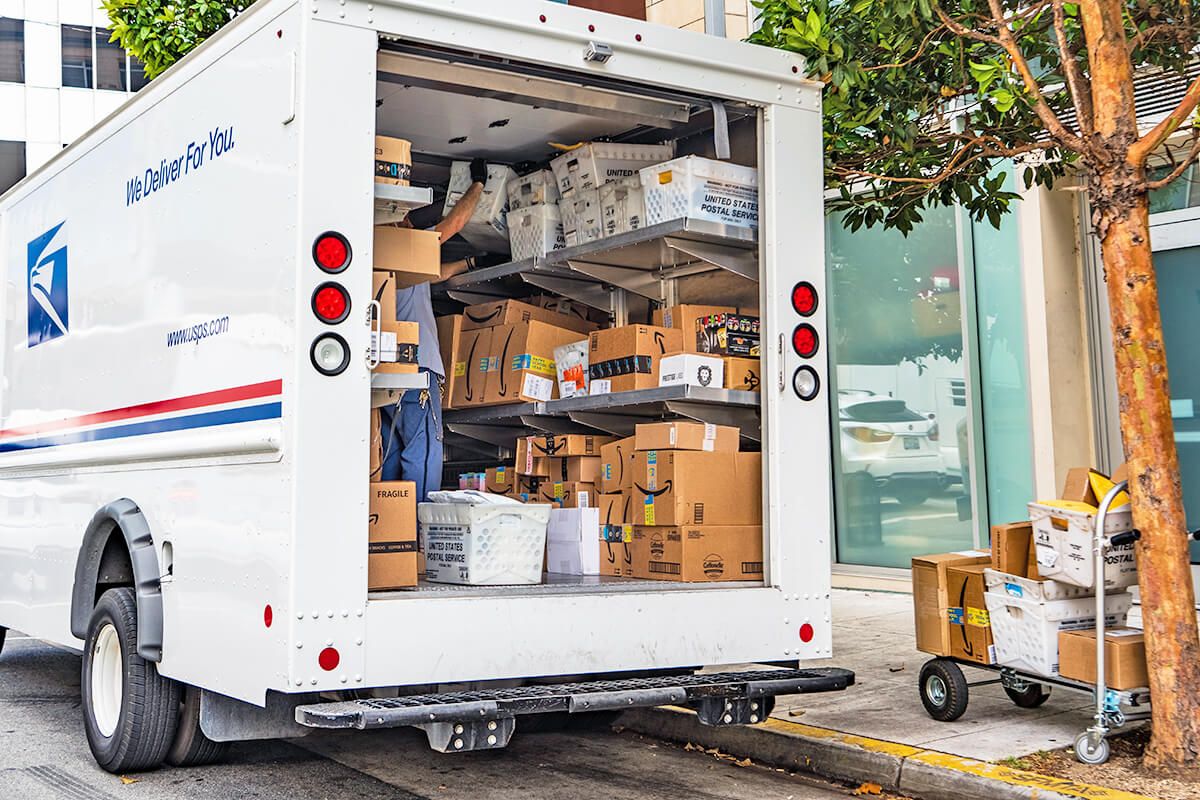
The scale of mail delivery across the U.S. is hard to overstate. In fact, the USPS processes and delivers more mail than any other postal service in the world, accounting for roughly 44% — nearly half! — of all mail in the world. 

Every day, an average of 371 million pieces of mail, including letters, cards, and parcels, are processed and delivered by USPS. The majority of it flows through a highly automated system, with around 9,000 pieces of processing equipment to help keep things moving. Sorting machines such as the Automated Delivery Unit Sorter handle 3,400 pieces of mail per hour, while millions of letter bundles and packages are loaded onto trucks that collectively drove more than 1.9 billion miles in 2024 alone — that’s more than 22.6 million mail-delivery trips.

Credit: © Andrej Lišakov/unsplash.com

If Machines Can’t Read Your Writing, Humans Are on Standby

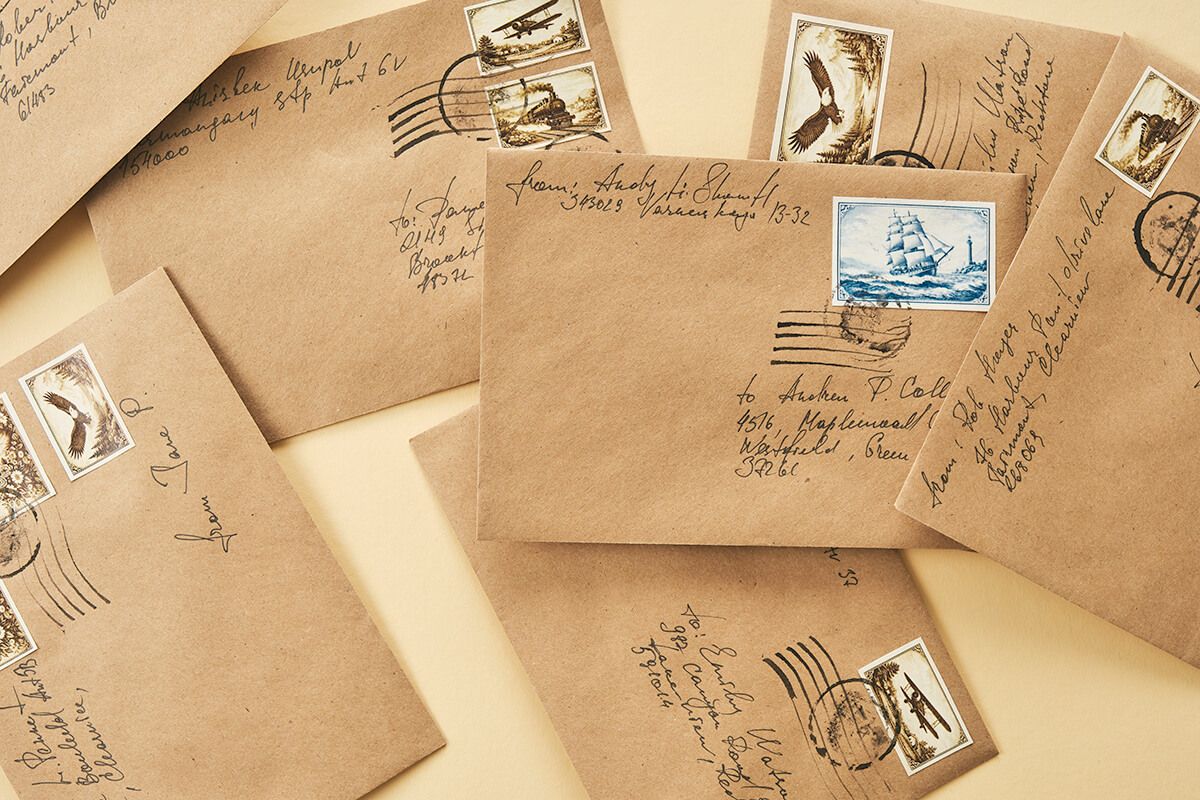
Even though all that high-tech equipment scans and sorts mail automatically, not every address is machine-readable. When ink gets too smudged or handwriting is incomplete or illegible (we’re looking at you, chicken-scratchers), an image is sent for another look at the USPS Remote Encoding Center (REC) in Salt Lake City, Utah.

On an average day, images from roughly 4 million pieces of mystery mail come across the screens of the data conversion operators — also known as keyers  — who staff the office 24 hours a day, seven days a week. Employees are trained to review each piece of mail in 10 seconds or less as it flashes across their screens, deciphering handwriting and correcting delivery information. 

At one time, the USPS operated 55 of these REC offices around the country, but with the reduction of physical mail in the digital age as well as improved automated screening technology, only the Salt Lake City site remains.

Credit: © M-Production/stock.adobe.com

Undeliverable Mail Has an Afterlife

Despite the Postal Service’s best efforts, some mail doesn’t end up at its intended destination. Undeliverable mail in the U.S. makes its way to a USPS facility in Atlanta, Georgia, known as the Mail Recovery Center — the modern successor to the Dead Letter Office established in 1825. 

Employees first attempt to identify the mail’s intended destination or return address, which is typically done by using clues inside the mail for any identifying information. Valuable items — that is, anything worth $25 or more — are typically held for up to 60 days if they include a USPS tracking barcode, or 30 days if they’re standard stamped mail without tracking. 

Ultimately, if no owner can be located, the USPS takes a similar approach to the lost luggage store in Alabama: Items may be auctioned off in lots, donated to charity, or, in some cases, recycled or thrown out.

Credit: © ZUMA Press Inc/Alamy

Some Mail Is Still Delivered by Mule

For all its extensive truck routes, the USPS continues to rely on some creative delivery methods as well. There’s the aptly named “pail mail” used between passing ships on the Detroit River, and sometimes snowmobiles step in when roads become impassable in particularly snowy states. But what may be the most unusual route doesn’t rely on engines at all — it requires hooves. 

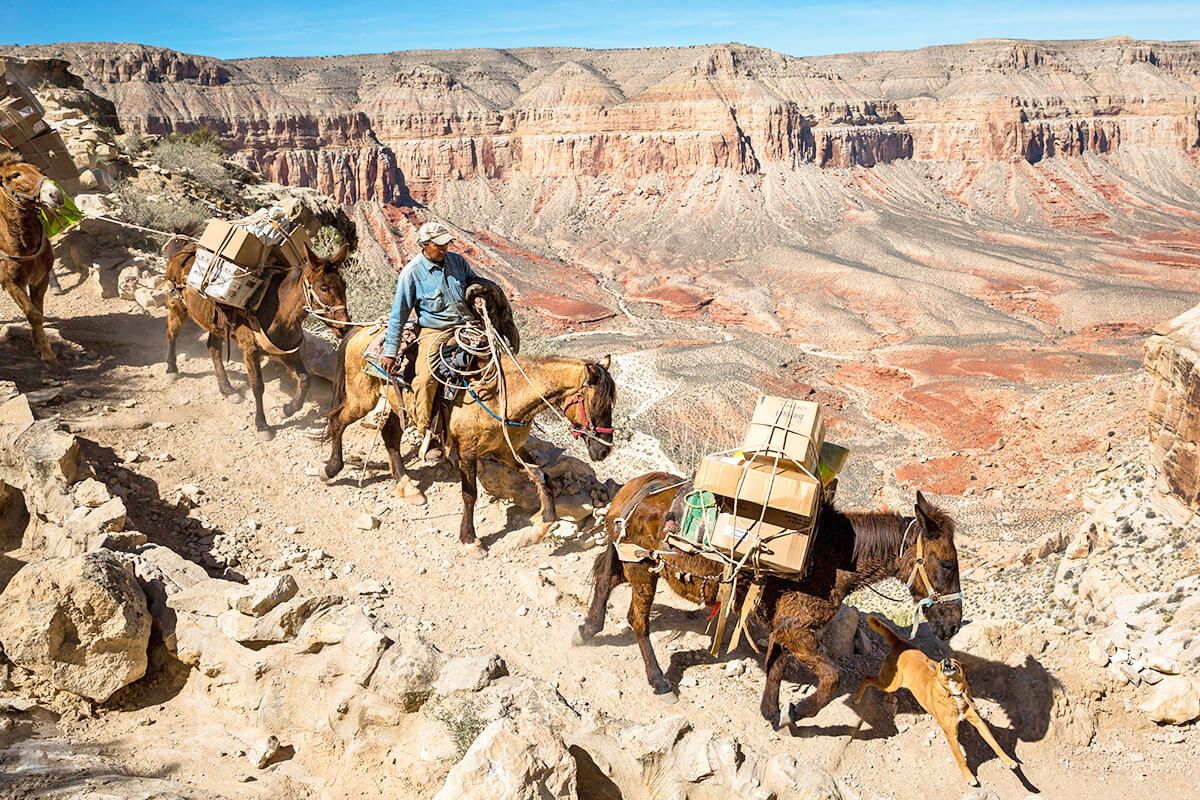
To deliver mail to the Havasupai Tribe at the bottom of the Grand Canyon, the USPS relies on mule trains. Up to seven times a week, between 10 and 22 mules set off with a wrangler on horseback, traveling 9 miles down to the remote Supai post office. 

The descent takes about three hours, while the climb back out takes closer to five. Incoming mail is limited to residents and workers in Supai, but visitors hiking into the canyon or staying at the Phantom Ranch can send letters or postcards out the same way it comes in: by mule.

Credit: Image Source Limited ©/Alamy

ZIP Codes Are More Recent Than You May Think

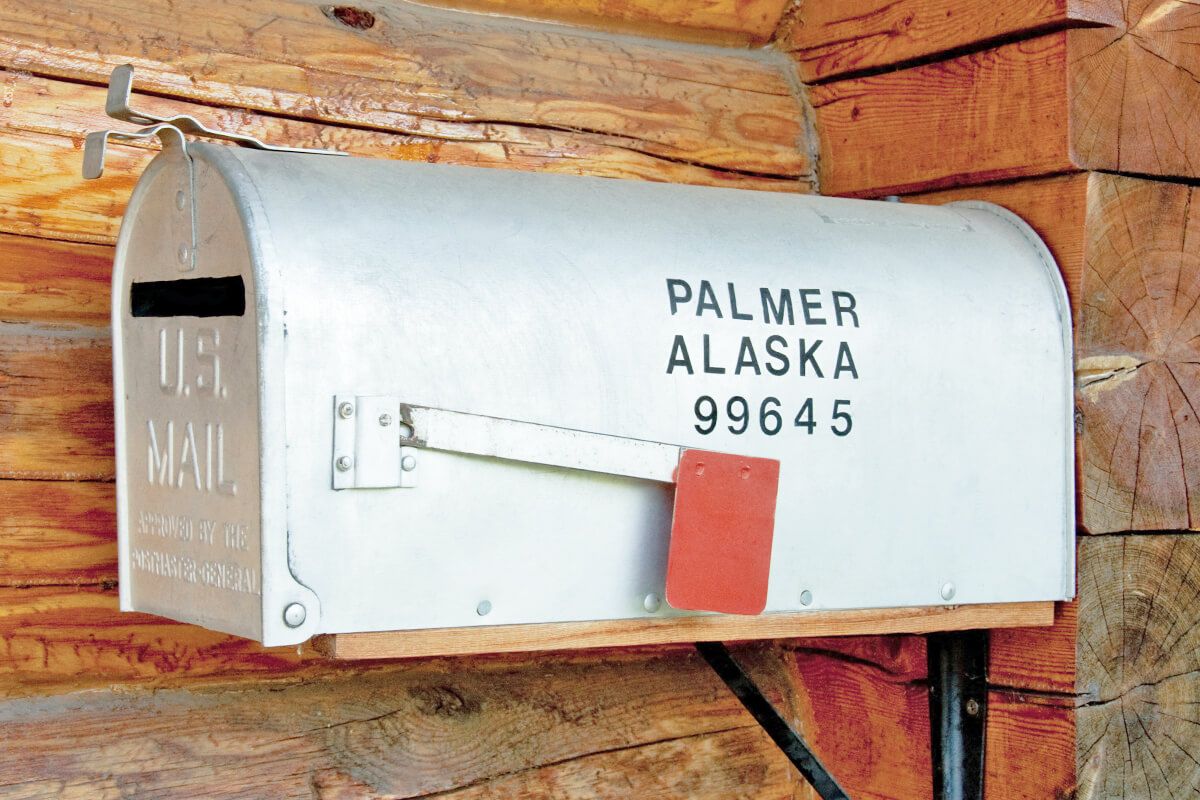
It’s hard to imagine sending a piece of mail without a ZIP code, but that familiar five-digit string of numbers tacked at the end of a U.S. address didn’t exist until the 1960s. The ZIP (Zone Improvement Plan) code system was introduced to streamline sorting as mail volume surged in the mid-20th century. 

It wasn’t an entirely new idea, however. In 1943, what was then called the United States Post Office Department introduced a zoning system for the country’s biggest cities; one- or two-digit zone numbers would be written after the city’s name on addresses to help coordinate deliveries. 

That system helped with wartime backlogs, but by the early 1960s, America’s annual mail volume had doubled, growing from 33 billion pieces of mail in 1943 to 66.5 billion. At the same time, suburbs were also expanding and people were spreading out across the country, making mail delivery more complicated. 

The ZIP code was introduced in the summer of 1963, with the first digit representing a broad geographical region of the country, the next two narrowing it to a regional area, and the last two pinpointing the area’s local post offices.

Credit: © The Picture Art Collection.=Alamy

The Postmaster General Is the Second-Highest-Paid Federal Employee

The role of postmaster general has a long and storied history, starting with Benjamin Franklin in 1775. Currently, the position ranks among the highest-paid in the U.S. government, with an annual base salary of $346,780 as of 2025 — second only to the U.S. president’s $400,000, which has remained the same since 1999

Because the USPS operates independently within the executive branch and makes revenue from postage and other service fees, the position is unusually high on the pay scale. Leading the USPS is, of course, no small feat: The postmaster general oversees one of the country’s largest civilian workforces and is responsible for a massive logistical operation that handles more than 100 billion pieces of mail per year.

Nicole Villeneuve
Writer

Nicole is a writer, thrift store lover, and group-chat meme spammer based in Ontario, Canada.