









Dogs are man’s best friend, and the canine ability to understand human words has gone a long way to solidify that world-changing relationship. According to the American Psychological Association, the average dog can understand 165 words, and “super dogs” — those in the top 20% of canine intellect — can understand around 250 words. Dog intelligence can be divided into three main types: instinctive (what the dog is bred to do), adaptive (what a dog learns from its environment), and working/obedience (what a dog is trained to do). Research into the levels of working/obedience intelligence in various dog breeds shows that border collies displayed the highest levels, followed by poodles, German shepherds, and golden retrievers. With the ability to also understand simple math (1+1 = 2, for example), these “super dogs” have an estimated cognitive ability equivalent to that of 2- to 2.5-year-old humans.
Recent research shows that dogs can make out yellows, blues, and hues in between. A dog’s retina has more rods than cones (humans are the opposite), and has only two types of cones. This makes dogs dichromatic, whereas humans, who have three types of cones, are trichromatic.
Although an understanding of 250 words is impressive, it’s by no means the absolute limit. The Einstein of the dog world is a border collie named Chaser. According to the journal Behavioural Processes, Chaser had the ability to recall and correctly identify 1,022 words. This far exceeds the vocabulary of any known dog, and pushes Chaser into the cognitive ability range of a 3-year-old. Now, that’s an extremely good girl.
The Labrador retriever was the most popular dog breed in the U.S. for 31 years.
Advertisement
Humans and wild apes may share a common, nonverbal language.
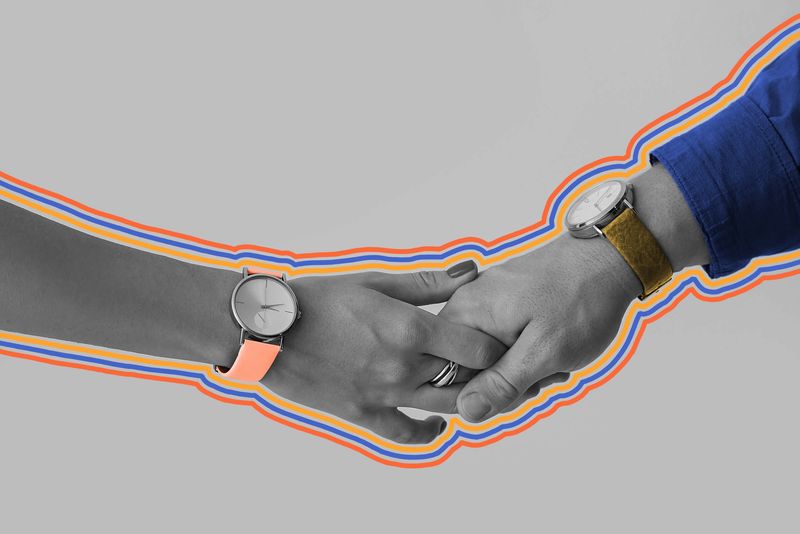
Not all language is verbal, and scientists theorize that human language actually evolved from a gesture-based language in our species’ distant past. A study published in the journal PLOS Biology in 2023 analyzed the gesture-based language of chimpanzees and bonobos, the closest living relatives to humans. In the study, thousands of humans (5,656 to be precise) watched videos of chimpanzees and bonobos striking different poses, and were often able to correctly guess the pose’s meaning. (The meanings had been predetermined by researchers based on work with the apes.) Participants were correct slightly more than 50% of the time in a series of four-answer multiple-choice questions. The results suggest that humans retain an innate ability to understand at least some of the language of great apes, which includes call signals that may be precursors to our own language.
Darren Orf
Writer
Darren Orf lives in Portland, has a cat, and writes about all things science and climate. You can find his previous work at Popular Mechanics, Inverse, Gizmodo, and Paste, among others.
Advertisement
top picks from the Inbox Studio network
Interesting Facts is part of Inbox Studio, which publishes content that uplifts, informs, and inspires.
Enter your email to receive facts so astonishing you’ll have a hard time believing they’re true. They are. Each email is packed with fascinating information that will prove it.
Sorry, your email address is not valid. Please try again.