







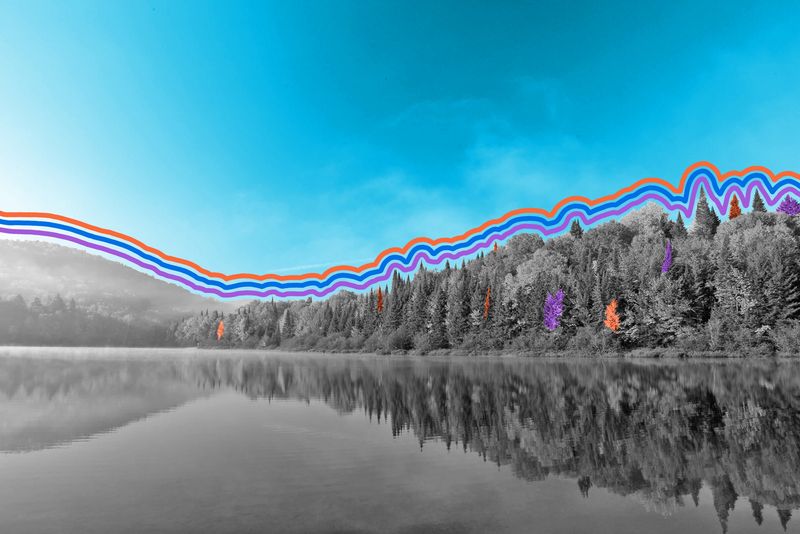


Original photo by borchee/ iStock

Iceland is often called “the land of fire and ice,” a nickname describing two of the nation’s most prominent geological features — volcanoes and glaciers. But in recent years, the world’s 18th-largest island has gotten a new reputation as a destination for readers and book lovers, and it’s because Iceland has more authors per capita than any other country in the world. It’s estimated that on an island with a population around 372,500 people, one in 10 will publish a book. There’s even a phrase in Icelandic that relates to the popularity of writing — “ad ganga med bok I maganum,” which roughly translates to “everyone gives birth to a book.” Many writers reside in the island’s capital city of Reykjavik, a major publishing hub that in 2011 was named a UNESCO City of Literature.

Iceland banned most beers for most of the 20th century.

Ready to reveal?

Oops, incorrect!

It's a fact

Like many places, Iceland experimented with prohibition, banning wine, liquor, and beer in 1915. The law was mostly repealed in 1933, but kept beer limited to 2.25% alcohol; full-strength brews weren’t allowed until March 1, 1989 — a day Icelanders celebrate as “Bjordagur” (Beer Day).

Icelanders’ love of reading is culturally ingrained in a country that has a nearly 100% literacy rate. It’s likely that storytelling became a tradition thanks to the family sagas passed from generation to generation; these stories described how the first Icelanders found and adapted to the land from around 930 to 1030 CE. Poetry and story recitation became a popular way for Icelanders to keep the stories alive, and provided an important form of socializing on long, winter nights. Today, sharing stories has spawned a more modern tradition, in which Icelanders give books to friends and family on Christmas Eve. The holiday season strain on publishers is so great, and so many books are gifted, that the tradition has its own name: Jolabokaflod, aka the Christmas Book Flood.

Numbers Don't Lie

Numbers Don't Lie

Nobel Prize in literature winners from Iceland (Halldór Kiljan Laxness, 1955)
1
Approximate number of notable islands off Iceland’s mainland, only four of which are inhabited
30
Year the International Standard Book Number (ISBN) system was adopted to identify books
1970
Number of digits in a book’s ISBN code (increasing from 10 in 2007)
13

The world’s oldest known, still-erupting ______ is found in Iceland.

Ready to reveal?

Confirm your email to play the next question?

The world’s oldest known, still-erupting geyser is found in Iceland.

Placeholder Image

Some Icelandic towns have curfews for cats.

It’s 10 p.m. — do you know where your cat is? In some Icelandic cities, not knowing could land you a fine. Cats are the preferred pet of many Icelanders, especially those living in the capital city of Reykjavik, a trend that lingered after dogs were banned from the city for six decades to prevent the spread of echinococcosis, a tapeworm that can infect and blind humans. These days, Reykjavik is said to have one cat for every 10 people. Historically, cats have had free reign of the city, but some spots are squashing that tradition, imposing laws that keep cats indoors entirely or creating evening curfews for felines (the creatures are often considered a nuisance). Some ecologists think these restrictions could have a positive impact on the environment: Among other benefits, keeping Iceland’s feline hunters partially indoors would help protect nests and chicks of struggling seabird species.

Nicole Garner Meeker
Writer

Nicole Garner Meeker is a writer and editor based in St. Louis. Her history, nature, and food stories have also appeared at Mental Floss and Better Report.