





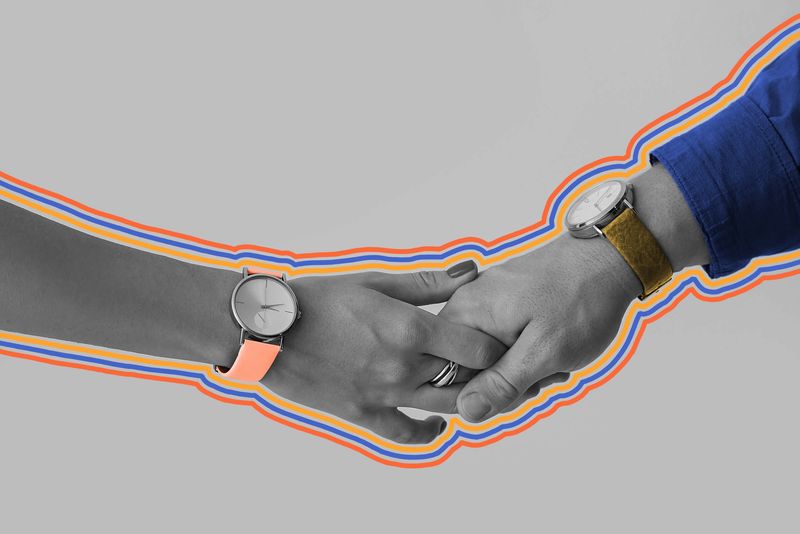





Brass fixtures have seen a resurgence in home design in recent years, especially in their natural, unlacquered form. But those warm, timeless decor pieces aren’t just stylish — they also happen to be natural germ fighters, a handy feature for surfaces our hands frequently come into contact with.
Brass is a durable metal known as an alloy, which means it’s made by combining different metals — in this case, copper and zinc. Copper has antimicrobial properties and can disinfect itself over time, and brass can too. This phenomenon is known as the oligodynamic effect; metals with this ability release ions that disrupt and kill bacteria and viruses.
Bacteria can double their population every 20 minutes.
Under ideal conditions, a single bacterium can reproduce about every 20 minutes, and its exponential growth means one cell can turn into millions in just a few hours.
Studies have shown that, within as little as two hours, more than 99% of germs on copper and brass surfaces were gone. Within eight hours, 100% of previously detectable microbes were eliminated. That includes some of even the nastiest germs: MRSA and regular staph, which can cause deadly infections; VRE, a type of antibiotic-resistant bacteria; and E. coli, the foodborne troublemaker that can cause severe stomach illnesses.
We should note that lacquered finishes block this property, so brass doorknobs, handles, or other fixtures must remain in their natural finish for the antimicrobial properties to work. Unlacquered brass is known to tarnish and get discolored, but since it doesn’t contain iron, it won’t rust, and it can easily be polished — a small tradeoff for fewer germs in the home.
The most contagious disease is widely considered to be measles.
Advertisement
The total bacteria in your body weigh about as much as your brain.
Scientists once thought bacterial cells outnumbered human cells in our bodies by as much as 10:1. More recent estimates suggest the split is closer to even, so the human body contains roughly as many bacterial cells as human cells.
We have roughly 37 trillion cells in our bodies that act as foundations of our tissues, organs, and blood. By comparison, about 38 trillion microbial cells — bacteria, fungi, and viruses — live in and on our bodies. The vast majority of those are concentrated in the gut, where microbial densities are far higher than elsewhere in the body.
A stomach full of bacteria may sound troublesome, but those bacteria actually help break down food, produce essential nutrients, and support the immune system. The bacteria are collectively known as the microbiome, and they add up to weigh roughly 2 to 4 pounds — roughly the same weight range as the average human brain.
Nicole Villeneuve
Writer
Nicole is a writer, thrift store lover, and group-chat meme spammer based in Ontario, Canada.
Advertisement
top picks from the Inbox Studio network
Interesting Facts is part of Inbox Studio, an email-first media company. *Indicates a third-party property.