

Original photo by © Oscar Gutierrez Zozulia/istock
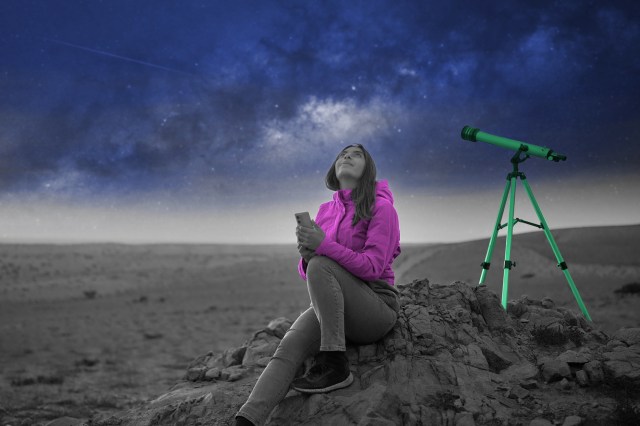
On a clear, dark evening, when the air is still and the world seems to slow, the night sky puts on a show — all you have to do is look up. For thousands of years, humans have done just that, looking to the stars in awe, seeking comfort and meaning in the sparkle of distant celestial bodies.
Beyond the haze of artificial light, the night sky is filled with wonders that connect us to nature, history, and one another. You don’t need a telescope or technical knowledge to explore it — just a little patience and curiosity. From ancient constellations to fleeting streaks of light and orbiting spacecraft, the sky above Earth holds countless surprises. Here are six fascinating facts that reveal just how remarkable the night sky can be.
You See Roughly the Same Stars Your Ancestors Did
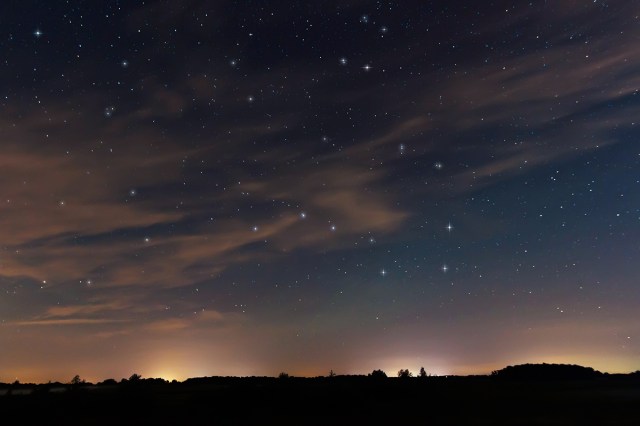
When you look up at the night sky, you’re seeing nearly the same star patterns people recognized thousands of years ago. Constellations such as Taurus, Orion, and Ursa Major were identified by ancient cultures long before modern science mapped them. Travelers used them for navigation, farmers tracked the seasons by their rising and setting, and storytellers built myths around their shapes.
The stars are constantly moving through space at tremendous speeds — thousands of miles per hour — in a slow drift astronomers call proper motion. They only appear fixed because they’re so far away. Over the course of a human lifetime, their positions shift so slightly that the patterns seem relatively unchanged. So while we don’t see exactly the same sky our ancestors saw, we see a version that’s changed only imperceptibly on a human timescale.
Polaris Hasn’t Always Been the North Star
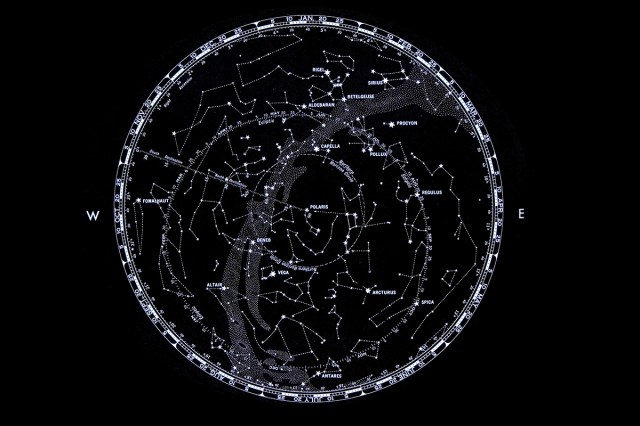
Even the stars that seem most fixed, such as the ones our ancestors relied on for direction, slowly shift over time. The North Star is the star that appears almost directly above Earth’s North Pole, sitting close to the north celestial pole, aka the point in the sky around which all the other stars seem to turn.
Because Earth rotates on its axis, the night sky slowly shifts over the course of the night, causing the stars to gradually change position., The North Star, however, barely seems to move, holding nearly the same position while the rest of the stars circle around it. Today, that role belongs to Polaris (Alpha Ursae Minoris), the brightest star in the constellation Ursa Minor. But that hasn’t always been the case.
Earth’s axis slowly wobbles in a 26,000-year cycle called axial precession, gradually tracing a wide circle against the background stars. Between roughly 3942 BCE and 1793 BCE, the star Thuban, the alpha star of the constellation Draco the Dragon, lay closest to the north celestial pole and served as the North Star.
Thousands of years from now, around 12,000 CE, the bright star Vega in the constellation Lyra the Harp will take its turn. And eventually, in the very distant 20,346 CE, Thuban will once again be the North Star.
You Can See Only About 3,000 Stars on a Clear Night
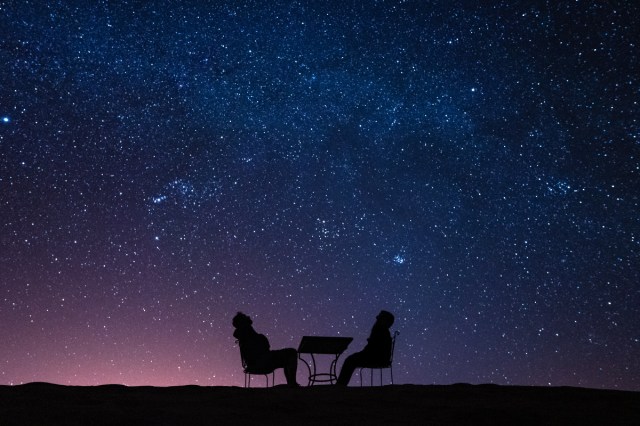
On a clear, moonless night far from city lights, it can feel as though the sky is crammed full of stars. In reality, the human eye can perceive only about 3,000 stars at one time under ideal conditions — exceptionally dark skies, no moonlight, and sharp vision. Because Earth itself blocks half the sky from view, there are only about 6,000 total stars visible to the naked eye across the entire planet.
That number may sound large, but it’s just a tiny fraction of what’s actually out there. Our galaxy, the Milky Way, contains an estimated 100 billion stars. Beyond it lie billions of other galaxies scattered across the observable universe.
Most of those stars are simply too far away — and therefore too faint — for the human eye to detect without a telescope. Compared to the unfathomable number of stars that lie in our own galaxy and beyond, the few thousand stars we can see without a telescope represent only the barest surface layer of the cosmos.
More Interesting Reads


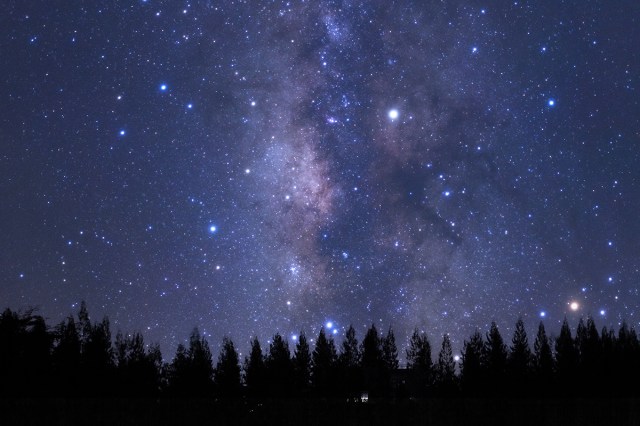
A Star’s Color Reveals Its Temperature
The color of a star — white, bluish, reddish, or golden — offers a direct clue about its surface temperature and, by extension, its size, age, and stage of life. Hot, massive stars burn bright and blue, consuming their fuel quickly and often living only a few million years. Reddish stars are actually the coolest and burn more slowly, sometimes for tens of billions of years, and may appear faint or deep crimson to the naked eye.
Stars such as our sun are medium-sized and sit in the middle of that spectrum, with a yellowish-white glow and a lifespan of roughly 10 billion years. By observing a star’s color, you can gauge both its relative size and the cosmic clock it follows.
On a clear, dark night, you can see those colors with the naked eye. In the constellation of Orion, Betelgeuse appears reddish, Rigel shines bluish‑white, and even stars that look white to casual viewing often reveal subtle gold or blue tints when seen under ideal conditions.
Stars can also undergo real color changes over long periods of time as they evolve. For example, historical records from cultures around the world suggest Betelgeuse was described as yellow‑orange about 2,000 years ago, indicating it may have been hotter and less red at that time than it is today. Those long‑term shifts reflect changes in the star’s outer layers and temperature as it advances through the late stages of stellar evolution.

We’re Looking at the Past When We Look at the Stars
Light travels at a finite speed (about 186,000 miles per second), and a light-year is the distance light can travel in one year (about 6 trillion miles), which means light from distant stars takes a long time to reach Earth. A star located 100 light-years away is seen as it appeared 100 years ago, because that’s how long its light has been traveling to us. Some of the faintest stars visible to the naked eye are thousands of light-years away, so the light we detect from them began its journey long before recorded human history.
We are effectively observing the past when we look at the night sky. In some cases, a star we see may no longer exist in the state we’re seeing — we’re seeing its light from before it changed, exploded, or died. The night sky is therefore a record of events that occurred across vast distances and timescales, with each star’s light carrying information about its condition from years, centuries, or even millennia ago.
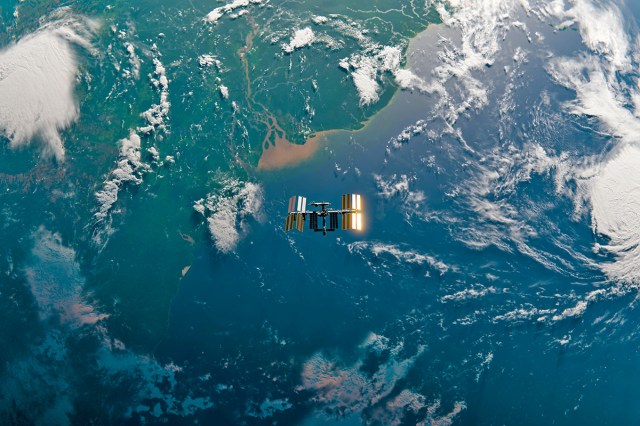
You Can Observe Human Spaceflight From Your Backyard
One of the brightest moving objects in the night sky is the International Space Station (ISS). Orbiting Earth approximately every 90 minutes at an average altitude of about 248 miles, it reflects sunlight, which makes it appear as a steady, bright point of light moving across the sky. How can you tell it’s the ISS? Unlike airplanes, the space station doesn’t have blinking lights, and unlike stars, it travels smoothly and quickly from horizon to horizon.
With precise timing, anyone can observe the ISS from their backyard using simple online tracking tools or smartphone apps that provide predictions on when it will pass. Depending on your location and the season, the station can be visible for several minutes, moving at roughly 17,500 miles per hour. The best time to see it is at dawn or dusk, when the sky is dark enough for visibility but the station is still high enough to catch sunlight and reflect it down to Earth.

Kristina is a coffee-fueled writer living happily ever after with her family in the suburbs of Richmond, Virginia.
top picks from the Inbox Studio network
Interesting Facts is part of Inbox Studio, an email-first media company. *Indicates a third-party property.